

Understanding the Role and Its Financial Value
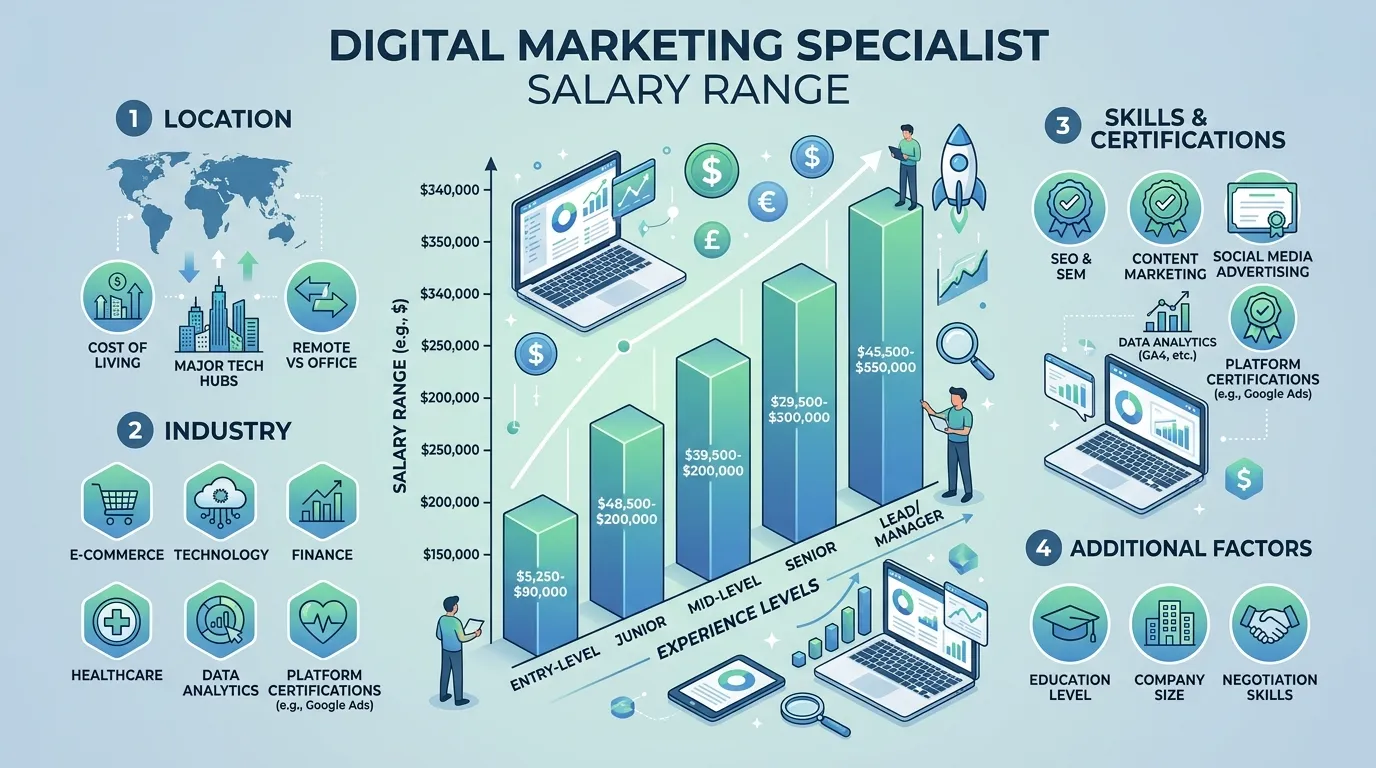
Before diving into the numbers, we must understand what drives the compensation for this role. A digital marketing specialist is a versatile professional responsible for executing online campaigns, analyzing consumer data, and optimizing digital channels to achieve business objectives. Because these actions directly influence a company’s bottom line, organizations are willing to pay a premium for proven talent.
In 2026, the marketing landscape is heavily influenced by artificial intelligence, automation, and data privacy regulations. Professionals who can navigate these complexities command higher wages. Companies no longer just want someone to post on social media; they need strategic thinkers who understand conversion funnels and return on investment.
Average Earnings Overview
The baseline digital marketing specialist salary has seen a steady increase. On average, professionals in the United States earn around $72,000 to $86,000 annually. However, this figure is just the starting point. Depending on various factors, your total compensation package, including bonuses, profit sharing, and benefits, can push well past the six-figure mark.
To give you a clearer picture, let us look at the fundamental elements that dictate how much you will make.
How Experience Dictates Your Paycheck
Your tenure in the industry is one of the most significant factors influencing your income. As you transition from learning the ropes to leading campaigns, your market value increases exponentially.
Entry-Level Earnings
When you first enter the field, your primary focus is on execution and learning platform mechanics. Entry-level specialists typically have zero to two years of experience. At this stage, your digital marketing specialist’s salary usually ranges from $45,000 to $60,000 per year.
At this level, employers evaluate your ability to follow instructions, adapt to new software, and manage basic tasks like scheduling content or running preliminary keyword research. To move up quickly, focus on mastering foundational tools like Google Analytics and basic SEO practices. You should also explore our guide on entry-level marketing certifications to build a strong resume.
Mid-Level Compensation
Once you hit the three to five-year mark, you transition into a mid-level role. Here, you are expected to operate independently, troubleshoot campaign issues, and deliver measurable results. The average digital marketing specialist salary for mid-level professionals sits between $65,000 and $85,000.
Mid-level marketers often specialize in specific channels, such as paid search or email marketing. You will start managing larger budgets and analyzing complex datasets to refine strategies. Demonstrating a track record of successful campaigns is crucial for negotiating salaries in this bracket.
Senior-Level and Leadership Income
Senior specialists and marketing managers bring five to ten years of experience to the table. They do not just execute campaigns; they design the overarching strategy, manage teams, and allocate substantial budgets. A senior digital marketing specialist’s salary often exceeds $95,000, with many earning between $100,000 and $130,000 annually.
At the leadership level, your pay is heavily tied to performance metrics. Bonuses based on revenue growth or lead generation targets can significantly inflate your total earnings. If you aspire to reach this tier, you must cultivate strong leadership skills and a deep understanding of multi-channel attribution. Check out our resource on marketing leadership strategies to prepare for this leap.
Salary Variations by Location
Where you live and work dramatically impacts your earning potential. While remote work has somewhat leveled the playing field, geographic economic differences still play a major role in compensation.
Top-Paying Cities in the United States
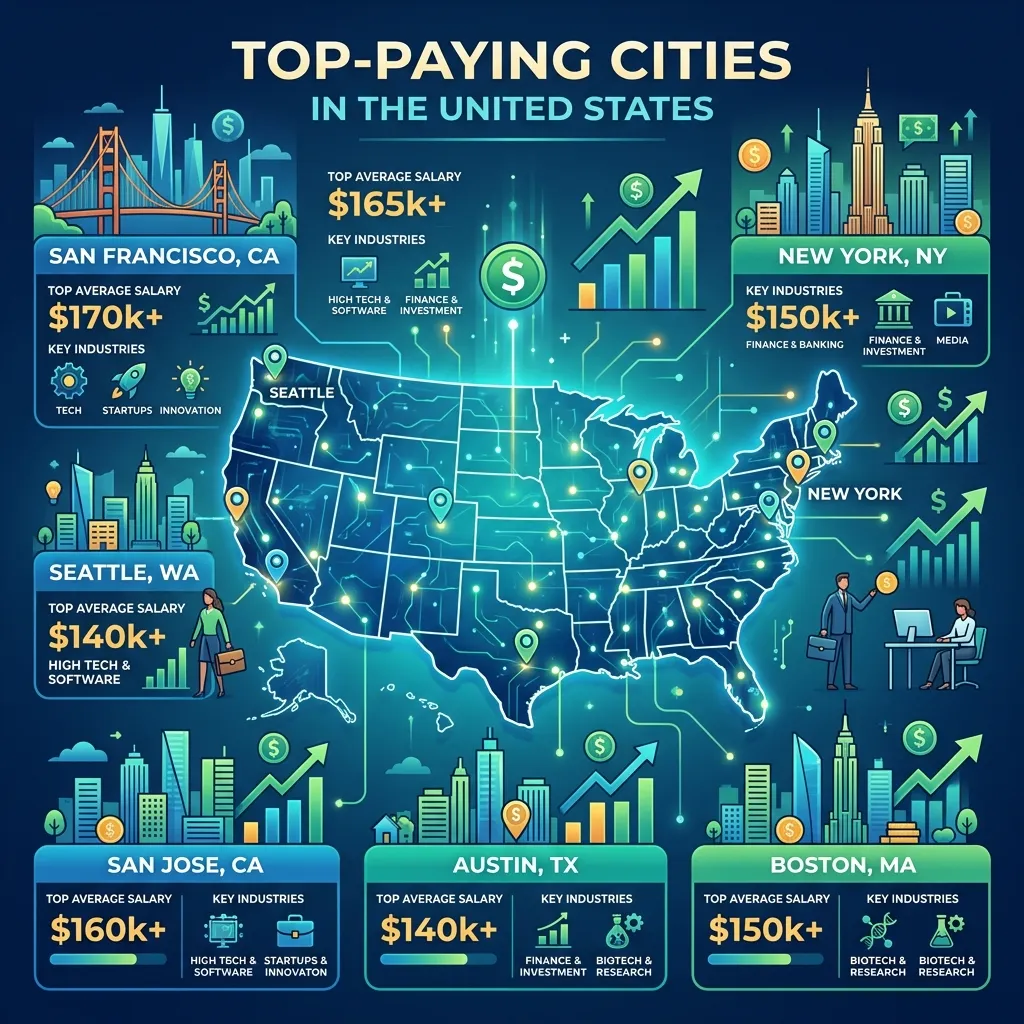
Major metropolitan areas with a high concentration of tech companies and advertising agencies naturally offer higher salaries to offset the elevated cost of living.
- San Francisco, California: Known as a massive tech hub, San Francisco offers some of the highest salaries in the country, often averaging over $90,000 for mid-level specialists.
- New York, New York: The advertising capital of the world demands top talent and pays accordingly, with averages hovering around $85,000 to $88,000.
- Seattle, Washington: Home to massive e-commerce and tech giants, Seattle provides highly competitive compensation packages for marketing professionals.
- Austin, Texas: As a rapidly growing tech center, Austin offers excellent salaries coupled with a relatively lower cost of living compared to coastal cities.
The Remote Work Factor
The rise of remote work has shifted how companies calculate pay. Some organizations pay a flat national rate, meaning you can earn a San Francisco-level digital marketing specialist salary while living in a low-cost Midwestern town. Other companies adjust compensation based on your local cost of living. When applying for remote roles, always clarify the company’s compensation philosophy early in the interview process.
The Impact of Industry on Compensation
Not all industries value marketing equally. Sectors with high profit margins or massive lifetime customer values tend to pay their marketing teams more generously.
Technology and Software (SaaS)

The tech sector is notoriously lucrative for marketers. Software-as-a-Service (SaaS) companies rely heavily on digital channels to acquire users. Because the lifetime value of a software subscriber is high, tech companies are willing to pay top dollar for specialists who can lower customer acquisition costs. Expect salaries in tech to be 10% to 20% higher than the national average.
Healthcare and Pharmaceuticals
Healthcare is a highly regulated and rapidly digitizing industry. Marketing specialists who understand how to navigate strict compliance laws while still driving patient or provider engagement are rare and highly valued. This specialized knowledge translates to excellent compensation packages.
E-commerce and Retail
E-commerce companies live and die by their digital marketing efforts. Specialists who excel at conversion rate optimization, cart abandonment recovery, and highly targeted social media advertising can negotiate strong salaries. In e-commerce, a digital marketing specialist salary is often supplemented by performance bonuses tied directly to online sales revenue. For deeper insights, review our article on e-commerce marketing tactics.
High-Income Skills You Need in 2026
If you want to push your digital marketing specialist salary to the upper limits, you need to acquire skills that directly impact revenue. Generalists are valuable, but specialists with deep technical knowledge command the highest paychecks.
Artificial Intelligence and Automation
In 2026, AI is no longer a novelty; it is a requirement. Professionals who know how to use generative AI for content scaling, predictive analytics for budget forecasting, and automation platforms for personalized customer journeys are the most sought-after talent. Familiarity with AI tools can easily add $10,000 to your base salary.
SEO
Organic traffic remains one of the most cost-effective ways to generate leads. Advanced SEO skills, particularly technical SEO and generative engine optimization (GEO), are highly lucrative. Understanding how to structure website architecture and optimize for AI-driven search experiences makes you an indispensable asset. Read the Search Engine Journal for the latest updates on algorithmic changes.
Paid Media and Performance Marketing
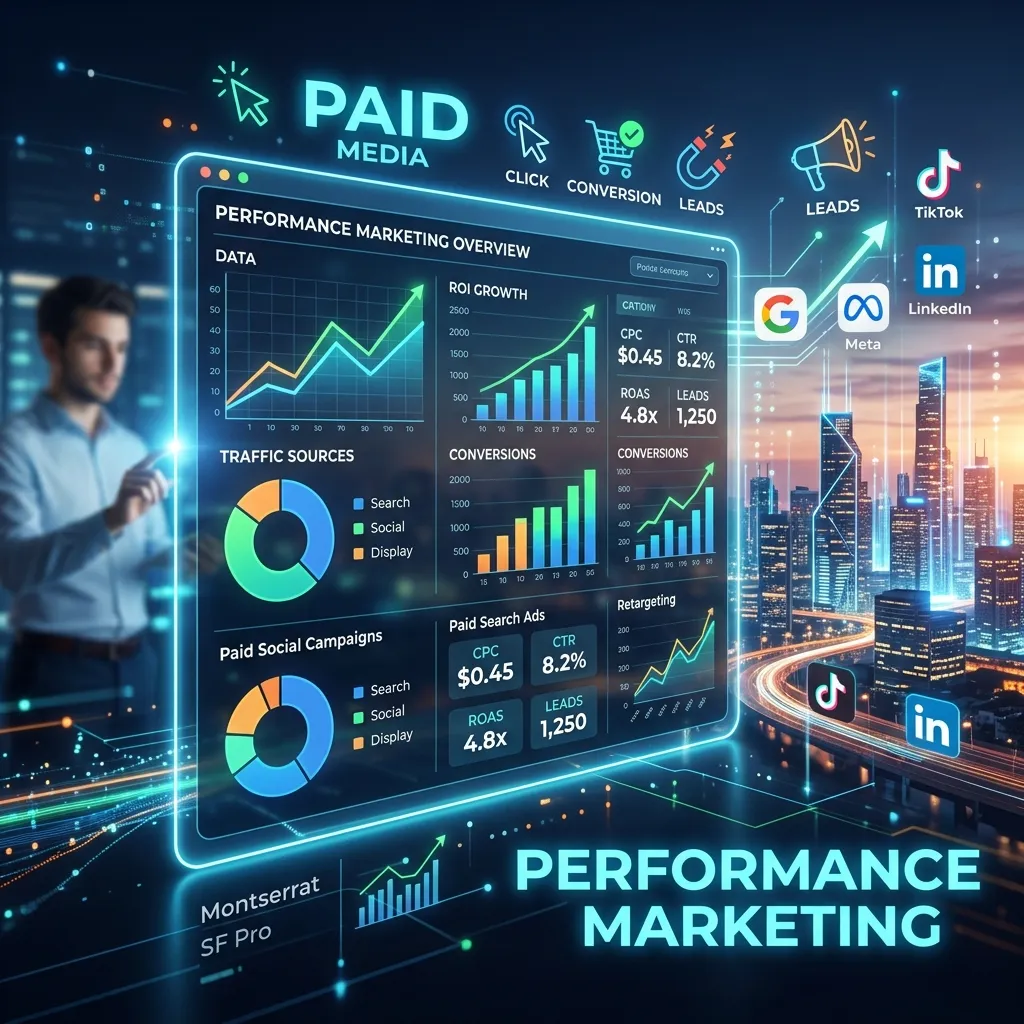
Companies spend millions on Google Ads, Meta Ads, and LinkedIn advertising. If you can manage a massive ad budget and consistently deliver a high return on ad spend (ROAS), you can write your own ticket. Performance marketers often enjoy excellent base salaries coupled with aggressive performance bonuses.
Data Analytics and Interpretation
Data is useless if you cannot translate it into actionable business strategy. Specialists who are proficient in platforms like Google Analytics 4, Tableau, and SQL can bridge the gap between marketing execution and business intelligence. Being able to prove the ROI of your campaigns is the single best way to justify a salary increase. Check out the Google Analytics Academy to sharpen your data skills.
Compensation Comparison Table
To help you visualize your earning potential, here is a breakdown of average salaries based on specific digital marketing roles and experience levels in 2026.
|
Job Title |
Entry-Level (0-2 Yrs) |
Mid-Level (3-5 Yrs) |
Senior (5+ Yrs) |
|---|---|---|---|
|
Digital Marketing Specialist |
$50,000 |
$75,000 |
$95,000 |
|
SEO Specialist |
$55,000 |
$80,000 |
$105,000 |
|
Performance Marketing Manager |
$60,000 |
$85,000 |
$115,000 |
|
Content Strategist |
$52,000 |
$78,000 |
$98,000 |
|
Marketing Data Analyst |
$65,000 |
$90,000 |
$120,000 |
Note: These figures represent base salaries and do not include bonuses, equity, or profit-sharing, which can significantly increase total compensation.
Common Mistakes to Avoid When Negotiating
Many marketers leave money on the table simply because they do not know how to advocate for themselves. Avoid these common pitfalls to ensure you receive a fair digital marketing specialist salary.
- Failing to Quantify Your Impact: Do not just list your duties; showcase your results. Instead of saying, “Managed email campaigns,” say, “Increased email revenue by 35% over six months.”
- Ignoring the Total Compensation Package: Base salary is important, but do not ignore health benefits, matching retirement contributions, remote work stipends, and flexible hours. Sometimes a slightly lower base pay is worth it if the benefits are exceptional.
- Accepting the First Offer: Employers almost always leave room for negotiation in their initial offer. Politely countering with data-backed reasons for a higher salary shows confidence and business acumen.
- Not Researching Market Rates: Use platforms like Glassdoor and Payscale to understand the standard pay for your specific city and experience level before entering a negotiation.
Pro Tips and Expert Insights for Career Growth
To accelerate your career trajectory and command top-tier pay, you must proactively manage your professional development.
- Build a Tangible Portfolio: Create a personal website showcasing case studies of your most successful campaigns. A visual representation of your work provides concrete proof of your abilities.
- Stay Ahead of the Curve: The digital marketing landscape shifts rapidly. Dedicate a few hours each week to reading industry publications and taking courses to keep your skills sharp. You must adapt to new platforms before they become mainstream.
- Network Relentlessly: Many of the highest-paying marketing jobs are never publicly posted. Build relationships with industry peers on LinkedIn, attend marketing conferences, and participate in online communities. Referrals often lead to better compensation packages than cold applications. Dive into our article on professional networking tips to expand your circle.
- Specialize to Monetize: While being a “jack of all trades” is great for entry-level roles, specialists get paid more. Pick one or two channels—like programmatic advertising or technical SEO—and become an absolute authority in those areas.
The Future of Marketing Compensation
As we look further into 2026 and beyond, the role of the digital marketer will only become more critical to business survival. As consumer behavior shifts entirely online, the experts who know how to capture attention and drive conversions will see their value rise.
We anticipate a widening salary gap between marketers who leverage AI efficiently and those who rely solely on traditional methods. Continuous upskilling will be the primary driver of salary growth. If you treat your career as a business and consistently invest in your own education, your earning potential is virtually limitless.
Conclusion
Securing a top-tier digital marketing specialist salary requires a blend of technical expertise, strategic thinking, and strong negotiation skills. By mastering high-income skills like AI and data analytics, specializing in profitable industries, and understanding your market value, you can significantly boost your income. Start updating your portfolio, refining your resume, and applying for roles that match your true worth today.
Frequently Asked Questions
1. What is the average digital marketing specialist salary in 2026?
In 2026, the average base salary for this role in the United States typically falls between $72,000 and $86,000 per year. However, this varies widely based on location, industry, and the specific technical skills the candidate possesses.
2. Can I earn six figures as a digital marketer?
Absolutely. Many professionals cross the six-figure mark once they reach senior or managerial levels. Additionally, specialists with deep expertise in high-demand areas like performance marketing, data analytics, and technical SEO frequently earn over $100,000.
3. Do I need a degree to get a high-paying marketing job?
While a bachelor’s degree in business or marketing is common, it is not strictly required. Employers care far more about your portfolio, your ability to drive proven results, and your proficiency with marketing technology. Strong case studies can easily outweigh a formal degree.
4. Which digital marketing skill pays the highest?
Currently, skills related to data analytics, AI implementation, and advanced performance marketing (managing large ad spends with high ROI) command the highest salaries. Technical SEO is also highly lucrative due to its complexity and impact on organic revenue.
5. How much does an entry-level digital marketer make?
Someone just starting in the industry with zero to two years of experience can expect to earn between $45,000 and $60,000 annually. Focusing on gaining certifications and hands-on platform experience will help you move out of this bracket quickly.
6. Does working remotely affect my salary?
It depends on the company. Some organizations offer location-agnostic pay, meaning you get the same salary regardless of where you live. Others adjust your pay based on the cost of living in your specific zip code. Always clarify this policy during the interview process.
7. How can I negotiate a higher starting salary?
To negotiate successfully, come prepared with industry salary data and concrete examples of your past successes. Focus on metrics: explain how your previous campaigns increased revenue, reduced customer acquisition costs, or boosted organic traffic.
8. Which industries pay digital marketers the most?
The technology and Software-as-a-Service (SaaS) sectors traditionally offer the highest compensation. Healthcare, pharmaceuticals, and finance are also highly lucrative industries for skilled marketers due to their high profit margins and complex regulatory environments.
9. Are marketing certifications worth getting?
Yes, especially if you are early in your career or looking to pivot into a new specialization. Certifications from Google, HubSpot, and Meta prove you understand platform mechanics and can give you an edge over uncertified candidates during the hiring process.
10. How long does it take to become a marketing manager?
Typically, it takes about five to seven years of consistent, successful experience to transition from a specialist role to a marketing manager. You must demonstrate not only technical marketing skills but also the ability to lead teams, manage budgets, and develop overarching business strategies.






Leave a Reply