

What do Dropbox, Hotmail, and TikTok all have in common? Beyond their massive valuations, they all grew to prominence through viral marketing. They built systems that encouraged existing users to bring in new ones, creating a self-perpetuating loop of growth that turned them into household names. This powerful engine for expansion is known as a viral marketing funnel.
Building a system that turns customers into advocates doesn’t happen by accident. It requires a deep understanding of user psychology, a product worth talking about, and a well-designed content marketing strategy. Many businesses dream of “going viral,” but few understand the mechanics behind it. Virality isn’t just luck; it’s engineered.
This guide will break down the essential components of a successful customer acquisition funnel that’s designed for viral growth. We’ll explore the strategic framework, the psychological triggers that motivate sharing, and the practical steps you can take to build your own viral marketing funnel from scratch. By the end, you’ll have a clear roadmap for creating a system that helps your business grow exponentially.
What is a Viral Marketing Funnel?
A viral marketing funnel is a customer acquisition model designed to encourage existing users to share a product or service with others, creating a continuous cycle of growth. Unlike a traditional marketing funnel that relies solely on paid ads or direct outreach, a viral marketing funnel leverages its own user base as a primary marketing channel. The goal is to make sharing so easy and rewarding that it becomes a natural part of the user experience.
The core principle is the viral loop, which lies at the heart of viral marketing:
- A new user signs up for your product (Acquisition).
- They experience real value (Activation).
- Built-in mechanisms incentivize them to share the product (Referral).
- Their friends sign up, and the loop continues.
When executed correctly, this approach transforms your user base into an active growth engine. Each participant in the viral loop contributes to your viral marketing efforts by naturally bringing in more users, which is measured by the viral coefficient (K). A K-factor greater than 1 indicates that your growth is self-sustaining.
The Key Stages of a Viral Funnel

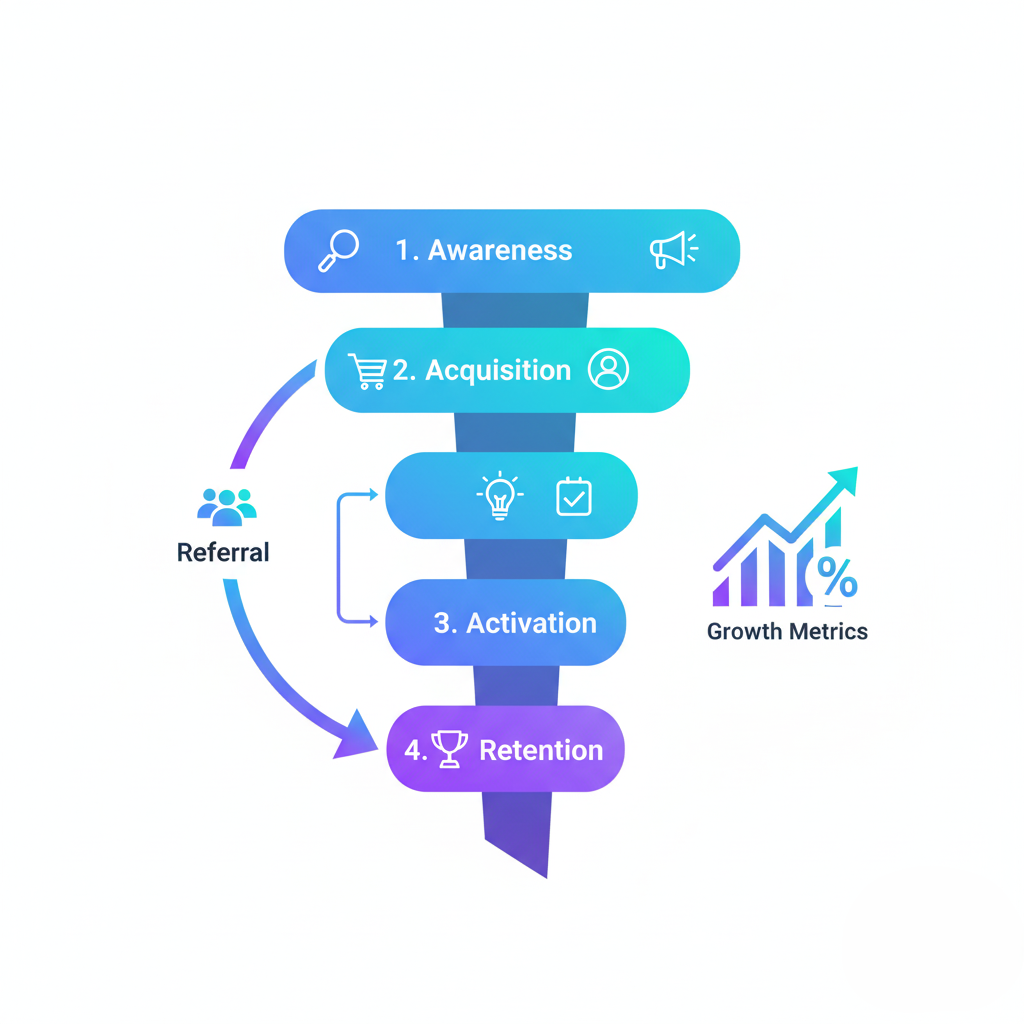
Building an effective viral marketing funnel requires optimizing several key stages. Think of it as a journey you guide your users through, with each step designed to lead them to the next.
1. Awareness: Getting the First Users
Before you can go viral, you need an initial group of users. This is where traditional marketing comes in. You need to seed your funnel with a high-quality audience that is most likely to find your product valuable and share it.
- Content Marketing: Create valuable blog posts, videos, or social media content that addresses your target audience’s pain points. This establishes your authority and attracts initial interest.
- Paid Advertising: Use targeted ads on platforms like LinkedIn, Facebook, or Google to reach a specific demographic. Focus on a clear value proposition to attract early adopters.
- Public Relations: Getting featured in industry publications or podcasts can provide a significant initial boost in traffic and credibility.
The goal at this stage isn’t mass marketing; it’s about attracting the right people who will become the first evangelists for your product.
2. Acquisition: The Hook
Once potential users land on your page, the acquisition stage is about converting them into actual users. Your landing page must be clear, compelling, and focused on a single call to action.
- Compelling Headline: Your headline should immediately communicate your core value proposition. What problem do you solve?
- Clear Call-to-Action (CTA): Use a prominent, action-oriented button like “Get Started for Free” or “Join the Waitlist.”
- Social Proof: Display testimonials, user counts, or logos of well-known clients to build trust.
- Frictionless Onboarding: Make the sign-up process as simple as possible. Ask only for essential information. Every extra field is a potential drop-off point.
3. Activation: The “Aha!” Moment
Activation is the critical point where a new user experiences the true value of your product. This is their “aha!” moment, where they understand how your product solves their problem. Without this, they will have no reason to stick around, let alone share it.
Your onboarding process should be designed to guide users to this moment as quickly as possible. For Dropbox, the “aha!” moment was saving a file on one device and seeing it appear on another. For a social media tool, it might be scheduling their first post. Identify your product’s core value and ensure every new user experiences it within their first session.
4. Referral: The Engine of Virality
This is where the magic happens. The referral stage involves creating built-in incentives and mechanisms that encourage users to share your product.
- Incentivize Both Parties: Offer a reward to both the referrer and the new user they bring in. This is called a dual-sided incentive. Dropbox famously offered extra storage space to both parties, which was a powerful motivator.
- Make Sharing Effortless: Integrate sharing options directly into the user experience. Add “Share with a friend” buttons, pre-written email templates, and one-click social media sharing options.
- Time the Ask: Don’t ask for a referral immediately after sign-up. Wait until the user has reached their “aha!” moment and is actively engaged. Prompt them to share after they’ve completed a key action or achieved a positive outcome.
5. Retention: Keeping the Fire Burning
Acquiring a user is only half the battle. A leaky funnel, where users sign up and then leave, will kill any viral momentum. Retention is about keeping users engaged and happy over the long term.
- Communicate Value: Use email newsletters, in-app notifications, and new feature announcements to remind users of the value your product provides.
- Build a Community: Create a space, like a forum or a Slack group, where users can connect, share tips, and feel a sense of belonging.
- Gather Feedback: Actively listen to your users and implement their suggestions. When users feel heard, they become more invested in your product’s success.
Building Your Viral Marketing Funnel: A Step-by-Step Guide
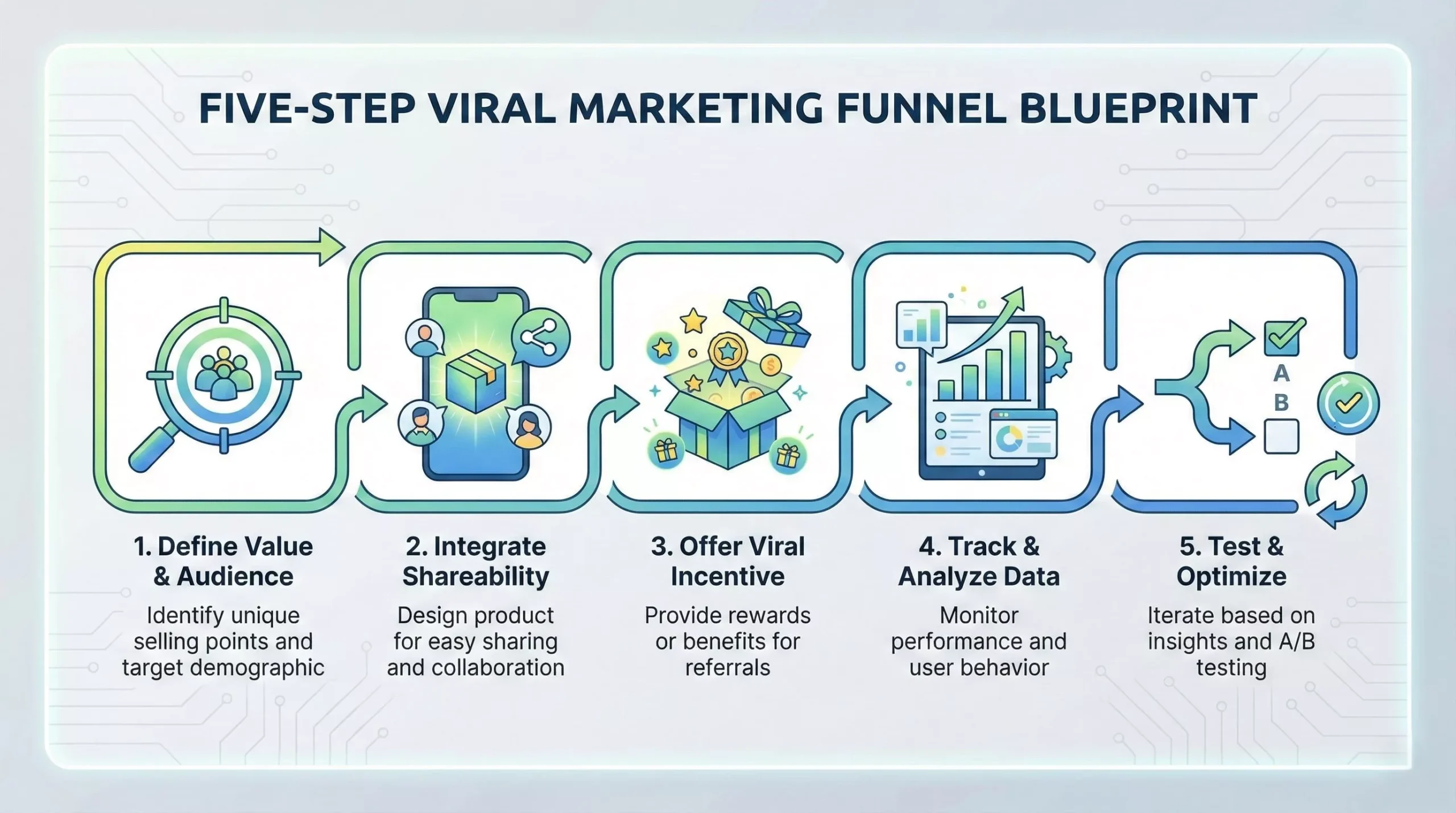
Now that we understand the theory, let’s get practical. Here’s how you can start building your own viral marketing funnel.
Step 1: Define Your Value Proposition and Target Audience
Who is your product for, and what unique value does it offer? Be incredibly specific. A vague understanding of your audience will lead to a weak content marketing strategy and an ineffective funnel. Create detailed user personas and map out their pain points, goals, and online behavior.
Once you clearly define your audience, you can build a viral content marketing strategy that speaks directly to their needs. This includes blog posts, videos, memes, or social media content that’s highly shareable and emotionally resonant—content that not only attracts but encourages users to spread the word organically.
Step 2: Design a Shareable Product
Virality is not something you can just bolt onto any product. The product itself must have shareable qualities.
- Is the value visible? Can others see the benefit of your product when a user shares it? Think of a cool design created in Canva or a survey built with Typeform.
- Does it facilitate collaboration? Tools like Miro or Figma are inherently viral because they are built for teams. Users need to invite colleagues to get the full value.
- Does it provide social currency? Does sharing your product make the user look smart, cool, or in-the-know? Early access to a new app or sharing a high score in a game are examples of this.
Step 3: Choose Your Viral Incentive
The right incentive can make or break your referral program. It should be valuable to your users and cost-effective for your business.
- Product-Based Incentives: Offer more of your product, like extra storage (Dropbox), premium features (Evernote), or credits (Airbnb). This is often the most effective because it attracts users who are genuinely interested in your product.
- Monetary Incentives: Cash rewards or gift cards can be powerful, but they can also attract low-quality users who are only interested in the reward.
- Altruistic Incentives: Some users are motivated by helping others. Frame the referral as a way to give their friends a valuable tool or discount.
Step 4: Implement Tracking and Analytics
You can’t optimize what you can’t measure. You need a robust analytics setup to track every stage of your funnel.
- Key Metrics: Track your conversion rates at each stage, from visitor to sign-up to referral. Most importantly, calculate your viral coefficient (K).
- Tools: Use tools like Google Analytics, Mixpanel, or Amplitude to monitor user behavior. Specialized referral marketing software like ReferralCandy or Viral Loops can help you manage and track your program.
Step 5: Test and Iterate
Your first attempt at a viral funnel will not be perfect. The key is to constantly test and optimize.
- A/B Test Everything: Test your landing page headlines, CTA buttons, referral messaging, and incentives.
- Gather User Feedback: Use surveys and interviews to understand why users are (or are not) sharing your product.
- Analyze Drop-Off Points: Identify where users are leaving your funnel and work to fix those leaks. Is the sign-up process too complicated? Is the “aha!” moment unclear?
Maximizing Social Proof and User-Generated Content (UGC)
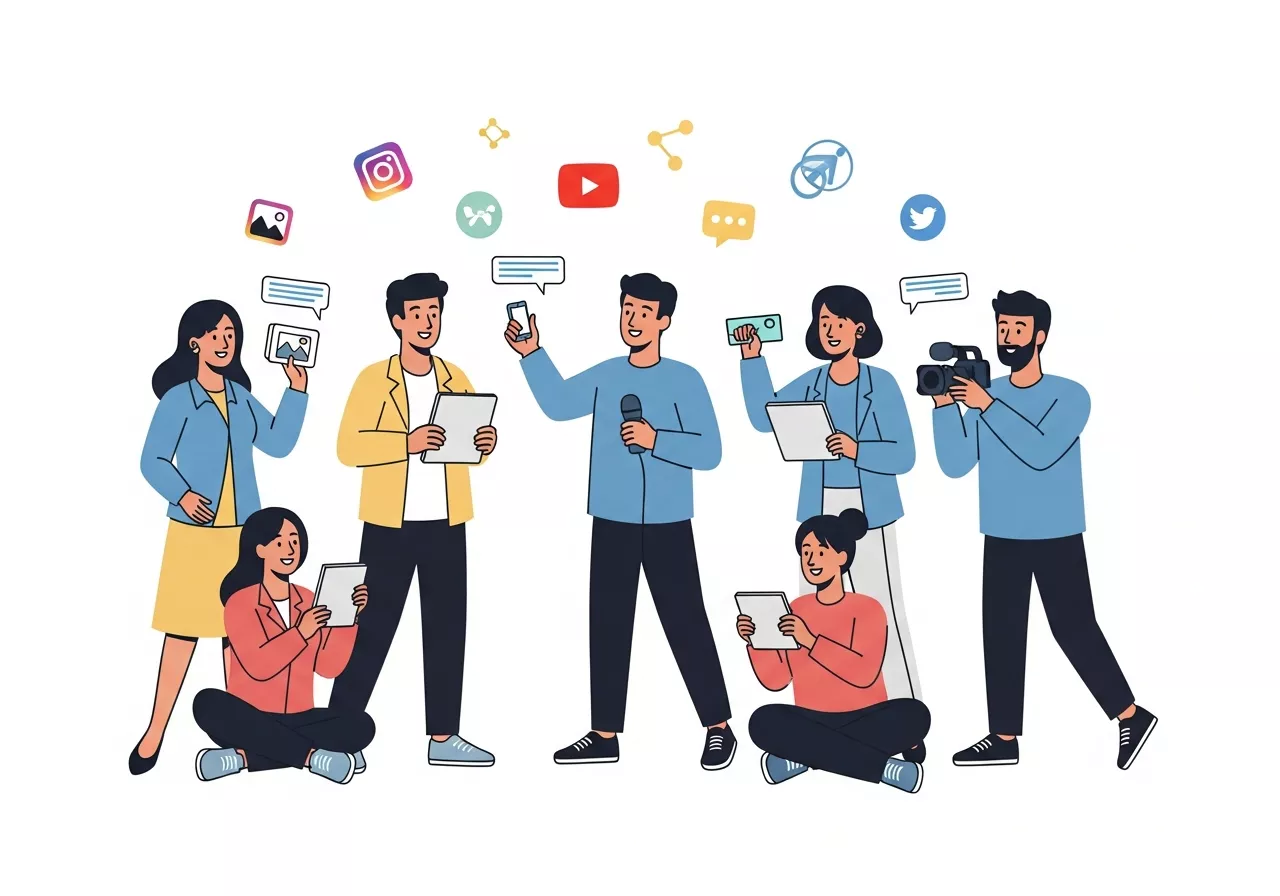
One of the most powerful tools in a viral marketing funnel is social proof—the concept that people are more likely to take action if they see others doing the same. In the context of viral marketing, leveraging user-generated content (UGC) can amplify this effect and drive further growth.
When users create content related to your product, whether it’s sharing success stories, unboxing videos, or testimonials, it not only boosts your credibility but also encourages others to jump on board. Social proof is particularly effective in the referral stage of the funnel, where users are motivated by seeing others like them benefit from your product.
How to Leverage Social Proof & UGC:
- Encourage Reviews and Testimonials: Ask your customers to leave reviews or testimonials. Display these prominently on your landing page, product pages, and social media channels.
- Highlight User Stories: Share success stories from users who have benefited from your product. This could be in the form of blog posts, social media shout-outs, or video case studies.
- Feature User Content: Create campaigns where users can share their own content, like photos or videos of themselves using your product. Share these on your official social media accounts.
- Collaborate with Influencers: Partner with micro-influencers who already have trust within your niche. Their endorsement acts as powerful social proof for their followers.
Table: Key Types of Social Proof and How to Use Them in Your Funnel
| Type of Social Proof | How to Use in Your Funnel |
|---|---|
| Testimonials | Display them on landing pages, emails, and marketing material. |
| User Reviews | Feature reviews on product pages and encourage sharing them via referral programs. |
| User-Generated Content (UGC) | Create campaigns that encourage users to share photos, videos, or stories. |
| Influencer Endorsements | Partner with influencers to promote your product on social media or in content. |
By consistently integrating these forms of social proof into your viral marketing funnel, you’ll build trust and motivate more people to share your product, propelling the viral loop even further.
Leveraging Data and Analytics to Optimize Your Funnel
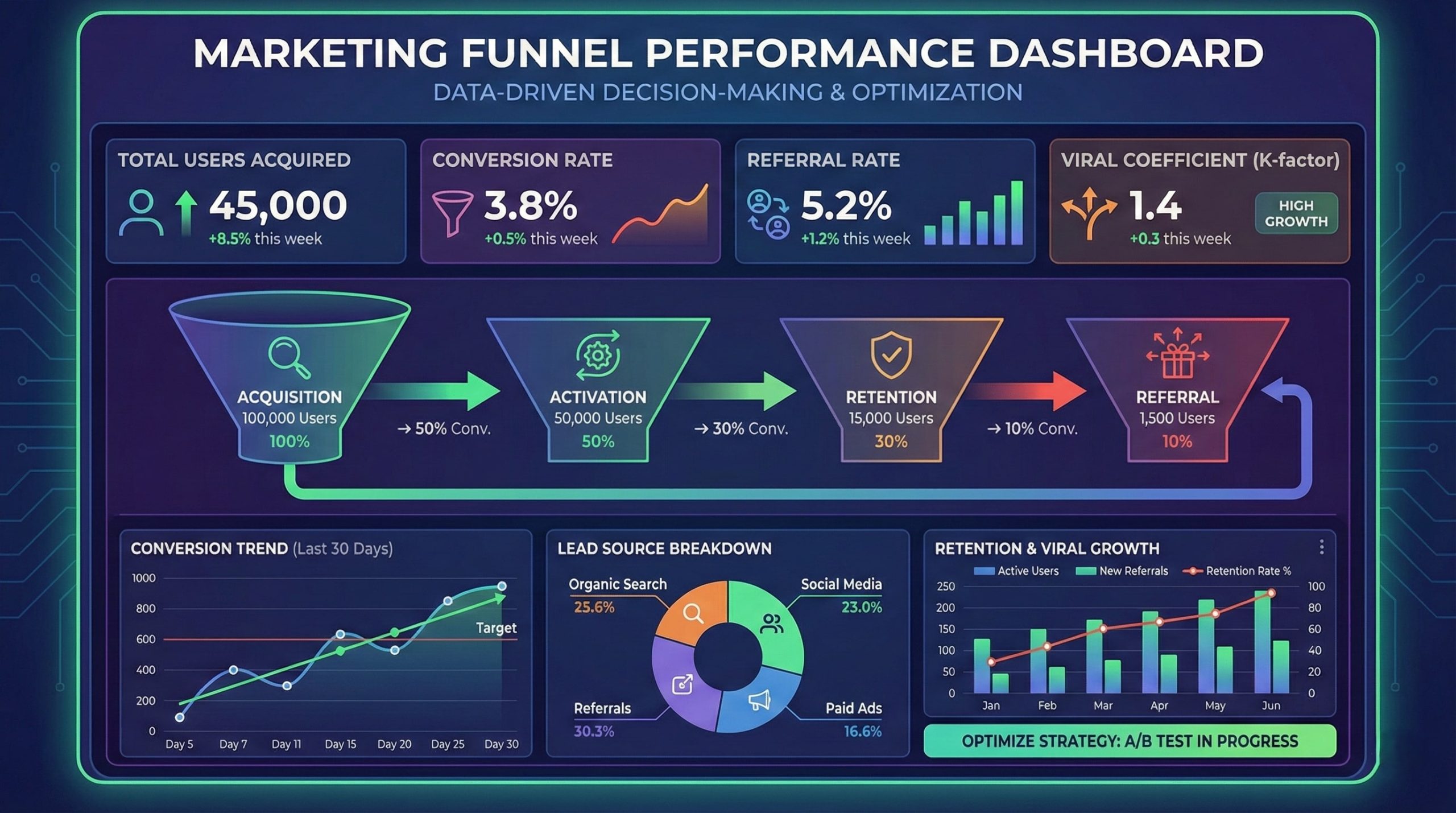
Tracking data at every stage of your viral marketing funnel is critical to understanding what’s working and where improvements are needed. Without data, it’s impossible to know whether your funnel is operating efficiently and what changes could enhance its effectiveness. This step ensures that you’re not just relying on gut feeling or assumptions but making informed decisions based on actual user behavior.
Effective use of analytics allows you to identify drop-off points, optimize your conversion rates, and measure the viral coefficient (K) to ensure that growth is sustainable. Whether you’re analyzing landing page performance, referral rates, or user engagement, the insights gained from data help you optimize your funnel continuously.
Key Metrics to Track:
- Conversion Rate: The percentage of visitors who sign up for your product after landing on your page.
- Viral Coefficient (K): The number of new users each current user brings to your product.
- Retention Rate: The percentage of users who remain active over a set period (e.g., 30, 60, or 90 days).
- Referral Rate: The percentage of users who invite others to join after using the product.
- Customer Lifetime Value (CLV): The total revenue a customer is expected to generate over the course of their relationship with your brand.
Tools for Tracking and Analytics:
- Google Analytics: To track user activity and behavior on your website.
- Mixpanel: To track specific actions users take within your product.
- Referral Marketing Software (e.g., ReferralCandy, Viral Loops): For managing and measuring referral programs.
- Heatmaps (e.g., Hotjar): To understand where users are clicking and how they interact with your site.
The process of testing, gathering data, and iterating is ongoing. It’s important to stay flexible and ready to make changes as you uncover insights about how users are interacting with your product and where the funnel can be tightened for better performance.
Final Thoughts: Virality is a Marathon, Not a Sprint
Building a viral marketing funnel is a complex but incredibly rewarding process. It transforms your customer acquisition funnel from a costly expense into a self-sustaining growth engine. It requires a product people love, a deep understanding of user psychology, and a relentless focus on data and optimization.
Don’t expect overnight success. True virality is built through careful planning, continuous testing, and a commitment to providing genuine value. Start by focusing on creating an exceptional product and a seamless user experience. Once you have a core group of happy users, you can then build the mechanisms to help them spread the word. With the right strategy, you can turn your customers into your most powerful marketing team.
Frequently Asked Questions (FAQ)
1. What is a viral marketing funnel?
A viral marketing funnel is a customer acquisition model that encourages existing users to share a product or service with others, creating a continuous cycle of growth. It typically includes key stages like awareness, acquisition, activation, referral, and retention, with the goal of leveraging users as a primary marketing channel.
2. How can I make my product more shareable?
To make your product shareable, you need to ensure it offers visible value, facilitates collaboration, and provides “social currency.” For example, design products that users are proud to share, like a cool tool or a highly personalized experience. Your product should naturally encourage users to invite others, either by offering collaborative features or social sharing options.
3. What is the viral coefficient (K), and why is it important?
The viral coefficient (K) measures the effectiveness of your viral marketing efforts. It represents the number of new users each existing user brings to your product. A K-factor greater than 1 indicates that your growth is self-sustaining. It’s an essential metric for understanding how quickly your product is growing through word of mouth.
4. How do I create an effective referral program?
To create a successful referral program, offer incentives for both the referrer and the referred user. Make the process as easy as possible by integrating sharing features directly into your product. Timing is crucial—wait until the user has experienced the core value of your product before asking for a referral. Offering product-based incentives like additional storage or premium features is often the most effective.
5. What role does content marketing play in a viral funnel?
Content marketing is vital in the awareness and acquisition stages of the viral funnel. By creating valuable, shareable content such as blog posts, videos, and social media posts, you can attract and engage potential users. Content that resonates emotionally or addresses pain points can motivate users to share, helping to spread the word about your product.
6. How do I track and measure the success of my viral marketing funnel?
To track the success of your viral marketing funnel, use analytics tools like Google Analytics, Mixpanel, or specialized referral marketing software. Focus on metrics like conversion rate, viral coefficient (K), referral rate, retention rate, and customer lifetime value (CLV). These will help you understand how well your funnel is performing and identify areas for optimization.
7. Why is retention so important in a viral marketing funnel?
Retention is crucial because acquiring users is only half the battle. If users don’t stick around, they won’t have the opportunity to refer others, and your viral loop will stall. Keeping users engaged through email newsletters, new features, and building a sense of community can help ensure long-term success.
8. How do I test and optimize my viral marketing funnel?
Testing and optimizing your viral funnel is an ongoing process. Start by A/B testing elements like landing page headlines, calls-to-action (CTAs), referral messaging, and incentives. Gather user feedback through surveys or interviews to understand why users are or aren’t sharing your product. Analyze drop-off points and make changes to your funnel to reduce friction and improve conversion rates.
9. Can any product go viral?
While any product has the potential to go viral, it requires careful planning, an understanding of user psychology, and a shareable, valuable product. Not every product is inherently viral by design, but by incorporating viral marketing strategies like incentives, social proof, and easy sharing, you can increase the chances of your product achieving viral growth.
10. How long does it take to see results from a viral marketing funnel?
Building a viral marketing funnel is a long-term strategy, and results typically won’t happen overnight. Expect to invest several months in designing your funnel, attracting your first users, and optimizing each stage. True virality builds over time through continuous testing, iteration, and providing value to your users.
Learn more: Viral vs. Sustainable Marketing: Where Should You Invest?






Leave a Reply