

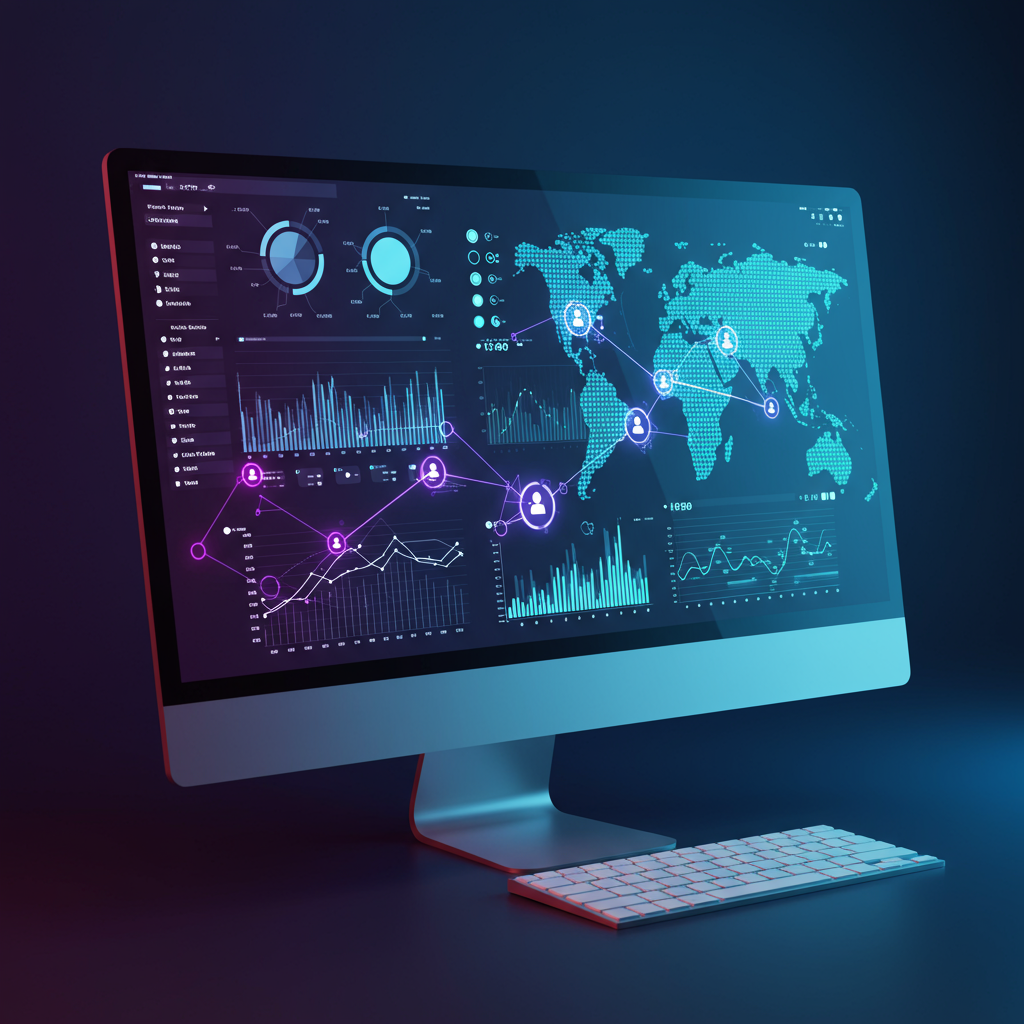
In today’s competitive landscape, brands must stay ahead by embracing cutting-edge technologies. Artificial intelligence (AI) is no longer a futuristic concept—it’s a core driver of effective trend marketing. By analyzing vast datasets, predicting consumer behavior, and automating campaign adjustments in real time, AI empowers marketers to identify and leverage trends faster and more accurately than ever before. In this post, we’ll explore how AI is reshaping trend marketing, outline key technologies and best practices, share real-world case studies, and discuss challenges and future outlook. Whether you’re a seasoned marketer or a curious entrepreneur, you’ll gain actionable insights to elevate your strategy.
What Is AI-Driven Trend Marketing?
AI-driven trend marketing uses machine learning algorithms, natural language processing (NLP), and predictive analytics to detect emerging consumer interests and market movements. Instead of relying on manual research and gut feelings, marketers leverage AI tools to:
- Collect and process social media chatter, search data, and ecommerce signals
- Identify patterns and sentiment shifts in real time
- Forecast which topics or products will gain momentum
- Automatically recommend creative adjustments and channel optimizations
This data-driven approach reduces guesswork, accelerates decision-making, and maximizes ROI by ensuring campaigns ride the wave of genuine consumer interest.
Key Benefits of AI in Trend Marketing
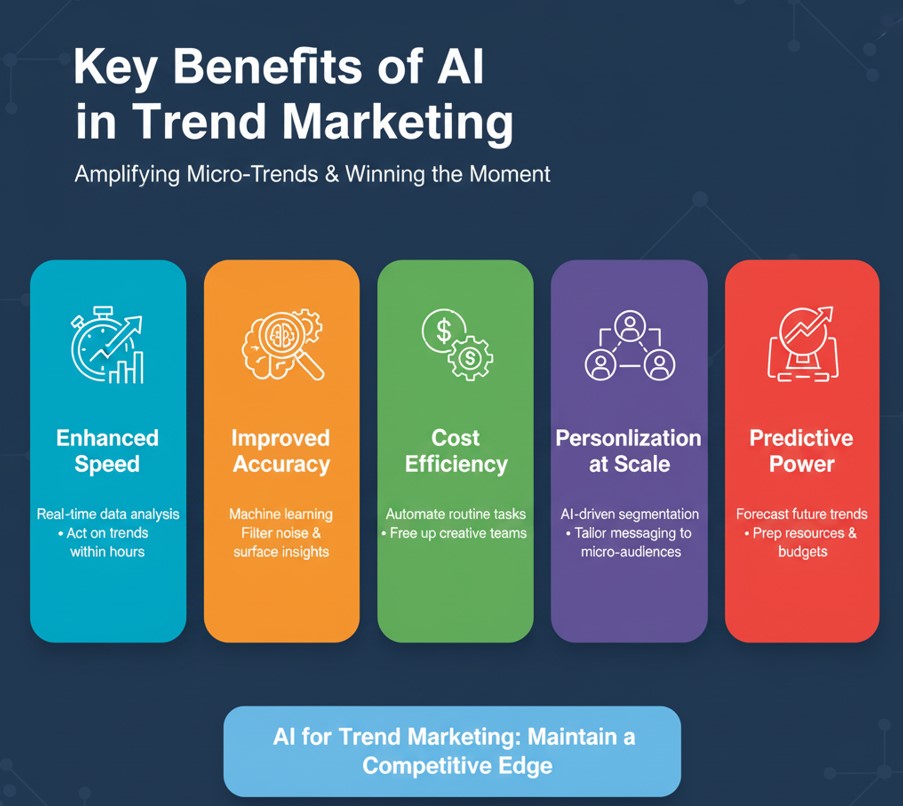
Incorporating AI into your trend marketing strategy unlocks several advantages:
- Enhanced Speed: Real-time data analysis means you can act on trends within hours, not weeks.
- Improved Accuracy: Machine learning models filter noise and surface the most relevant insights.
- Cost Efficiency: Automating routine tasks like sentiment analysis and reporting frees up teams for creative work.
- Personalization at Scale: AI-driven segmentation tailors messaging to micro-audiences without manual effort.
- Predictive Power: Forecast future trend trajectories to prep resources and budgets proactively.
These benefits help brands maintain a consistent competitive edge in dynamic markets and respond swiftly to social media viral trends.
Essential AI Technologies for Trend Marketing
Several AI-driven tools and technologies are pivotal for modern trend marketing:
- Natural Language Processing (NLP): Analyzes text from social media, forums, and reviews to gauge sentiment and topic relevance.
- Machine Learning Models: Classify and cluster content to detect emerging themes without human labeling.
- Predictive Analytics: Uses historical data to forecast trend lifecycles and peak times.
- Computer Vision: Scans images and videos on platforms like Instagram and TikTok to identify visual trends, colors, and styles.
- Chatbots & Virtual Assistants: Engage customers with trend-driven recommendations, collecting feedback for further refinement.
Combining these technologies allows for a multi-dimensional view of trends across text, visuals, and behavior.
The Role of AI in Enhancing Marketing Strategy
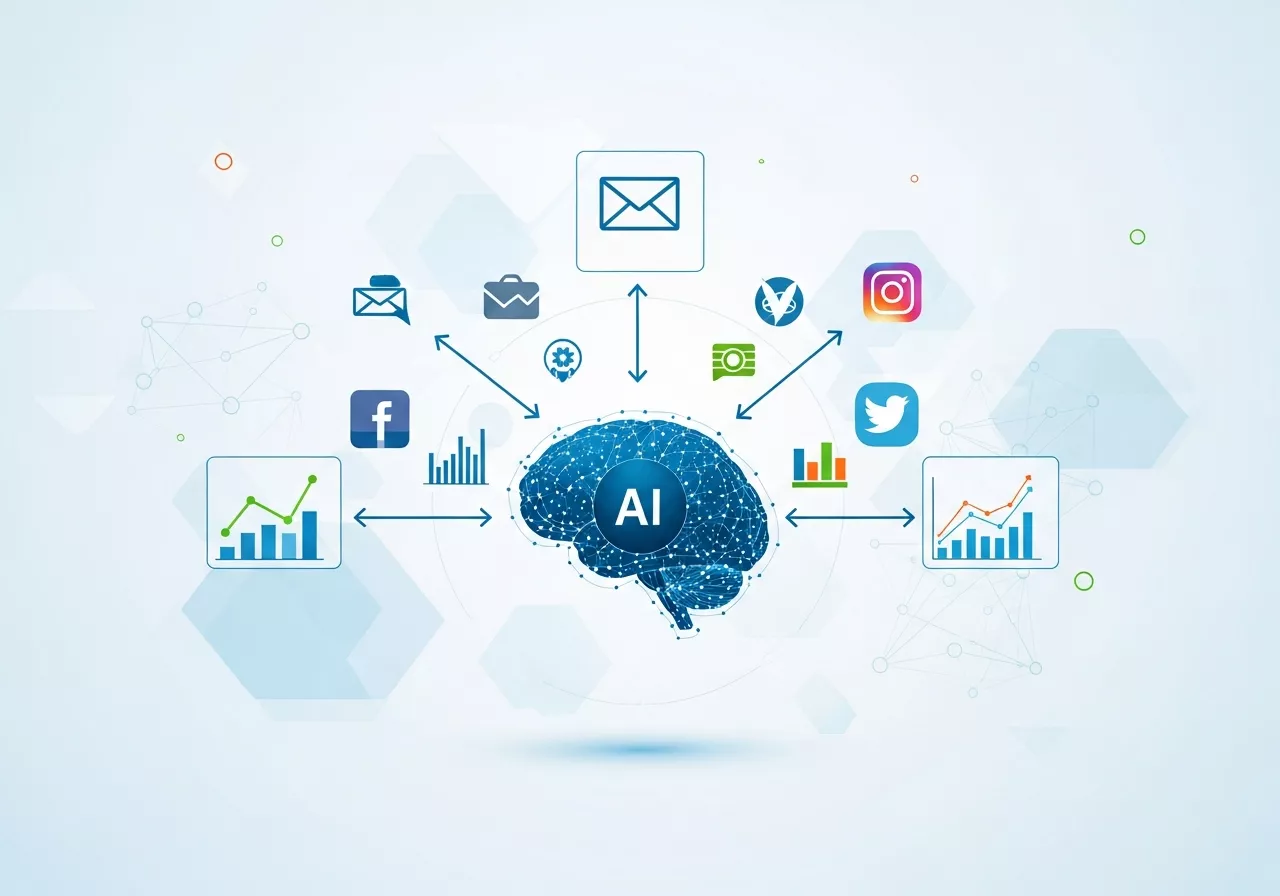
AI is transforming marketing strategies in profound ways. By enabling deeper insights into consumer behavior and optimizing decision-making processes, AI allows brands to stay ahead of the curve in fast-evolving markets. Here’s how AI impacts strategic decisions in marketing:
1. Data-Driven Decision Making
AI tools are capable of analyzing massive amounts of structured and unstructured data from multiple sources, enabling marketers to make more informed decisions. These data-driven insights allow brands to:
- Identify consumer preferences and behaviors with greater precision.
- Predict market shifts and consumer demands in real time.
- Optimize marketing spend by focusing on high-performing channels and strategies.
2. Optimizing Channel Mix
AI algorithms can recommend the optimal marketing channels for various customer segments based on past interactions and behaviors. By analyzing performance metrics, AI suggests the right balance of channels—whether it’s social media, email marketing, SEO, or paid ads. Viral Content Marketing can thrive here as AI helps brands determine which content is most likely to go viral across these channels.
3. Competitive Analysis and Benchmarking
AI can also track competitor activities and market trends. With predictive analytics, brands can adjust their strategies to remain competitive. For example, AI tools can identify when competitors are making a significant marketing move, allowing you to capitalize on those insights.
Key AI Marketing Strategies for Success
| AI Strategy | Benefit | Example |
|---|---|---|
| Predictive Analytics | Predict consumer behavior and future trends | Launching products at the peak of interest |
| Natural Language Processing (NLP) | Understanding consumer sentiment and feedback | Customizing marketing messages based on reviews |
| Machine Learning | Automating content creation and personalization | Personalized email marketing campaigns |
AI for Marketing Operations: Streamlining Campaigns
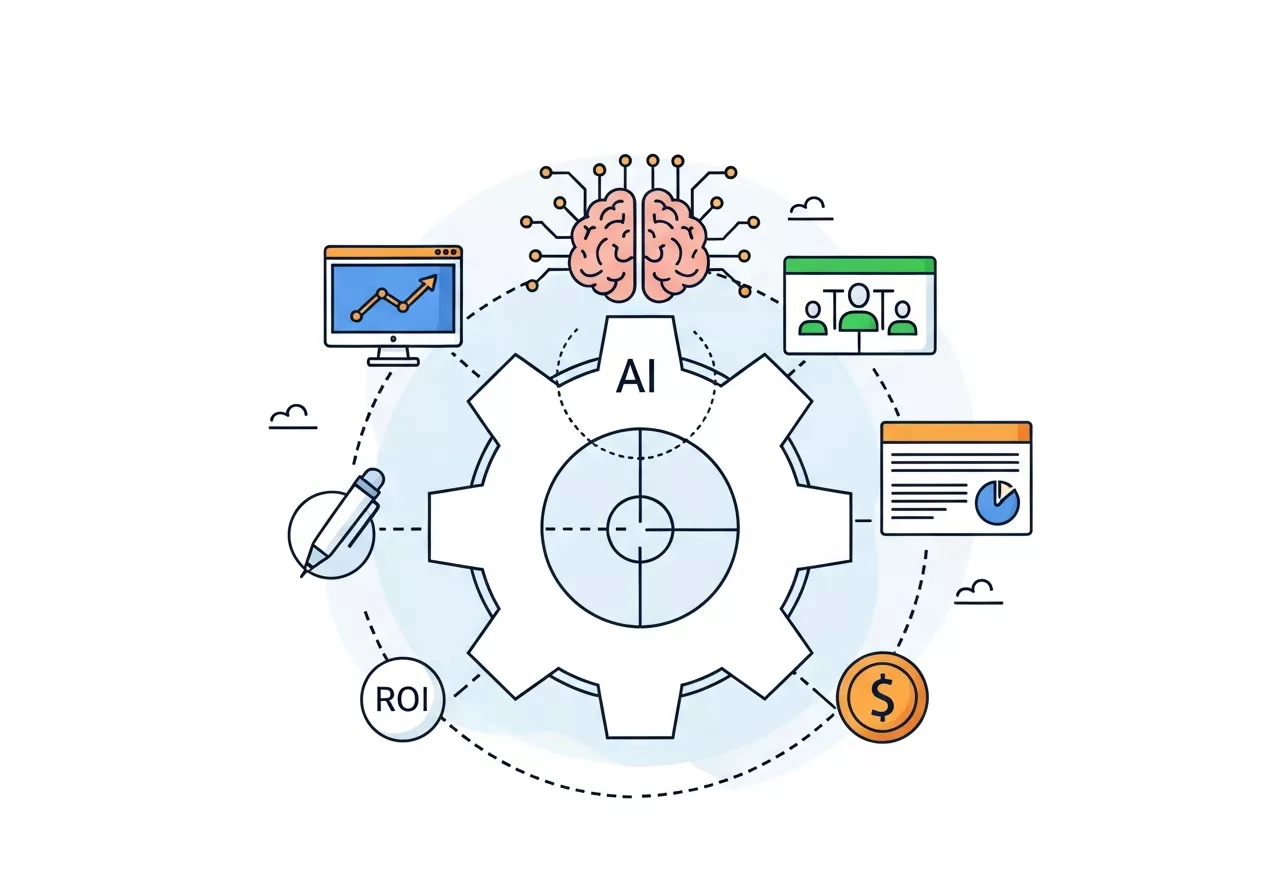
AI doesn’t just change the way marketers think strategically; it also optimizes day-to-day operations. From content creation to campaign management, AI is helping streamline marketing tasks to improve efficiency and reduce human error.
1. Automating Content Creation
AI-powered tools are now capable of generating high-quality content based on predefined parameters. For example, AI can write blog posts, generate product descriptions, or even compose social media posts based on trending keywords and consumer sentiment. This automation helps marketers focus on higher-level creative tasks and decision-making.
2. Real-Time Campaign Optimization
AI helps monitor campaigns in real time, making instant adjustments based on performance. This can involve tweaking budgets, changing creative content, or adjusting audience targeting based on data insights. With AI, brands can significantly reduce campaign wastage and ensure maximum ROI.
3. Enhancing Customer Segmentation
AI-driven segmentation enables brands to categorize customers into specific groups based on behavior, preferences, and purchasing history. These segments can then be targeted with hyper-relevant messaging, products, and offers. AI tools can analyze historical data to create these segments automatically, removing the guesswork from traditional marketing strategies.
Key Operations Optimized by AI
| Operation | How AI Helps | Impact |
|---|---|---|
| Content Creation | AI tools generate content from keyword trends and sentiment analysis | Faster content production with high relevance |
| Audience Targeting | AI segments customers based on behavior and interactions | Increased engagement and conversion rates |
| Campaign Optimization | AI analyzes campaign performance and adjusts in real time | Improved ROI and reduced marketing spend |
Data Collection and Analysis
High-quality data is the backbone of AI-powered trend marketing. Best practices include:
- Integrating first-party and third-party data streams
- Ensuring data privacy and compliance (GDPR, CCPA)
- Cleaning and normalizing datasets for consistency
- Annotating training sets for supervised learning models
Once prepared, this data fuels AI algorithms that detect subtle shifts in consumer sentiment and behavior, giving you an early warning on rising or fading trends.
Personalization and Segmentation at Scale
AI-driven segmentation moves beyond demographics to behavior, psychographics, and purchase intent. By identifying micro-audiences, you can:
- Deliver tailored content and offers that resonate deeply
- Optimize ad spend by avoiding ad fatigue
- Increase conversion rates with hyper-relevant messaging
Automation platforms then push dynamic creative variations across channels, ensuring each segment sees the most compelling asset at just the right time.
Predictive Trend Forecasting
Forecasting models analyze historical trend curves and external variables (seasonality, events, economic indicators) to predict:
- When a trend will peak and wane
- Optimal budget allocation over time
- Potential geographical hotspots
These insights allow marketers to front-load or scale back campaigns proactively, avoiding wasted spend and capturing maximum engagement windows.
Real-Time Trend Monitoring and Adjustment
In fast-moving markets, waiting for weekly reports is too slow. AI-powered dashboards deliver live alerts for:
- Sudden sentiment swings
- Viral posts and hashtags
- Competitor activity spikes
Marketers can then pivot creative, messaging, or channel focus on the fly, ensuring campaigns remain aligned with the latest consumer conversations.
AI Trends in Digital Marketing: What’s Next?
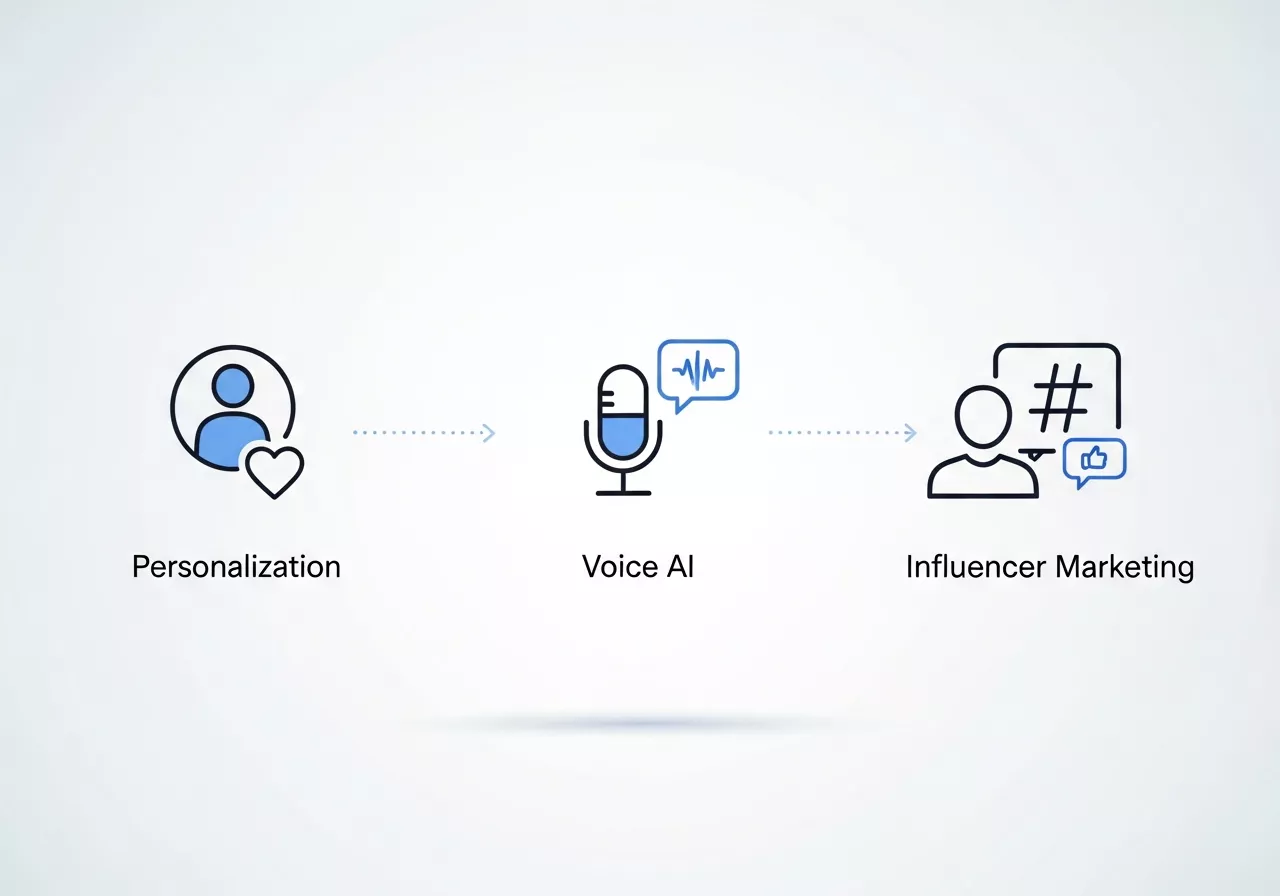
AI is still evolving, and as we look to the future, several key trends are emerging in digital marketing that are poised to reshape the landscape even further.
1. AI-Powered Personalization at Scale
Personalization has been a key focus of digital marketing for years, but AI is taking it to the next level. By analyzing massive datasets, AI can deliver personalized experiences not just for individual customers, but for micro-segments in real-time. This can range from personalized content recommendations to tailored product offers that feel intuitively relevant.
- Personalized email campaigns based on customer behavior
- Dynamic website content changes based on real-time interactions
- AI-driven product recommendations that adapt to preferences as they evolve
2. Voice and Conversational AI
As voice search becomes more prevalent, brands are investing in AI-powered conversational marketing tools. This includes chatbots, virtual assistants, and voice search optimization. AI enables these tools to understand natural language, engage in meaningful conversations, and even predict customer needs based on prior interactions.
- Voice search optimization for better SEO
- Chatbots offering 24/7 customer support and engagement
- Virtual assistants providing personalized advice and suggestions
3. AI in Influencer Marketing
AI is increasingly being used to identify influencers who resonate with target audiences and can drive engagement for brands. By analyzing social media conversations, AI can assess which influencers have the most relevant reach, ensuring that brands partner with the right voices for their marketing campaigns.
Emerging AI Trends in Digital Marketing
| Trend | How It Works | Impact |
|---|---|---|
| AI-Powered Personalization | AI analyzes consumer behavior to create tailored experiences | Higher engagement, increased sales |
| Voice Search Optimization | AI optimizes content for voice search queries | Improved SEO and discoverability |
| Influencer Marketing | AI identifies key influencers based on audience engagement metrics | More relevant partnerships, increased ROI |
Case Studies: AI in Action
1. Global Apparel Brand: Leveraged computer vision to identify emerging streetwear colors, launching a limited-edition line that sold out in 48 hours.
2. Food Delivery Service: Used NLP to detect rising interest in plant-based diets, creating targeted social ads that boosted orders by 35%.
3. Financial Services Firm: Implemented predictive models to anticipate fintech trend surges, allowing them to launch a timely digital investment tool with 20% higher signup rates.
Challenges and How to Overcome Them
While AI offers immense promise, marketers may face obstacles:
- Data Quality Issues: Invest in data governance and cleansing protocols.
- Skill Gaps: Provide training or partner with AI specialists.
- Integration Complexity: Use scalable APIs and modular platforms for smoother integration.
Proactive planning and cross-functional collaboration can mitigate these risks and unlock AI’s full potential.
The Future of AI-Driven Trend Marketing
Looking ahead, we can expect:
- Deeper fusion of AR/VR with AI for immersive trend experiences
- Voice and audio trend detection via advanced NLP
- Greater emphasis on ethical AI and transparent algorithms
- Collaborative AI systems that co-create content with human marketers
Brands that experiment early will shape best practices and secure a lasting competitive advantage.
Conclusion
AI-driven trend marketing is no longer optional—it’s essential for brands aiming to stay relevant and agile. By harnessing advanced analytics, machine learning, and real-time automation, marketers can detect emerging trends, personalize at scale, and forecast campaign performance with unprecedented accuracy. Embrace the AI transformation now to lead your industry, delight your customers, and drive sustained growth.
Ready to revolutionize your marketing strategy? Start integrating AI tools today and unlock the future of trend-driven success.
FAQ: AI-Driven Trend Marketing
1. What is AI-driven trend marketing?
AI-driven trend marketing uses artificial intelligence to analyze data, predict consumer behavior, and identify emerging trends, enabling marketers to create more targeted and effective campaigns.
2. How does AI help predict trends?
AI analyzes data from sources like social media and search behavior to forecast upcoming trends. It identifies patterns and predicts which topics or products will gain popularity.
3. What AI tools are commonly used in trend marketing?
Key tools include:
- NLP: Analyzes text to gauge sentiment.
- Machine Learning: Detects patterns and emerging themes.
- Predictive Analytics: Forecasts future trends.
- Computer Vision: Identifies visual trends in images/videos.
- Chatbots: Provide personalized recommendations.
4. Is AI only for large companies?
No, AI tools are available at various price points, making them accessible for businesses of all sizes, including small and medium-sized enterprises (SMEs).
5. How does AI improve personalization in marketing?
AI analyzes customer data to create personalized content, product recommendations, and tailored messaging, delivering a more relevant experience to each consumer.
6. How does AI optimize marketing operations?
AI automates tasks like content creation, campaign management, and customer segmentation, saving time and improving efficiency while reducing human error.
7. What are the challenges of implementing AI in marketing?
Challenges include poor data quality, skill gaps, integration issues with existing systems, and ethical concerns like data privacy.
8. How do I get started with AI in marketing?
Start by auditing your data, choosing the right AI tools, running small tests, training your team, and optimizing campaigns based on AI insights.
9. Can AI predict the success of a marketing campaign?
AI can predict outcomes like engagement and ROI by analyzing past campaign data, though human creativity and strategy are still crucial for execution.
10. How is AI-driven trend marketing different from traditional marketing?
AI uses real-time data and predictive models for faster, more accurate trend identification, while traditional marketing relies on slower, manual research.
11. Will AI replace human marketers?
No, AI enhances marketers’ abilities by automating tasks and providing data-driven insights. Human creativity and strategy remain essential for effective marketing.
Learn more about: How Brands Go Viral: The Psychology Behind Internet Fame





Leave a Reply