


Viral content thrives on emotion, authenticity, and timing. From behind-the-scenes glimpses to memes, challenges, and collaborations, strategic formats, tools, and audience insights maximize reach, while careful execution turns fleeting viral hits into long-term engagement and brand growth.
Viral content seems to happen by accident—one moment you’re scrolling through your feed, the next you’re watching a cat play piano for the fifth time. But creating content that spreads like wildfire isn’t just luck. Behind every viral hit lies strategic planning, perfect timing, and an understanding of what makes people click, share, and comment.
The content creators who consistently produce viral hits know something most don’t: there are specific types of content that naturally encourage sharing. These formats tap into fundamental human emotions and behaviors, making them irresistible to audiences across platforms.
Whether you’re a seasoned content creator looking to amplify your reach or a blogger trying to break through the noise, understanding these viral content types will transform how you approach your content strategy. Let’s explore the nine types of content that dominate feeds and drive engagement.
What Makes Content Go Viral?
Before diving into specific content types, it’s essential to understand the psychology behind viral marketing. Content spreads when it triggers strong emotional responses—surprise, joy, anger, or inspiration. The most shareable content makes people feel something so intensely that they can’t help but share it with others.
Viral content also provides value, whether that’s entertainment, information, or social currency. When someone shares your content, they’re essentially endorsing it to their network. They want to look good, appear informed, or make their friends laugh.
Timing plays a crucial role too. Content that aligns with current events, trending topics, or cultural moments has a higher chance of catching fire. The best viral content creators stay plugged into what’s happening and can quickly adapt their messaging to ride these waves.
Trending Content Formats That Drive Engagement
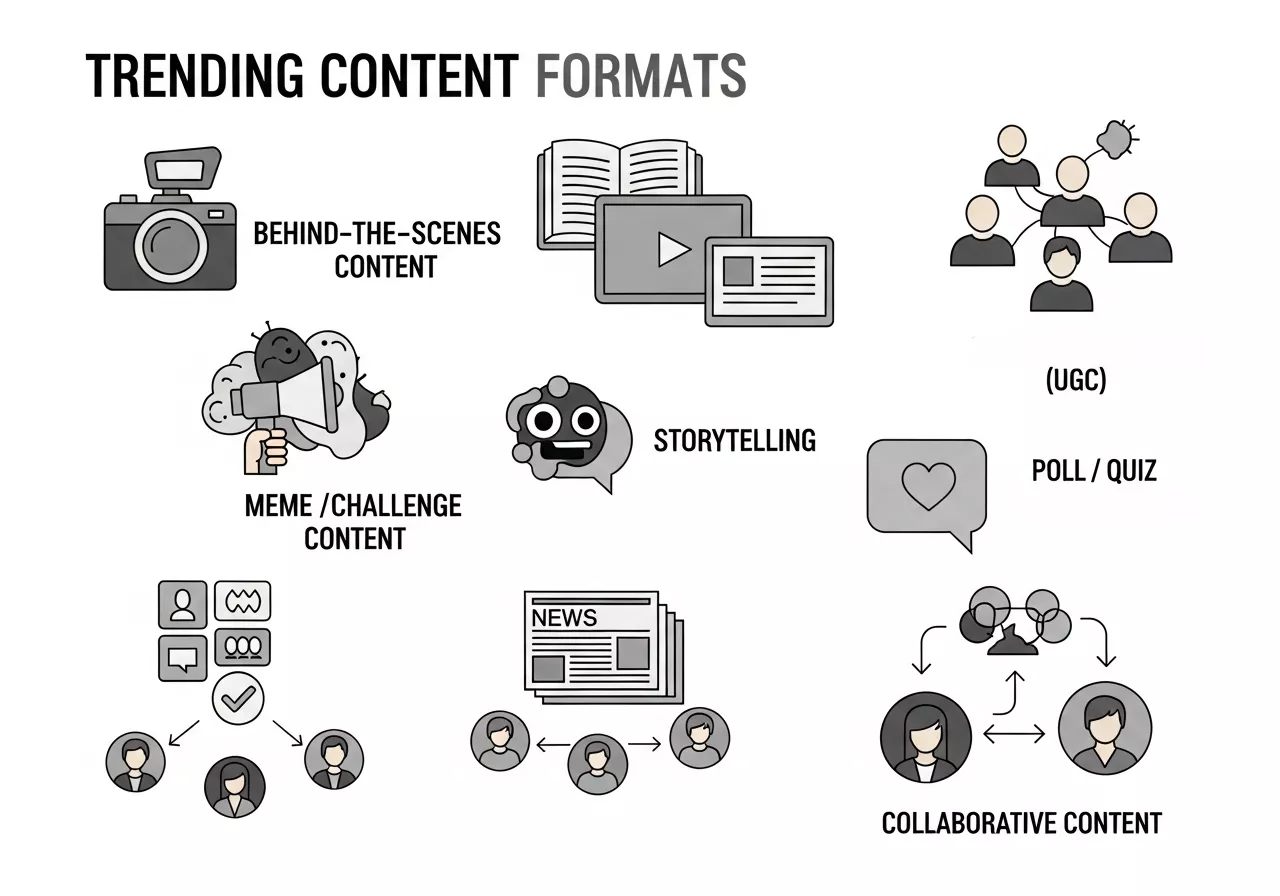
1. Behind-the-Scenes Content
Audiences crave authenticity, and behind-the-scenes content delivers exactly that. This format pulls back the curtain on your creative process, showing the messy, unfiltered reality behind polished final products.
Behind-the-scenes content works because it satisfies human curiosity while building trust with your audience. When people see the effort, failures, and real moments that go into your work, they develop a deeper connection with you as a creator.
This content type performs exceptionally well on Instagram Stories, TikTok, and YouTube Shorts. Show your workspace, document your creative struggles, or share the unexpected moments that happen during content creation. The key is to be genuinely authentic—audiences can spot manufactured “authenticity” from miles away.
2. Educational How-To Content
Educational content that solves specific problems has massive viral potential. When you teach something valuable in an engaging way, people naturally want to save and share it with others who might benefit.
The most viral educational content breaks down complex topics into digestible, actionable steps. Think recipe videos, DIY tutorials, or quick tips that solve common frustrations. This type of content succeeds because it provides immediate value and positions you as an expert in your field.
To maximize the viral potential of educational content, focus on trending topics within your niche. Use clear, benefit-driven headlines that promise specific outcomes. “How to double your Instagram engagement in 30 days” performs better than “Instagram tips for beginners.”
3. User-Generated Content and Testimonials
User-generated content (UGC) is marketing gold because it combines social proof with authentic storytelling. When real people share their experiences with your brand or participate in challenges you create, it builds credibility while expanding your reach.
This content type works particularly well for brands, but individual creators can leverage it too. Create hashtags, run contests, or simply encourage your audience to share their own versions of your content. When people participate, they’re essentially becoming brand ambassadors, sharing your message with their networks.
The viral nature of UGC comes from its authenticity and the community aspect it creates. People love seeing themselves represented in brand content, and they’re more likely to share content featuring real people rather than polished advertisements.
4. Trending Challenges and Memes
Challenges and memes represent the purest form of viral content. They spread rapidly because they’re easy to participate in, highly shareable, and tap into the human desire to be part of something bigger.
Successful challenges have simple rules, are easy to execute, and often include a creative twist that makes each version unique. The Ice Bucket Challenge, for example, combined charity with entertainment and social pressure, creating the perfect viral storm.
Memes work similarly but rely more on cultural references and humor. The key to meme success is timing—jumping on trends early while they’re still fresh but have enough momentum to carry your content.
5. Controversial or Polarizing Content
Controversial content walks a fine line, but when handled thoughtfully, it can generate massive engagement. This doesn’t mean being offensive or inflammatory for shock value—it means taking a stance on topics your audience cares about.
The viral potential comes from the strong emotional responses these topics generate. People feel compelled to comment, share, and discuss, which signals to algorithms that your content is engaging and worth showing to more people.
Success with controversial content requires knowing your audience well and understanding the difference between constructive controversy and harmful divisiveness. Focus on industry debates, varying perspectives on common practices, or challenging widely accepted beliefs within your niche.
6. Emotional Storytelling Content

Stories that evoke strong emotions—whether joy, sadness, inspiration, or nostalgia—have incredible viral potential. Humans are wired for storytelling, and content that tells a compelling story naturally gets shared.
The most viral emotional content often follows classic storytelling structures: a relatable protagonist faces a challenge, overcomes obstacles, and achieves transformation. This could be a personal journey, a customer success story, or even a fictional narrative that resonates with your audience.
Visual storytelling particularly excels on platforms like Instagram and TikTok, where you can combine compelling narratives with engaging visuals. The key is authenticity—real stories with genuine emotion outperform manufactured content every time.
7. Interactive and Gamified Content
Interactive content transforms passive viewers into active participants, significantly increasing engagement and shareability. This includes polls, quizzes, games, and content that requires audience input to complete.
The viral nature of interactive content stems from its ability to create personalized experiences. When people get results that feel specific to them, they’re more likely to share those results with others. Personality quizzes, “Which character are you?” posts, and prediction games all leverage this psychological trigger.
This content type works across all platforms but particularly excels on social media, where sharing and interaction are built into the user experience. The key is creating interactions that are both fun and revealing enough that people want to share their results.
8. Newsjacking and Trending Topics
Newsjacking involves inserting your brand or perspective into current news cycles and trending topics. When done skillfully, it can generate massive visibility by riding the wave of existing conversations.
The viral potential comes from the increased search volume and social media activity around trending topics. By adding valuable commentary or a unique perspective to these conversations, you can capture attention from audiences already engaged with the topic.
Successful newsjacking requires speed, relevance, and sensitivity. You need to move quickly while the topic is hot, ensure your content adds value to the conversation, and be mindful of the tone and context of the trending topic.
9. Collaborative Content
Collaborative content leverages the combined audiences of multiple creators, exponentially increasing potential reach. This includes duets, partnerships, guest appearances, and any content that features multiple personalities or brands.
The viral mechanics work through network effects—when multiple creators share collaborative content, it reaches the intersection of their audiences plus attracts new viewers interested in the collaboration itself. Cross-pollination between different audiences often leads to rapid growth for all participants.
Successful collaborative content requires finding partners whose audiences align with yours while offering complementary rather than competing value. The most viral collaborations feel natural and provide clear benefits to viewers from all participating creators’ communities.
Tools and Platforms to Amplify Viral Content

Creating viral content isn’t enough—distribution and amplification play a crucial role. The right tools and platforms help your content reach a broader audience faster, track engagement, and optimize performance.
Key Tools and Their Uses:
- Social Media Management: Schedule posts, track trends, and monitor engagement across platforms.
- Analytics Tools: Measure shares, engagement rates, and virality metrics to identify what resonates.
- Content Creation Platforms: Edit videos, graphics, and interactive media quickly to match trending formats.
- Collaboration Tools: Coordinate campaigns efficiently across teams or with multiple creators.
| Tool Type | Example Tools | Purpose | Key Benefit |
|---|---|---|---|
| Social Media Management | Buffer, Hootsuite | Schedule, monitor, and manage posts | Saves time, increases consistency |
| Analytics | Google Analytics, Sprout Social | Track engagement and shares | Data-driven insights for optimization |
| Content Creation | Canva, Adobe Premiere | Produce high-quality visuals and videos | Faster production, trend-ready content |
| Collaboration | Trello, Slack | Team coordination and workflow management | Reduces bottlenecks, accelerates campaigns |
Pro Tip: Combining trend monitoring with content creation tools lets you react in real time, increasing your viral potential.
Strategies for Creating Viral Marketing Campaigns

Creating viral content isn’t just about choosing the right format—it’s about executing a comprehensive strategy that maximizes your content’s potential for spread. Start by deeply understanding your audience’s pain points, desires, and shared motivations.
Timing your content release strategically can make the difference between viral success and obscurity. Study when your audience is most active, consider current events and cultural moments, and plan your content calendar around peak engagement periods.
Cross-platform distribution amplifies viral potential. Adapt your core content for different platforms, tailoring the format and messaging for each audience while maintaining your central message. What works on TikTok might need adjustment for LinkedIn, but the underlying value should remain consistent.
Engagement acceleration in the first few hours after posting is crucial. Prepare your immediate network to engage with your content quickly after publication. Early engagement signals to algorithms that your content is worth showing to broader audiences.
Common Mistakes to Avoid in Viral Marketing
Even with the right formats, many creators fail to achieve viral success due to avoidable mistakes. Being aware of pitfalls can save time, effort, and brand reputation.
Key Mistakes:
- Ignoring Audience Insights: Posting content without understanding your audience reduces shareability.
- Overloading on Trends: Jumping on every trending topic can dilute your brand identity.
- Neglecting Platform Nuances: Content designed for one platform may underperform on another.
- Failing to Engage: Viral content often sparks conversation; ignoring comments or messages can hinder reach.
| Mistake | Consequence | How to Avoid |
|---|---|---|
| Ignoring Audience Insights | Low engagement, missed shares | Conduct surveys, analyze engagement metrics |
| Overloading on Trends | Brand dilution | Select trends aligning with core values |
| Neglecting Platform Nuances | Underperformance on certain platforms | Customize content per platform |
| Failing to Engage | Reduced algorithmic boost and reach | Respond promptly to comments and shares |
Key Insight: Viral content success requires strategic thinking, not just creativity. Balance trend participation with audience understanding.
Turning Viral Hits into Long-Term Growth
Viral content can provide a short-term boost, but the real value lies in converting that attention into lasting engagement and brand growth.

How to Leverage Viral Content:
- Repurpose Content: Turn viral videos or posts into blog articles, email campaigns, or ads.
- Engage New Audiences: Welcome new followers with onboarding content that strengthens brand loyalty.
- Analyze Patterns: Identify why content went viral to inform future campaigns.
- Integrate into Strategy: Combine viral content learnings with long-term content planning for sustainable growth.
| Action Step | Implementation Example | Benefit |
|---|---|---|
| Repurpose Viral Content | Turn TikTok trends into Instagram Reels or blog posts | Extends lifespan and reach |
| Engage New Audience | Create a welcome series or exclusive content | Builds loyalty and retains followers |
| Analyze Virality Patterns | Track shares, engagement, and sentiment | Guides future content creation |
| Integrate into Strategy | Include viral insights in the content calendar | Creates sustainable growth, not one-offs |
Pro Tip: Treat viral content as a learning tool. Insights from what worked—or didn’t—help refine your content strategy for future success.
Measuring and Optimizing Viral Content Performance
Track the right metrics to understand what’s working. While vanity metrics like total views matter for viral content, pay attention to engagement rates, share-to-view ratios, and how quickly your content spreads after publication.
Analyze the comments and discussions your content generates. Viral content often sparks conversations that extend far beyond the original post. Understanding these conversations helps you create follow-up content and refine your approach.
Document what works and what doesn’t. Keep detailed records of content formats, posting times, topics, and results. Patterns will emerge that help you replicate success and avoid repeating mistakes.
The Future of Viral Content Creation
The landscape of viral content continues evolving as platforms change their algorithms and user behaviors shift. Stay adaptable by monitoring emerging platforms, testing new content formats, and keeping your finger on the pulse of cultural trends.
Authenticity remains the constant factor across all successful viral content. As audiences become more sophisticated, they increasingly gravitate toward creators who offer genuine value and authentic perspectives rather than manufactured viral attempts.
Focus on building sustainable content strategies rather than chasing viral hits. While understanding these content types is valuable, consistent quality and audience relationship-building create longer-term success than sporadic viral moments.
The creators who thrive understand that viral content is just one tool in a comprehensive content strategy. Use these formats strategically while maintaining your unique voice and providing consistent value to your audience. That’s the formula for sustainable content success that goes far beyond any single viral moment.
Frequently Asked Questions (FAQ)
1. What makes content go viral?
Content goes viral when it triggers strong emotions, provides value, aligns with trends, and encourages sharing. Timing, authenticity, and relevance are key factors in virality.
2. Which types of content are most likely to go viral?
Popular viral content types include behind-the-scenes content, how-to tutorials, user-generated content, memes and challenges, emotional storytelling, interactive content, newsjacking, collaborative content, and controversial or polarizing posts.
3. How can I increase the chances of my content going viral?
Understand your audience, leverage trending topics, use the right formats, post at peak times, encourage engagement, and share across multiple platforms. Early interaction is crucial to boost algorithmic reach.
4. What tools help track viral content performance?
Social media management tools (Hootsuite, Buffer), analytics platforms (Google Analytics, Sprout Social), content creation suites (Canva, Adobe Premiere), and collaboration tools (Slack, Trello) help monitor performance and optimize campaigns.
5. Can viral content create long-term growth?
Yes. Viral hits can attract new followers, increase engagement, and provide insights for future content. Repurposing viral content and integrating lessons into a broader strategy converts short-term attention into lasting growth.
6. Are controversial posts always effective for virality?
Not always. Controversial content can drive engagement if handled thoughtfully, but it must align with your audience and brand values. Avoid offensive or divisive content that could harm reputation.
7. How do I measure if content has gone viral?
Metrics include shares, engagement rate, comment activity, reach growth, and the speed of audience interaction after posting. Analyzing these data points helps determine virality and guide future campaigns.
8. Can small brands or creators make viral content?
Absolutely. Viral content isn’t limited to big brands. Smaller creators can succeed by focusing on authenticity, niche trends, creativity, and timely engagement with their audience.
9. How do I avoid common viral marketing mistakes?
Avoid ignoring audience insights, overloading on trends, neglecting platform nuances, and failing to engage with your audience. Strategic planning, thoughtful content, and consistent interaction are key.
10. What’s the future of viral content?
Viral content will continue evolving with changing platforms and algorithms. Authenticity, creativity, cross-platform adaptability, and trend awareness will remain essential for sustainable content success.
Learn more about: How to Make Your Product Go Viral: A Step-by-Step Guide








Leave a Reply