


In today’s digital landscape, brands face an unprecedented volume of conversations unfolding across social media platforms, forums, blogs, and review sites every second. This surge of unstructured chatter contains invaluable clues about emerging topics, customer sentiment, and potential market shifts.
Social listening and generative AI have emerged as the dynamic duo that empowers marketers to transform raw data into predictive trend insights. The fusion of these technologies unlocks new levels of agility, enabling teams to identify nascent themes, craft timely content, and steer campaigns with precision. By leveraging social listening to capture authentic consumer voices and then feeding that data into advanced AI models, organizations can move beyond reactive reporting toward truly prescriptive, forward-looking strategies.
In this comprehensive guide, we’ll explore how to integrate social listening and generative AI into your trend marketing workflow. You’ll discover practical steps for sourcing and preprocessing data, applying large language models to surface emerging topics, and activating insights to drive engagement. We’ll spotlight leading tools, outline a step-by-step implementation framework, and examine real-world case studies that demonstrate measurable ROI. Whether you’re launching a new product line, fine-tuning creative campaigns, or seeking better competitive intelligence, this article will equip you with the knowledge to supercharge your trend marketing efforts this year.
Why Social Listening Matters for Trend Marketing
Social listening goes far beyond tracking brand mentions. It involves systematically capturing and analyzing public online conversations to detect sentiment shifts, customer pain points, and emerging hashtags before they erupt into widespread movements. Currently, high-performing marketing teams rely on social listening to achieve:
- Early Trend Detection: By monitoring spikes in keyword volume and contextual usage across channels, brands can identify budding topics—such as a shift from fast fashion to sustainable upcycling—before competitors catch on.
- Sentiment Intelligence: Natural language processing (NLP) techniques parse tone, emotion, and intent, revealing how audiences perceive new features or campaigns in real time.
- Competitive Benchmarking: Tracking share of voice and messaging gaps illuminates opportunities where your brand can differentiate or refine positioning.
- Crisis Prevention: Early warning systems flag surges in negative sentiment, empowering teams to intervene swiftly and safeguard reputation.
Leading universities such as Harvard University have published research showing that brands actively listening to consumer feedback can reduce product launch failures by up to 30%. Integrating social listening into your trend marketing arsenal ensures that strategic decisions are guided by authentic, up-to-the-minute consumer intelligence rather than outdated reports or gut feel alone.
Harnessing Generative AI for Predictive Insight

Generative AI—particularly large language models—excels at processing vast amounts of text to unearth hidden patterns and generate human-quality narratives. When applied to social listening data, Gen AI can:
- Automate Theme Summarization: Group thousands of mentions into coherent topics, surface subthemes, and assign sentiment scores at scale.
- Predict Trend Trajectories: Model growth velocities of emerging topics, estimating when they’ll reach critical mass for marketing activation.
- Generate Content Assets: Produce optimized social media captions, blog outlines, or ad copy tailored to trending keywords and audience tone.
- Simulate Scenarios: Conduct “what-if” analyses to forecast audience reactions to hypothetical campaign messages or product features.
For instance, a study from the National Institutes of Health demonstrates how transformer-based models can achieve over 85% accuracy in sentiment classification across multilingual social datasets. By integrating these AI-driven capabilities into your trend marketing process, you elevate from descriptive analytics—what happened—to prescriptive insights—what you should do next.
Key Steps to Integrate Social Listening and Generative AI
Bringing together social listening and gen AI requires a structured approach. The following framework outlines a continuous loop that fuels predictive trend marketing:
1. Data Collection and Ingestion
Identify the social platforms and forums most relevant to your brand voice and audience demographics—Twitter, Instagram, Reddit, TikTok, niche communities, and review aggregators. Leverage APIs or third-party tools to ingest raw mentions, comments, and user-generated content in JSON or CSV formats. Implement scheduling to capture real-time streams, ensuring you never miss a sudden spike in activity.
2. Data Cleansing and Preprocessing
Cleanse incoming data by removing duplicates, spam, and bot-generated content. Filter by language, geography, or demographic tags to focus on high-value audience segments. Standardize text through normalization—lowercasing, removing special characters, and expanding contractions—to prepare for NLP analysis.
3. AI-Driven Analysis
Feed preprocessed text into your LLM or transformer model. Through prompt engineering or fine-tuning, instruct the model to extract key entities, cluster related mentions, assign sentiment polarity, and highlight emerging subtopics. Ensure your prompts include guardrails for brand guidelines and tone consistency.
4. Trend Scoring and Prioritization
Develop a composite scoring algorithm that blends social volume acceleration, sentiment shifts, and influencer reach metrics. Topics with scores above a dynamic threshold trigger alerts for the marketing team. Visualize scores on dashboards to compare trend trajectories side by side.
5. Content Activation and Campaign Design
Utilize AI-generated content briefs—headlines, captions, blog outlines—to jumpstart creative development. Align each asset with the identified trend’s key themes and preferred customer tone. Deploy across social channels, email newsletters, blogs, and paid ads in a coordinated rollout.
6. Performance Measurement and Feedback Loop
Track leading indicators like engagement lift, click-through rates, and sentiment shifts to assess content resonance. Monitor lagging metrics such as conversions, form submissions, and sales uplift. Feed performance data back into your AI model to refine scoring weights and improve predictive accuracy over time.
Tools and Technologies for Effective Implementation
Successfully integrating social listening with generative AI hinges on selecting the right tools and platforms. Here are some industry-leading solutions to consider:
- Brandwatch: Offers real-time social listening APIs, sentiment analysis modules, and customizable dashboards.
- Talkwalker: Combines enterprise-grade monitoring with AI-driven trend discovery and image recognition.
- BuzzSumo: Delivers content performance data alongside GPT-powered topic summaries and influencer analytics.
- OpenAI GPT-4: Provides versatile LLM endpoints for thematic extraction, content generation, and scenario simulation.
- Azure OpenAI Service: Enables fine-tuning of models on proprietary social data using scalable cloud infrastructure.
- Clarabridge & Lexalytics: Specialized in emotion detection, semantic clustering, and multi-language support.
Real-World Case Studies Demonstrating ROI
Apparel Brand Spotting Vintage Upcycle Demand
A global athletic wear company employed social listening to detect surges in discussions around “retro jogging suits” and “upcycled denim.” By feeding these mentions into GPT-4, they clustered niche conversations and identified a subset of eco-conscious consumers. This insight led to a limited-edition vintage-inspired line launched within six weeks, achieving a 35% higher engagement rate on social channels and a 22% lift in pre-orders compared to standard releases.
Consumer Electronics Pre-Launch Feature Testing
An electronics manufacturer used Gen AI to analyze chatter on Reddit AMAs and tech forums, simulating customer reactions to rumored foldable displays and solar charging technology. Predictive sentiment modeling prioritized R&D for foldable screens and informed teaser campaigns. The result: a teaser video that drove 48% more newsletter sign-ups and tripled engagement rates during the official announcement.
Food & Beverage Viral Challenge Activation

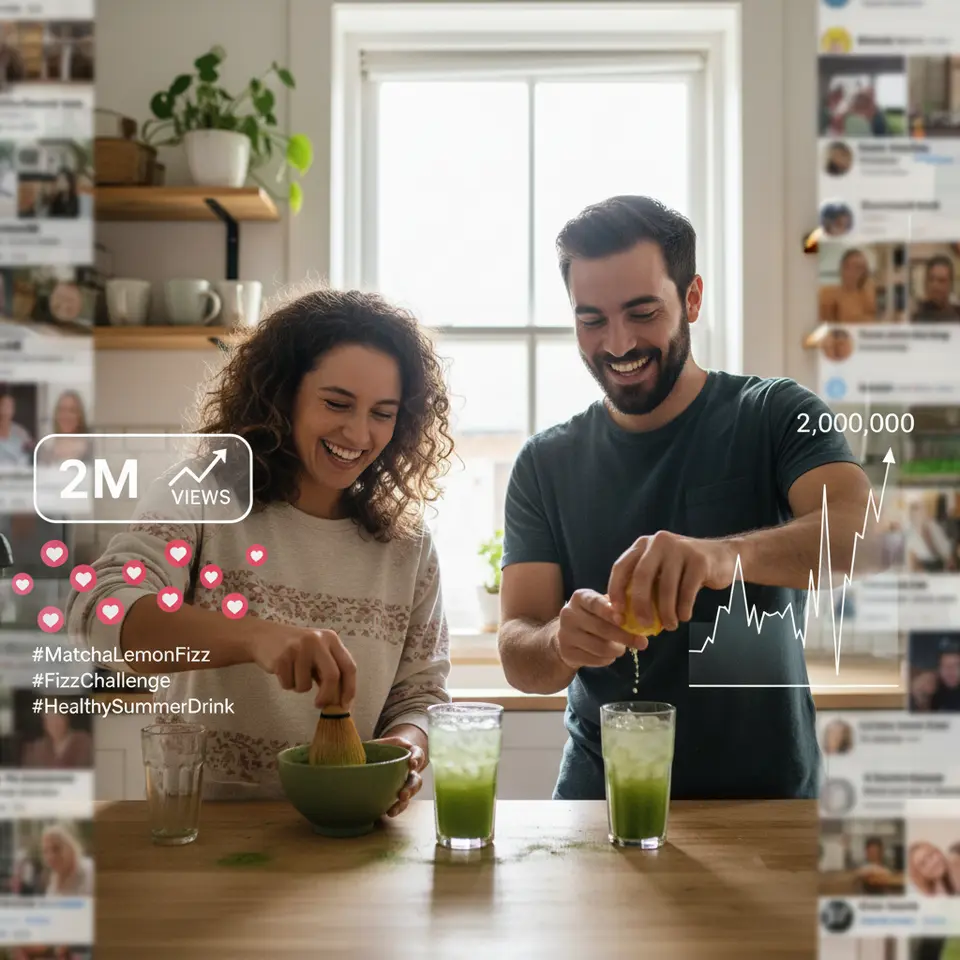
A beverage company combined social listening with AI to unearth a micro-trend for “matcha lemon fizz” recipes among micro-influencers. They launched a branded “Matcha Lemon Fizz Challenge” on TikTok, collaborating with nano-influencers. Within 48 hours, the challenge reached 2 million views, spurred a 15% spike in retail searches, and earned press coverage from leading food blogs.
Best Practices and Common Pitfalls
- Avoid Data Bias: Ensure diversity by monitoring multilingual feeds and regional channels to prevent skewed insights.
- Maintain Human Oversight: Automate where possible but always validate AI-driven recommendations against brand values and strategic objectives.
- Prioritize Compliance: Adhere to platform policies and data-privacy regulations when collecting and processing consumer content.
- Distinguish Signal from Noise: Use multi-factor scoring models to verify trend longevity before scaling campaigns.
- Foster Cross-Functional Collaboration: Combine AI insights with stakeholder workshops to challenge assumptions and refine activation plans.
Conclusion
In today’s hyperconnected marketplace, mastering the synergy of social listening and generative AI is no longer optional—it’s essential for brands aiming to stay ahead of the curve. By capturing real-time consumer conversations, applying advanced language models to forecast trend trajectories, and activating insights through optimized content, marketers can deliver highly relevant campaigns with surgical precision. The tools and methodologies outlined here provide a blueprint for building a self-reinforcing trend marketing engine. Begin with a focused pilot, define clear KPIs, and iterate rapidly based on performance feedback. As AI capabilities continue to evolve, your brand will be well-positioned to detect tomorrow’s consumer passions today, drive meaningful engagement, and secure a lasting competitive advantage in this year.






Leave a Reply