

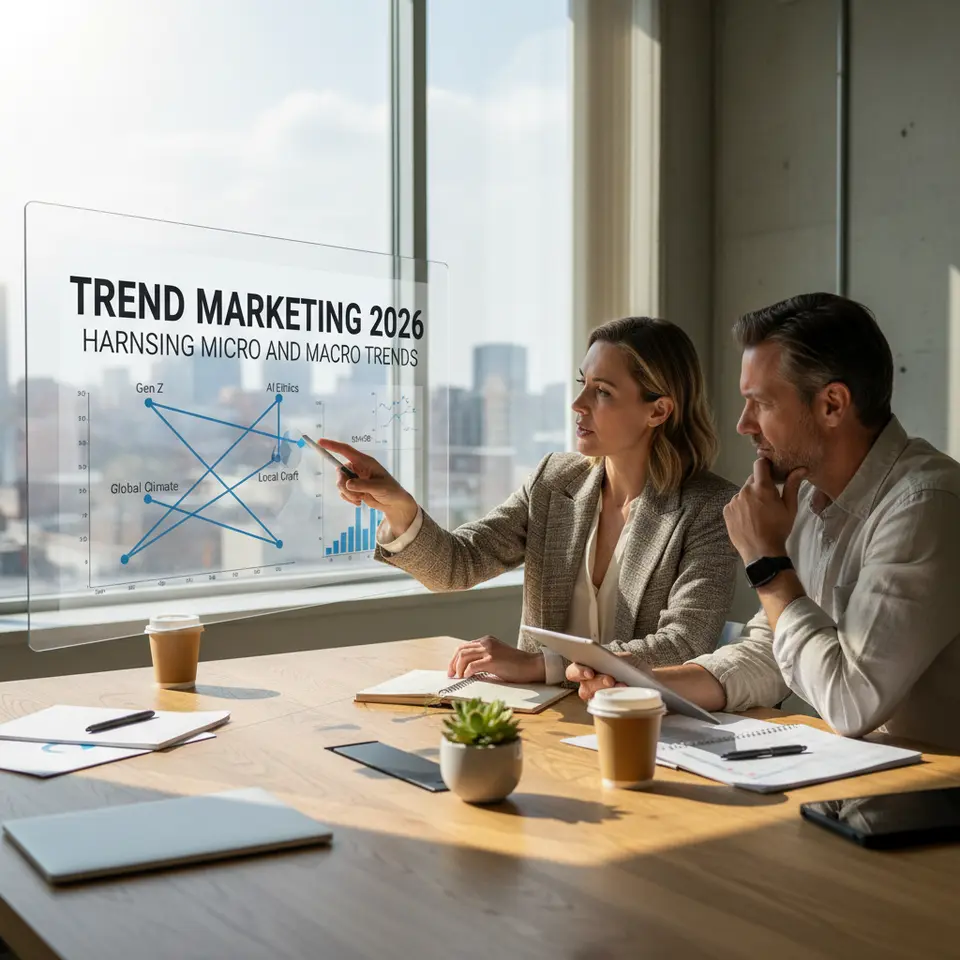
In today’s digital landscape, trend marketing has become a vital compass for brands navigating rapidly shifting consumer behaviors. This year (2026), organizations that skillfully blend enduring industry movements with fleeting cultural moments can spark deeper connections and accelerate growth. Unlike traditional campaigns that rely on static planning, trend marketing thrives on agility—merging long-term trajectories like sustainability and digital transformation with ephemeral catalysts such as viral challenges or community-driven phenomena. By doing so, companies craft experiences that feel both trust-worthy and of-the-moment, forging authentic engagement across touchpoints.
As competition intensifies, mastering both macro and micro trend dimensions elevates strategic decision-making. Macro insights provide the underlying framework for brand purpose and messaging consistency, while micro spikes enable timely relevance and conversational entry points. When harmonized, these layers drive campaigns that resonate on multiple levels: they fulfill consumer expectations for responsible innovation while catalyzing excitement around fresh cultural sparks.
Throughout this article, we’ll explore how to decode major market forces, harness real-time social signals, leverage AI-powered forecasting, and design campaigns that stand out in a crowded landscape. You’ll discover best practices, real-world examples, and practical tips to integrate trend marketing into your roadmap. Let’s embark on a journey to transform trend marketing from a buzzword into your brand’s strategic growth engine.
Understanding Macro Trend Dynamics
Macro trends are sweeping transformations that influence entire markets over extended periods. In 2026, key drivers include:
- Sustainability and Ethical Commerce—Consumers now expect brands to demonstrate environmental stewardship, from carbon-neutral processes to responsible sourcing. Research from the Pew Research Center shows that eco-friendly credentials can be a decisive purchase factor for a majority of shoppers.
- AI-Augmented Experiences—Advancements in machine learning and natural language processing enable hyper-personalized interactions. Chatbots, recommendation engines, and immersive virtual assistants are reshaping how audiences discover and engage with products.
- Holistic Wellness Economy—Well-being has expanded beyond physical fitness to include mental health, mindfulness, and self-care rituals. This paradigm shift drives product innovation and content creation across industries.
- Hybrid & Remote Lifestyles—Flexible work arrangements have altered daily routines, media consumption patterns, and purchasing priorities. Brands must adapt to home-centric behaviors and distributed communities.
These macro currents form the backbone of trend marketing strategies, guiding resource allocation, brand storytelling, and long-range planning. By mapping your offerings to these foundational themes, you create a stable narrative that withstands the ebb and flow of short-lived fads. Moreover, establishing a macro-informed vision ensures that tactical activations remain aligned with core values and long-term objectives.
Real-Time Micro Trend Identification

While macro trends set the strategic horizon, micro trends deliver the tactical spark that grabs attention. These rapid episodes often emerge on social platforms and can vanish just as quickly, making early detection critical. To spot micro trends effectively, implement a multi-pronged monitoring approach:
- Social Listening Platforms—Tools like Brandwatch or Sprout Social can track keyword spikes, hashtag adoption, and sentiment shifts. Integrate data from Google Trends to visualize real-time search interest across regions.
- Community Engagement—Join relevant subreddits, Discord channels, and niche Facebook groups. Active participation helps you understand the language, memes, and emerging themes in grassroots conversations.
- Trend Dashboards—Build internal boards that aggregate viral video formats, trending audio clips, meme templates, and popular filters. Update these dashboards daily to maintain fresh insights.
- Creator Partnerships—Cultivate relationships with influencers and micro-creators who pilot new formats. Their experimental content often reveals nascent micro trends before they reach mainstream audiences.
By layering quantitative signals with qualitative observation, your team can prioritize micro trends that align with brand values and audience preferences. Quick mobilization—drafting content assets, adjusting product messaging, or testing limited offers—ensures you capitalize on the window of peak interest.
Empowering Trend Insights with AI and Predictive Analytics
Artificial intelligence transforms trend marketing from a reactive exercise into a proactive discipline. Predictive models and advanced analytics deliver foresight into emerging patterns before they saturate the market. Key AI capabilities for trend marketing include:
- Predictive Forecasting—Machine learning algorithms analyze historical purchase behavior, web traffic, and social chatter to project trend trajectories. This data-driven outlook helps you allocate budget and creative resources optimally.
- Natural Language Processing (NLP)—NLP engines can sift through millions of unstructured text sources—forums, reviews, news sites—to detect early topic clusters and sentiment nuances.
- Image Recognition—Computer vision technologies scan visual platforms like Instagram and Pinterest at scale, identifying recurring motifs, color palettes, and design elements linked to viral creativity.
- Recommendation Engines—By cross-referencing individual customer profiles with micro trend data, these systems deliver personalized product suggestions that feel both relevant and timely.
Institutions like MIT CSAIL are at the forefront of research on AI-driven consumer insights, demonstrating how advanced analytics can reduce time-to-market for trend-inspired initiatives. Integrating these technologies into your workflow accelerates ideation, testing, and refinement—fueling a continuous cycle of innovation.
Designing Trend-Driven Campaigns
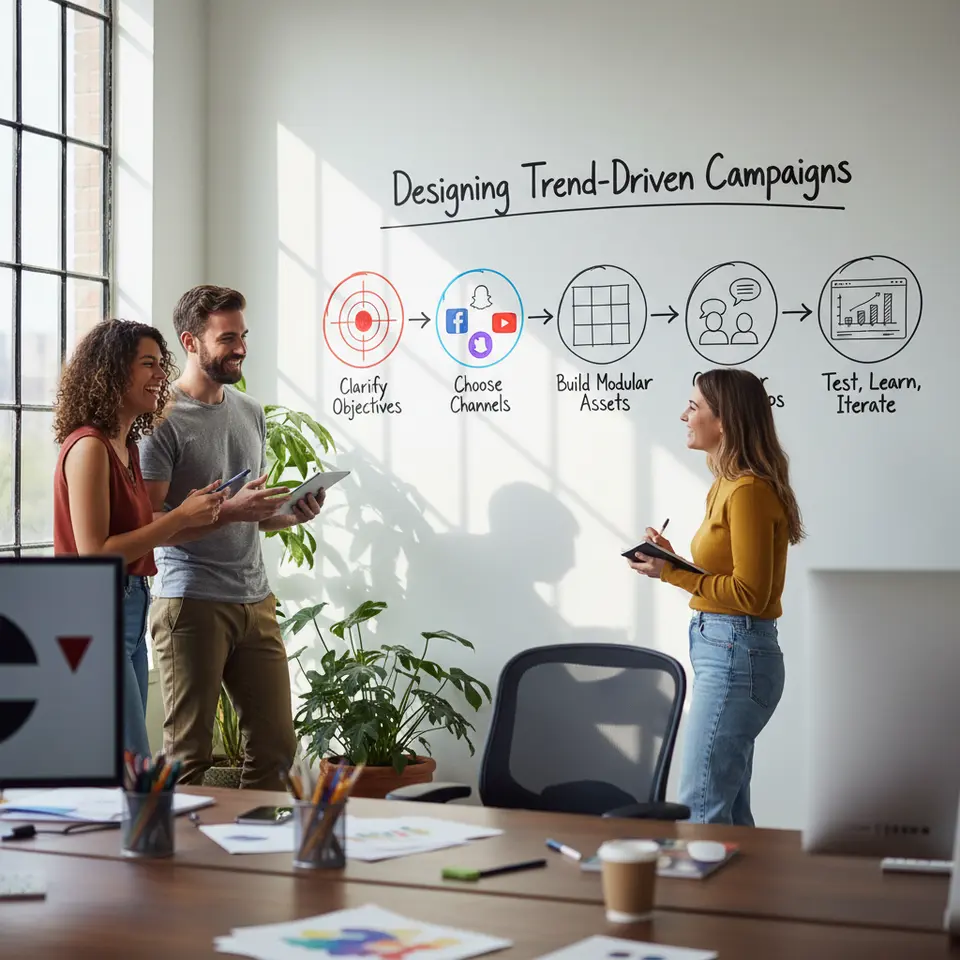
Once you’ve mapped macro foundations, detected a compelling micro moment, and harnessed AI forecasts, it’s time to bring your trend marketing strategy to life. Follow these steps to craft campaigns that resonate:
- Clarify Objectives—Define whether your goal is brand awareness, community engagement, lead generation, or direct conversions. Each aim requires distinct creative approaches and measurement frameworks.
- Choose the Right Channels—Match your content format to the platforms where your audience is most active. Short-form video works well on TikTok and Instagram Reels, while thought leadership may perform better on LinkedIn or in podcast form.
- Build Modular Assets—Develop adaptable templates—dynamic video intros, customizable graphics, or branded AR filters—that can be updated rapidly as the micro trend evolves.
- Collaborate with Creators—Partner with niche influencers whose personal style aligns with the identified micro trend. Authentic endorsements amplify reach and trust.
- Test, Learn, Iterate—A/B test messaging, visuals, and call-to-actions in real time. Allocate budget toward high-performing variants, and pivot swiftly when new opportunities emerge.
This iterative approach ensures your trend-driven campaign remains fresh, relevant, and aligned with both macro vision and micro momentum.
Success Stories and Case Examples
Real-world examples illustrate the power of synchronizing macro context with micro agility. Here are two brands that executed trend marketing with remarkable results:
Case Study A: Eco-Chic Footwear Launch
- Macro Focus: Sustainable fashion and ethical production
- Micro Spark: Upcycling tutorials trending on short-form video apps
- Strategy: The brand launched a branded #UpcycleYourSole challenge, inviting users to share creative shoe transformations using leftover materials. Social listening guided iterative tweaks to color palettes and messaging.
- Outcome: Over 5 million video views, a 15% boost in preorder volume, and coverage in top fashion outlets.
Case Study B: Immersive Wellness Webinar Series
- Macro Focus: Holistic health and self-care
- Micro Spark: ASMR relaxation sessions gaining traction on streaming platforms
- Strategy: The company hosted live sound-bath webinars led by wellness experts, integrating shoppable segments for related products. NLP insights optimized session topics based on participant feedback.
- Outcome: 30,000 registrants, an 18% conversion rate on featured products, and a 25% uplift in newsletter subscriptions.
FAQ
What is the difference between macro and micro trends?
Macro trends refer to long-term, broad shifts in market or consumer behavior, while micro trends are short-lived, rapidly emerging phenomena driven by cultural moments or social media activity.
How can AI improve trend marketing?
AI enhances trend marketing by offering predictive forecasting, natural language processing for sentiment analysis, image recognition to detect visual patterns, and recommendation engines for personalized experiences.
Why is rapid mobilization important for micro trends?
Micro trends often peak quickly and fade, so the ability to rapidly create and deploy content or offers allows brands to capitalize on moments of high interest and drive engagement before attention shifts elsewhere.
How do I balance trend-driven campaigns with brand consistency?
Align each trend-driven activation with your core brand values and macro themes. Use modular assets and clear guidelines to ensure rapid executions still reflect your overall messaging and identity.
Conclusion
Trend marketing in 2026 demands a balanced lens: leveraging broad, enduring shifts in consumer values while capitalizing on rapid cultural sparks. By grounding strategy in macro insights, monitoring micro moments in real time, and deploying AI-driven forecasts, brands can craft campaigns that feel both timeless and irresistible. The key lies in agility—testing, measuring, and iterating with speed—so that each trend becomes an accelerant for growth.
To get started, audit your current listening and analytics tools, align cross-functional teams around clear objectives, and establish a rapid-response process for emerging trends. In today’s fast-evolving marketplace, the brands that synchronize purpose with cultural relevance will lead the charge. Embrace trend marketing as a core competency, and you’ll transform every signal—big or small—into strategic momentum this year (2026).







Leave a Reply