


In today’s digital landscape, brands face the dual challenge of capitalizing on emerging movements while remaining true to their core values. Ethical Trend Marketing has emerged as the guiding approach that empowers organizations to harness the momentum of consumer shifts without sacrificing transparency, social responsibility, or long-term credibility.
This year, savvy marketers recognize that short-lived hype alone cannot sustain customer loyalty; instead, they must ground every initiative in genuine purpose and measurable respect for their audience. By striking a balance between innovative growth strategies and unwavering integrity, companies can forge deeper emotional connections with consumers and build resilient brand equity in an ever-evolving marketplace.
At its heart, Ethical Trend Marketing transcends superficial trend chasing. Rather than merely replicating what’s popular, it demands thoughtful analysis of cultural undercurrents, stakeholder values, and data usage practices. This holistic mindset ensures that campaigns not only capture attention but also reinforce trust and demonstrate accountability. As brands navigate social nuances and privacy concerns, adopting an ethical framework becomes a competitive advantage and a moral imperative.
In this comprehensive guide, we explore five key pillars that define Ethical Trend Marketing: authenticity, transparency, respect, consumer-centricity, and long-term focus. We’ll delve into research methodologies, creative strategies, and performance metrics that enable responsible trend-driven campaigns. Throughout the post, you’ll find practical tactics, real-world case examples, and links to authoritative resources, including guidelines from the Federal Trade Commission and insights from the Pew Research Center. Whether you’re a marketing veteran or a newcomer, this article offers a structured roadmap for leveraging trends ethically and effectively.
Understanding Ethical Trend Marketing
Ethical Trend Marketing is a strategic approach that goes beyond conventional trend adoption by embedding brand purpose and social conscience into every campaign. Today, consumers demand more than catchy taglines—they expect brands to align with their values and demonstrate responsible data practices. At its core, Ethical Trend Marketing fuses three foundational pillars: authenticity, transparency, and respect. Authenticity requires brands to present campaigns that genuinely reflect their mission and heritage, not merely chase virality. Transparency involves clear disclosure of data usage, sponsorships, and creative influences to foster informed engagement. Respect ensures cultural sensitivity and prevents exploitative messaging that could alienate or offend audiences.
Implementing Ethical Trend Marketing begins with deep-rooted research and stakeholder involvement. Organizations must identify trends that resonate not only with market sentiments but also with their own ethical standards. This measured strategy stands in stark contrast to rapid-fire campaign rollouts that risk eroding credibility and consumer trust. By prioritizing purpose over novelty, brands can build long-term affinity and differentiate themselves in a crowded landscape.
Another critical dimension of Ethical Trend Marketing is the continuous feedback loop between brands and their audiences. Monitoring sentiment analysis and qualitative input helps marketers refine messaging, ensuring that campaigns remain relevant and respectful. Leveraging tools like social listening platforms, one can capture emerging conversations and spot potential misalignments before they escalate. This proactive stance underscores the “ethical” element by prioritizing consumer well-being and open communication over reactive damage control.
Moreover, Ethical Trend Marketing aligns closely with corporate social responsibility initiatives. Integrating sustainability goals, diversity commitments, and community engagement projects into trend-based campaigns elevates the brand narrative. For instance, a company might spotlight an environmental cause when a green consumer trend emerges, thereby reinforcing its own eco-friendly values. This synergy between trend timing and social impact not only amplifies reach but also strengthens brand trust, as stakeholders recognize the genuine contribution beyond promotional objectives.
Throughout this guide, you will learn how to craft campaigns that honor these principles, ensuring that every trend-driven effort contributes positively to brand reputation and customer loyalty. By embracing Ethical Trend Marketing, organizations can navigate the fast-paced world of consumer trends without compromising integrity or authenticity.
Core Principles of Ethical Trend Marketing
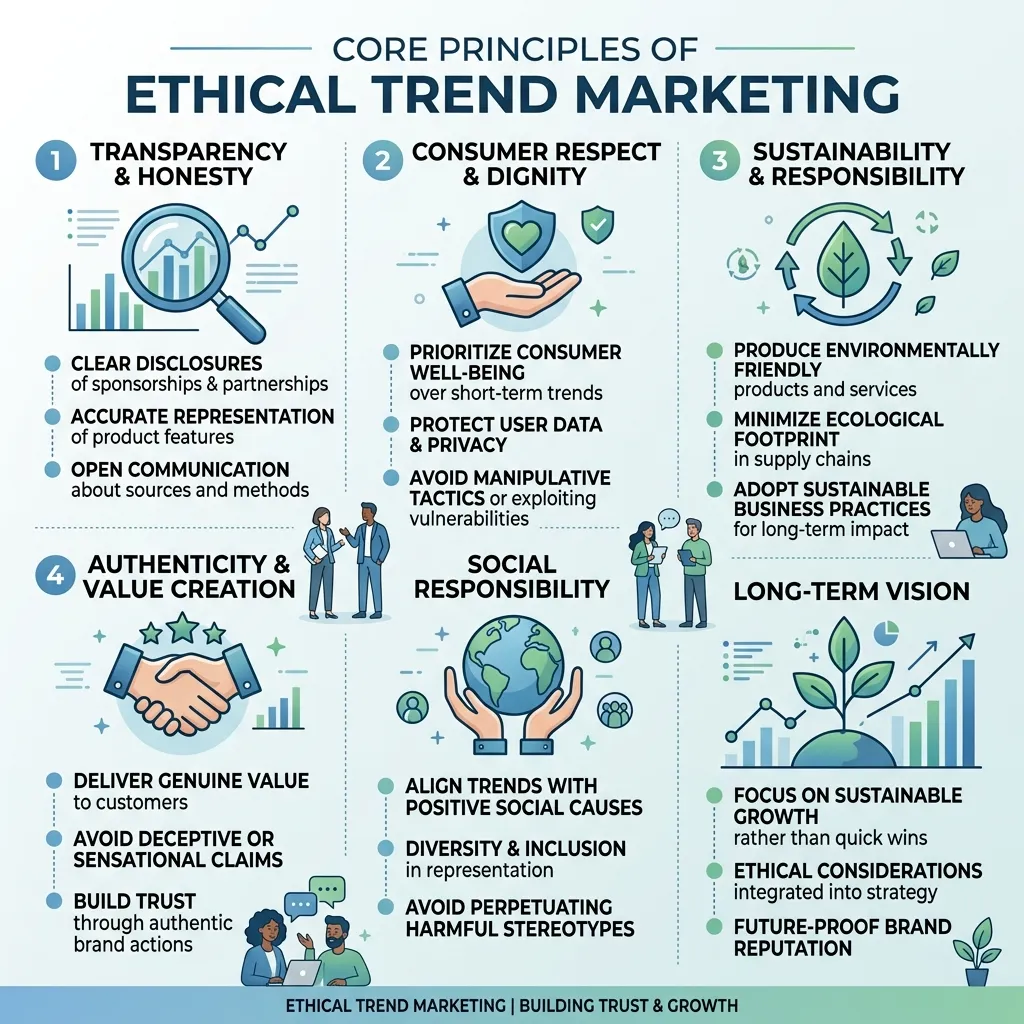
To operationalize an ethical approach to trend-driven initiatives, marketers must adhere to a clearly defined set of principles. These guiding values serve as safeguards against missteps, ensuring that campaigns resonate authentically with audiences and remain aligned with the corporate mission. Below are five core principles every team should adopt.
1. Consumer-Centricity
Consumer-centricity puts people at the heart of every decision. This means collecting and using personal data responsibly, with explicit consent and transparent opt-in mechanisms. Over-personalization may boost short-term conversion rates but can damage trust if it crosses privacy boundaries. Ethical marketers develop detailed audience personas and prioritize consent-based segmentation to deliver relevant messages without infringing on consumer autonomy.
2. Value Alignment
Value alignment demands that every trend engagement reinforces the brand’s fundamental values. Before adopting a new hashtag or viral challenge, teams should assess how the trend aligns with the mission statement, corporate responsibility goals, and stakeholder expectations. If a trend contradicts core brand promises—such as sustainability, diversity, or equity—it should be set aside, regardless of its popularity.
3. Cultural Sensitivity
Cultural sensitivity involves understanding the historical and social origins of trends. Ethically minded teams research cultural nuances and consult diverse voices to avoid appropriation or trivialization of important issues. By engaging with community leaders or subject-matter experts during the concept phase, marketers can craft messages that respect heritage and foster genuine cultural exchange.
4. Long-Term Orientation
Effective Ethical Trend Marketing measures success beyond immediate engagement metrics. Key performance indicators (KPIs) should include brand trust scores, customer lifetime value (CLV), and sentiment over time. This long-term orientation discourages one-off “flash in the pan” campaigns and encourages sustained relationship building with customers.
5. Accountability
Accountability means owning both successes and failures. When a campaign misfires or causes unintended offense, organizations should issue transparent communications, apologize publicly, and implement corrective measures. This level of responsibility not only mitigates reputational damage but also reinforces the brand’s commitment to ethical standards.
By embedding these principles into planning and execution processes, marketing teams create a resilient foundation for Ethical Trend Marketing, capable of navigating rapid shifts in consumer attitudes without compromising integrity.
Research and Trend Identification Techniques
Rigorous research is the bedrock of any Ethical Trend Marketing strategy. Rather than relying on gut instinct or fleeting social media buzz, ethical marketers combine qualitative and quantitative methods to validate trends before committing significant resources. Below are several proven techniques for spotting and vetting consumer movements.
Social Listening
Social listening tools track public conversations across platforms like Twitter, Instagram, and Reddit, providing real-time insights into evolving sentiments and emerging topics. By analyzing keyword trends, sentiment analysis, and community clusters, marketers can detect potential opportunities or risks early. This approach not only informs campaign ideation but also helps brands respond sensitively to evolving social dynamics.
Customer Feedback
Direct feedback from consumers is invaluable in assessing trend relevance and ethical implications. Surveys, focus groups, and in-depth interviews generate firsthand opinions and uncover latent needs. Ethical teams ensure that participants’ privacy is protected—often using anonymized data—and that incentives for participation are fair and transparent.
Data Analytics
Web analytics platforms, such as Google Analytics or Adobe Analytics, reveal traffic patterns, content engagement metrics, and conversion spikes that signal shifting consumer interests. By correlating on-site behavior with marketing touchpoints, teams can identify which trends drive meaningful actions and align those insights with brand goals.
Industry Reports and Academic Research
Consulting authoritative sources—such as the Pew Research Center for societal trends or university white papers—provides a macro-level view of cultural shifts. Industry reports from reputable research firms, academic journals, and government publications offer context and foresight, helping marketers anticipate how emerging movements might evolve.
Competitive Audits
Observing peer brands and adjacent industries allows marketers to learn from both successful and flawed trend implementations. A competitive audit includes evaluating messaging angles, campaign outcomes, and community responses. This comparative analysis helps teams refine their ethical framework and avoid replicating mistakes that could damage brand reputation.
By integrating these research methods, organizations create a robust decision-making process that balances innovation with ethics. This foundation reduces the risk of misaligned campaigns and strengthens trust with consumers who increasingly value responsible brand behavior.
Crafting Authentic Campaigns

After identifying a trend that aligns with your brand values, the next step is to develop a campaign that feels organically rooted in your company’s story. Authenticity is not a buzzword—it’s a strategic necessity in Ethical Trend Marketing. Here are key tactics to infuse sincerity into every creative element.
Story-Driven Narratives
People connect with stories more than slogans. Instead of deploying abstract catchphrases, focus on real customer journeys or brand milestones. Document the experiences of individuals who embody your values, and weave those testimonials into campaign assets. This narrative-driven approach fosters emotional resonance and encourages audiences to see themselves in your brand’s mission.
User-Generated Content
Empowering customers to share their own stories creates an authentic dialogue that no polished advertisement can replicate. Encourage user-generated content (UGC) through contests, hashtags, or collaborative projects, ensuring clear guidelines to protect privacy and respect intellectual property. When participants see their contributions highlighted, they become advocates who amplify your message organically.
Purpose-Driven Messaging
Aligning trend-based campaigns with social or environmental causes strengthens your ethical stance. Whether partnering with nonprofits or launching in-house initiatives, purpose-driven messaging should connect a trending topic to a meaningful impact. By transparently showcasing how funds are allocated or how actions drive change, brands demonstrate genuine commitment and deepen customer trust.
Behind-the-Scenes Transparency
Consumers appreciate access to the people and processes behind a campaign. Sharing details about creative development, sourcing decisions, or partner selection via blogs, short videos, or live streams enhances transparency. This window into your operations signals that you have nothing to hide and value honest communication with stakeholders.
Multi-Channel Consistency
An authentic brand experience requires coherent messaging across every touchpoint—social media, email newsletters, blog posts, and paid advertisements. Establish clear guidelines for tone, visual identity, and call-to-action elements to ensure that each platform reinforces the same ethical narrative. Consistent execution cements brand credibility and prevents confusion.
By weaving these tactics into your campaign planning and execution, you ensure that trend-driven initiatives resonate with both heart and mind, translating fleeting interest into durable connections.
Tools and Metrics for Ethical Trend Marketing

Implementing Ethical Trend Marketing requires the right combination of tools and metrics to track performance and ensure accountability. Rather than relying solely on vanity metrics, an ethical approach focuses on meaningful indicators that reflect both financial and social outcomes.
Social Analytics Platforms
Platforms like Brandwatch, Sprout Social, and Hootsuite Insights monitor engagement, sentiment, and community growth. By capturing comments, shares, and emotional reactions, these tools help teams evaluate how trends influence public perception and brand trust over time.
Web Analytics Solutions
Using solutions such as Google Analytics or Adobe Analytics allows marketers to assess on-site behavior, bounce rates, and conversion paths tied to campaign activities. Tracking traffic sources and segmenting by demographic or psychographic data reveals which trend-based content drives the most meaningful actions.
Customer Feedback Software
Platforms like Qualtrics, SurveyMonkey, and Typeform enable brands to collect structured opinions and measure trust scores, Net Promoter Score (NPS), and customer satisfaction. Ethical teams often incorporate post-campaign surveys to gauge long-term sentiment and ensure that initiatives resonate positively.
Project Management and Compliance
Coordinating cross-functional efforts with tools like Asana, Trello, or Monday.com ensures that each campaign adheres to ethical review stages. Checklists for privacy compliance, cultural sensitivity assessments, and executive approvals help prevent missteps before launch.
Key Performance Indicators (KPIs)
Essential KPIs for Ethical Trend Marketing include:
- Engagement Rate: Measures active participation (likes, comments, shares) as a percentage of total reach.
- Sentiment Uplift: Tracks positive versus negative mentions to assess emotional impact.
- Brand Trust Score: Aggregates survey results and social feedback to quantify credibility.
- Earned Media Value: Estimates the monetary worth of organic coverage and word-of-mouth referrals.
- Customer Lifetime Value (CLV): Evaluates the long-term revenue generated by customers acquired through trend-based campaigns.
By prioritizing these metrics, brands can move beyond short-lived viral peaks and demonstrate how Ethical Trend Marketing contributes to sustainable growth and improved stakeholder relationships. For further guidance on responsible marketing metrics, consult resources from the U.S. Small Business Administration or industry best practices published by research institutions.
Conclusion
In today’s competitive marketplace, Ethical Trend Marketing has become a crucial strategy for brands that want to harness the power of emerging trends without compromising integrity. By anchoring every campaign in authenticity, transparency, respect, consumer-centricity, and accountability, organizations can differentiate themselves and foster deeper, longer-lasting relationships with customers. This year, consumers are increasingly attuned to how brands communicate, use data, and contribute to societal good, making ethical considerations a key driver of both engagement and loyalty.
Through rigorous research methods—ranging from social listening to academic collaboration—and by employing robust tools and meaningful KPIs, marketing teams can ensure that trend-based initiatives align with corporate values and deliver measurable impact. Real-world case studies show that purpose-driven, culturally informed campaigns not only achieve impressive engagement but also fortify brand trust and long-term loyalty. As you implement the frameworks and best practices in this article, remain open to feedback and continually refine your strategies. Ethical Trend Marketing is not a static checklist but a commitment to growth that preserves integrity in every phase of execution.
By embracing Ethical Trend Marketing, you position your brand as a responsible leader in today’s digital world. Let these principles guide your next campaign and witness how purpose and performance can thrive together.
FAQs
Why is Ethical Trend Marketing important for modern brands?
Ethical Trend Marketing helps brands build long-term trust, strengthen customer loyalty, and maintain credibility while engaging with popular trends. Consumers increasingly prefer brands that demonstrate authenticity, transparency, and social responsibility.
How can brands avoid appearing opportunistic when following trends?
Brands should only participate in trends that align with their mission, values, and audience expectations. Authentic storytelling, transparency, and meaningful contributions help prevent campaigns from feeling forced or exploitative.
What role does transparency play in Ethical Trend Marketing?
Transparency ensures consumers understand how brands use data, collaborate with influencers, and support social causes. Open communication fosters trust and helps audiences make informed decisions about engaging with a brand.
Can small businesses benefit from Ethical Trend Marketing?
Yes, small businesses can use Ethical Trend Marketing to differentiate themselves, create authentic community connections, and compete with larger brands by emphasizing genuine values and personalized customer experiences.
How does Ethical Trend Marketing improve customer loyalty?
When brands consistently demonstrate integrity, cultural sensitivity, and respect for consumer privacy, customers are more likely to trust the business, engage repeatedly, and recommend it to others.
What are common mistakes brands make with trend-based marketing?
Common mistakes include blindly following viral trends, ignoring cultural context, overusing consumer data, prioritizing short-term engagement over trust, and failing to respond transparently when campaigns receive criticism.
How can social listening support ethical marketing strategies?
Social listening tools help brands monitor audience sentiment, identify emerging concerns, and understand cultural conversations in real time, allowing marketers to adapt campaigns responsibly and respectfully.
What industries benefit most from Ethical Trend Marketing?
Industries such as fashion, technology, healthcare, beauty, finance, education, and sustainability-focused businesses benefit greatly because consumers in these sectors closely evaluate brand values and social responsibility.
How often should brands review their ethical marketing practices?
Brands should continuously review campaigns, audience feedback, compliance policies, and cultural trends throughout the year to ensure messaging remains responsible, inclusive, and aligned with evolving consumer expectations.
What is the future of Ethical Trend Marketing?
The future will likely focus on AI transparency, ethical data collection, sustainability initiatives, inclusive storytelling, creator accountability, and stronger consumer demand for socially responsible brand behavior.






Leave a Reply