


A complete guide to making your product go viral. Learn the psychology behind sharing, platform-specific strategies, content creation tactics, influencer marketing, analytics, and how to turn viral attention into sustainable long-term growth.
Going viral isn’t just a stroke of luck reserved for a handful of breakout brands—it’s the result of thoughtful strategy, deep audience understanding, and well-executed storytelling. In today’s crowded digital landscape, products don’t spread simply because they’re good; they spread because they spark emotion, conversation, and action. From social media algorithms to influencer dynamics, many moving parts influence whether a product catches fire or fades away. While no strategy guarantees instant virality, there are proven principles that significantly improve your odds. This guide breaks down those principles step by step, showing you how to design, launch, and sustain viral momentum that translates into real business growth.
What Makes Products Go Viral?
Before diving into tactics, it’s crucial to understand the psychology behind viral content. Products that achieve viral status typically share several key characteristics.
Emotional Connection
Products that evoke strong emotions—whether excitement, surprise, joy, or even controversy—are more likely to be shared. People don’t just buy products; they buy feelings and experiences.
Consider the success of Dollar Shave Club’s launch video. The combination of humor, irreverence, and a genuine value proposition created an emotional response that drove millions of shares and transformed a startup into a billion-dollar company.
Novelty and Uniqueness
Viral products often introduce something genuinely new or solve familiar problems in unexpected ways. The more unique your product or its presentation, the more likely people are to talk about it.
Social Currency
People share things that make them look good. Your product needs to provide social currency—something that enhances the sharer’s reputation or identity when they recommend it to others.
Practical Value
While entertainment matters, products that offer clear, practical benefits are more likely to sustain viral growth. The initial buzz might come from novelty, but long-term success requires genuine value.
Building Your Viral Foundation

Creating viral momentum requires more than just a great product. You need to build the right foundation before launching your viral campaign.
Know Your Audience Inside Out
Successful viral campaigns start with deep audience understanding. Research where your target customers spend time online, what content they typically share, and what motivates them to recommend products to others.
Create detailed buyer personas that include not just demographics, but psychographics—their values, interests, and social media behavior. This information will guide every aspect of your viral strategy.
Create Shareworthy Content
Your product itself might be amazing, but you need compelling content to showcase it. This could be:
- Demonstration videos that show your product solving problems
- Behind-the-scenes content that humanizes your brand
- User-generated content that builds community
- Educational content that positions you as an expert
Focus on creating content that provides value even to people who don’t immediately buy your product. This approach builds trust and increases the likelihood of shares.
Develop Your Brand Story
Every viral product has a compelling story. This isn’t just about features and benefits—it’s about the why behind your product. What problem were you passionate about solving? What journey led you to create this solution?
Your story should be authentic, relatable, and emotionally resonant. People connect with stories, not specifications.
Timing Your Launch for Maximum Impact
Timing can make or break a viral campaign. The best product with perfect content can fall flat if launched at the wrong moment.

Research Peak Activity Times
Different platforms have different peak activity periods. Generally, weekdays between 9 AM and 3 PM see high engagement on professional platforms like LinkedIn, while evenings and weekends work better for consumer-focused platforms like Instagram and TikTok.
However, these are just starting points. Use analytics tools to understand when your specific audience is most active and engaged.
Consider Seasonal Relevance
Align your launch with relevant seasons, holidays, or events when possible. A productivity app might perform better at the start of the year when people are focused on self-improvement, while a party game could thrive during holiday seasons.
Monitor Competitor Activity
Launching when competitors are quiet can help you capture more attention. Use social listening tools to track competitor activity and identify potential windows of opportunity.
Leveraging Social Media Platforms
Before diving into platform-specific strategies, stay updated on Social Media Viral Trends, as these trends often dictate which content formats, sounds, or narratives gain traction across major networks.
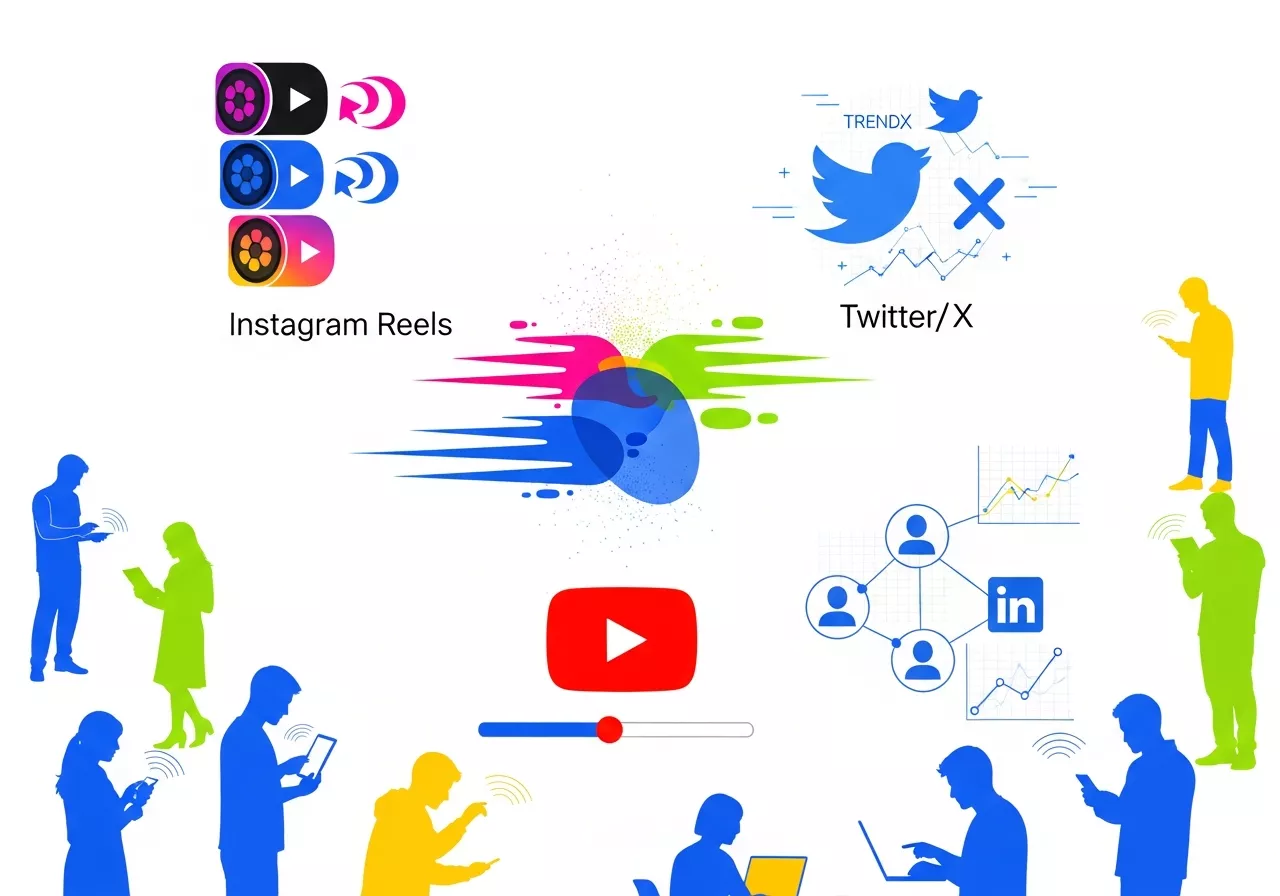
TikTok and Instagram Reels
These platforms favor authentic, entertaining content. Create videos that are:
- Visually engaging within the first 3 seconds
- Easy to understand without sound
- Featuring real people using your product
- Tapping into current trends or sounds
Twitter/X
Twitter thrives on real-time conversations and trending topics. Success strategies include:
- Engaging with trending hashtags relevant to your industry
- Sharing bite-sized insights or tips
- Responding quickly to mentions and comments
- Using humor appropriately
For B2B products, LinkedIn offers unique opportunities:
- Share industry insights and thought leadership
- Participate in relevant professional discussions
- Leverage employee networks for organic reach
- Focus on problem-solving content
YouTube
Long-form content performs well on YouTube:
- Create detailed product demonstrations
- Develop an educational series related to your industry
- Collaborate with relevant influencers
- Optimize titles and thumbnails for click-through rates
Influencer and Community Strategies
Building relationships with influencers and communities can dramatically amplify your reach.

Identify Relevant Influencers
Look beyond follower counts to find influencers who genuinely align with your brand values and have engaged audiences. Micro-influencers (10,000-100,000 followers) often provide better ROI than mega-influencers.
Engage Authentically
Before asking for a promotion, engage genuinely with influencers’ content. Comment thoughtfully, share their posts, and build real relationships.
Provide Value First
Offer free products, exclusive access, or valuable content before asking for anything in return. This approach builds goodwill and increases the likelihood of authentic recommendations.
Tap into Existing Communities
Find online communities where your target audience already gathers. Reddit, Facebook groups, Discord servers, and niche forums can provide direct access to engaged potential customers.
Participate authentically in these communities before promoting your product. Share valuable insights, answer questions, and build relationships.
Creating Viral-Worthy Content
Content creation is where strategy meets execution. The right content can turn a good product into a viral sensation.
Focus on Storytelling
People remember stories better than facts. Structure your content around narratives that include:
- A relatable problem or challenge
- The journey to find a solution
- The transformation your product enables
- Social proof from satisfied customers
Use Visual Elements Effectively
Visual content is shared 40 times more than text-only content. Invest in:
- High-quality product photography
- Engaging video content
- Branded graphics and infographics
- User-generated visual content
Optimize for Each Platform
Adapt your content for each platform’s specific requirements:
- Square or vertical formats for Instagram
- Horizontal formats for YouTube
- Text-heavy posts for LinkedIn
- Quick, entertaining videos for TikTok
Include Clear Calls-to-Action
Every piece of content should guide viewers toward a specific action, whether that’s visiting your website, signing up for updates, or making a purchase.
Measuring and Optimizing Your Viral Campaign
Viral campaigns require constant monitoring and adjustment. Track the right metrics to understand what’s working and what isn’t.

Key Metrics to Track
- Reach and impressions
- Engagement rates (likes, comments, shares)
- Click-through rates
- Conversion rates
- Mention volume and sentiment
- Website traffic and time on site
A/B Testing
Test different versions of your content to identify what resonates best with your audience. Variables to test include:
- Headlines and captions
- Visual elements
- Posting times
- Call-to-action phrases
Respond to Feedback Quickly
Viral campaigns often generate significant feedback. Respond quickly and professionally to both positive and negative comments. This engagement can extend your viral moment and build stronger customer relationships.
Leveraging Data and Analytics to Fuel Virality
Creating viral campaigns is not just an art—it’s also a science. Using data and analytics effectively can help you understand audience behavior, identify trends, and refine your strategy to maximize shares and engagement.
Track Audience Behavior Across Platforms
Understanding how users interact with your content is critical. Monitor metrics such as:
- Click-through rates (CTR): How many people clicked your links or buttons.
- Engagement duration: How long viewers watch your videos or read your posts.
- Content interactions: Likes, shares, comments, and saves.
Identify Patterns and Trends
Analyze past viral content and industry trends to uncover what resonates most with your target audience. Look for:
- Content themes that consistently perform well
- Optimal posting times that generate maximum engagement
- Audience segments that are most likely to share content
A/B Testing for Continuous Improvement
Experimentation is key. By testing different versions of content, headlines, visuals, and CTAs, you can discover the winning combination for virality. For instance, try testing:
- Video length (short-form vs. long-form)
- Tone (humorous vs. educational)
- Visual style (animated vs. live-action)
Using Predictive Analytics for Future Campaigns
Predictive analytics tools can help forecast which content is likely to go viral based on historical performance, audience behavior, and social signals. By leveraging these insights, you can proactively shape campaigns rather than relying solely on luck.
Key Analytics Metrics for Viral Campaigns
| Metric | Purpose | How to Measure | Suggested Tools |
|---|---|---|---|
| Reach & Impressions | Understand how many people see your content | Platform analytics dashboards | Facebook Insights, TikTok Analytics |
| Engagement Rate | Measure audience interaction relative to reach | (Likes + Comments + Shares) ÷ Total Reach × 100 | Sprout Social, Hootsuite |
| Click-Through Rate (CTR) | Track the effectiveness of CTAs | Clicks ÷ Impressions × 100 | Google Analytics, Bitly |
| Conversion Rate | Measure how many take the desired action (purchase/signup) | Conversions ÷ Clicks × 100 | Shopify Analytics, Google Analytics |
| Social Mentions & Sentiment | Gauge brand perception and buzz | Track mentions and analyze sentiment | Brand24, Mention |
| Audience Retention | Understand how long users stay engaged with content | Average watch/read time | YouTube Analytics, TikTok Analytics |
Common Viral Marketing Mistakes to Avoid
Learning from others’ mistakes can save you time and resources.
Prioritizing Reach Over Relevance
It’s better to reach 1,000 potential customers than 100,000 people who will never buy your product. Focus on relevant audiences rather than maximum reach.
Ignoring Negative Feedback
Negative comments are inevitable in viral campaigns. Address them professionally and use them as opportunities to demonstrate your customer service quality.
Failing to Capitalize on Momentum
Viral moments are temporary. Have a plan ready to convert viral attention into lasting business results through email capture, retargeting campaigns, or special offers.
Overselling
People share content that provides value, not advertisements. Focus on educating, entertaining, or inspiring your audience rather than constantly promoting your product.
Sustaining Success Beyond the Viral Moment
Going viral is just the beginning. Converting viral attention into lasting business success requires strategic follow-up.
Build Your Email List
Capture contact information from viral traffic through:
- Valuable lead magnets
- Exclusive content offers
- Early access to new products
- Educational resources
Create Retargeting Campaigns
Use pixels and tracking to create retargeting campaigns for people who engaged with your viral content but didn’t convert immediately.
Develop Long-Term Content Strategy
Plan content that maintains interest beyond the initial viral moment. This might include:
- Regular product updates
- Educational content series
- User-generated content campaigns
- Community building initiatives
Your Next Steps to Viral Success
Making your product go viral requires strategic planning, creative execution, and persistent effort. Start by deeply understanding your audience and creating content that provides genuine value.
Focus on building authentic relationships with your community and influencers in your space. Remember that viral success often comes from consistent effort over time rather than a single lucky break.
Most importantly, ensure your product delivers on the promises your viral campaign makes. The best marketing in the world can’t save a product that doesn’t meet customer expectations.
Begin by implementing one or two strategies from this guide. Test, measure, and refine your approach based on what works best for your specific audience and product. With patience and persistence, you can create the viral moment that transforms your product’s trajectory.
Turning Virality Into Sustainable Growth
Virality is a momentary phenomenon, but your business goals extend far beyond a single viral spike. Converting viral attention into long-term growth requires strategic planning and execution.
Capitalize on the Attention
Once your product starts trending, you must act quickly to capture the audience’s interest:
- Launch follow-up campaigns: Introduce complementary products or services.
- Highlight customer testimonials: Show proof that your product delivers on its promises.
- Offer limited-time promotions: Encourage immediate purchases to sustain momentum.
Develop a Customer Retention Strategy
Viral campaigns bring a wave of new users, but retention ensures long-term growth:
- Personalized email campaigns: Send tailored recommendations and updates.
- Loyalty programs: Reward repeat customers with discounts or exclusive content.
- Community engagement: Build brand advocates through social media groups, forums, or events.
Measure Long-Term Impact
Track not only immediate virality but also long-term metrics:
- Customer lifetime value (CLV)
- Repeat purchase rate
- Brand awareness and recall over time
Focus on Brand Consistency
Maintain a consistent brand voice, messaging, and quality across all touchpoints. Viral success can quickly backfire if new customers feel the product or experience doesn’t match the hype.
Iterate and Scale
Learn from every viral campaign. Analyze what worked, what didn’t, and refine your strategies for future launches. Consider expanding successful campaigns to new markets, languages, or demographics for broader reach.
Key Takeaways:
- Virality is a spark, but growth is sustained through strategy.
- Capture attention quickly and guide users toward meaningful actions.
- Build retention systems that transform one-time visitors into loyal customers.
- Continuously analyze, refine, and scale your efforts for maximum impact.
FAQ: Frequently Asked Questions About Making Products Go Viral
1. Can any product go viral, or does it need to be unique?
Not every product has to be groundbreaking to go viral, but uniqueness definitely increases your chances. A product that solves a problem in a new way, offers a twist on something familiar, or tells a compelling story is naturally more shareable. Even ordinary products can go viral when paired with strong emotional content, humor, or smart marketing.
2. How long does it usually take for a product to go viral?
There is no fixed timeline. Some campaigns blow up within hours, while others build momentum over weeks. Virality depends on factors like platform algorithms, audience behavior, content quality, timing, and sometimes pure luck. Consistency and strategic follow-up are more important than speed.
3. Which social media platform is best for going viral?
Each platform has different strengths:
- TikTok & Instagram Reels: Short, entertaining, and trend-driven video content.
- Twitter/X: Real-time conversations and fast-moving trends.
- LinkedIn: Best for B2B, educational, and professional thought leadership.
- YouTube: Long-form tutorials, demos, and storytelling.
Your platform should match where your audience spends the most time.
4. Do I need influencers to make my product go viral?
Influencers can help, but they aren’t mandatory. What matters most is authenticity. Micro-influencers (10k–100k followers) often deliver stronger engagement than larger influencers because their audiences trust them more. Genuine partnerships always outperform paid shoutouts.
5. What metrics do I track to know if my campaign is going viral?
Key metrics include:
- Reach & impressions
- Engagement rate (likes, shares, comments, saves)
- Click-through rate (CTR)
- Conversion rate
- Social mentions & sentiment
- Audience retention
- Website traffic spikes
These indicators show whether your content is catching momentum or needs adjustment.
6. Why do some campaigns fail to go viral even with great content?
Some common reasons include:
- Poor timing
- Targeting the wrong audience
- No emotional hook or story
- Overly promotional content
- Lack of platform-specific optimization
- No follow-up strategy
- Not enough initial distribution or engagement
Even strong content needs the right strategy and timing to take off.
7. How can I maintain momentum after a viral moment?
To keep the growth going:
- Capture emails or leads during the viral traffic spike
- Use retargeting ads for non-converters
- Release follow-up content or updates
- Encourage user-generated content
- Offer special promotions or bundles
- Build an engaged community (Discord, Facebook groups, etc.)
Virality opens the door—retention keeps the business alive.
8. Is virality enough to grow my business long-term?
No—virality is a spark, not a strategy. To turn attention into sustained growth, you must:
- Deliver a high-quality product
- Provide strong customer support
- Maintain brand consistency
- Create ongoing value through content
- Build relationships with your audience
- Encourage repeat purchases and loyalty
Virality brings customers in; your business keeps them coming back.
9. What’s the biggest myth about viral marketing?
The biggest myth is that going viral is purely based on luck. While luck plays a small role, most viral successes come from:
- Deep audience understanding
- Strategic storytelling
- Platform-specific execution
- Strong emotional triggers
- Smart distribution
- Consistent testing and optimization
In reality, virality is more science and strategy than people think.
You can learn more about: What Is Viral Marketing? A Beginner’s Guide to Going Big








Leave a Reply