


Master micro-trends by leveraging real-time insights, social listening, and agile campaigns. Spot emerging trends, act quickly, manage risks, and use tools effectively to boost engagement, strengthen brand relevance, and turn fleeting opportunities into long-term growth.
In today’s digital landscape, where consumer attention spans can be measured in seconds, catching—and capitalizing on—micro-trends is the key to staying relevant and driving explosive brand growth. Unlike broad, long-term trends, micro-trends arise suddenly, thrive for a brief window, and then vanish as quickly as they appeared. Brands that can identify and implement marketing strategies around these bite-sized phenomena gain a powerful advantage: real-time relevance.
What Are Micro-Trends and Why They Matter
Micro-trends are highly specific, short-lived shifts in consumer interests or online behavior that emerge within niche communities, social platforms, or regional markets. They can be driven by viral videos, celebrity endorsements, sudden cultural moments, or even algorithm changes on social media networks. While major trends might dominate an industry for months or years, micro-trends burn bright and fade fast—often within days or weeks.
Why should marketers care? Because micro-trends offer a unique opportunity to:
- Capture peak engagement by aligning campaigns with what’s top-of-mind for audiences right now
- Demonstrate that your brand is agile, culturally aware, and tuned into consumer sentiment
- Generate high-impact content or product tie-ins with minimal lead time and budget compared to long-term campaigns
The Benefits of Real-Time Marketing
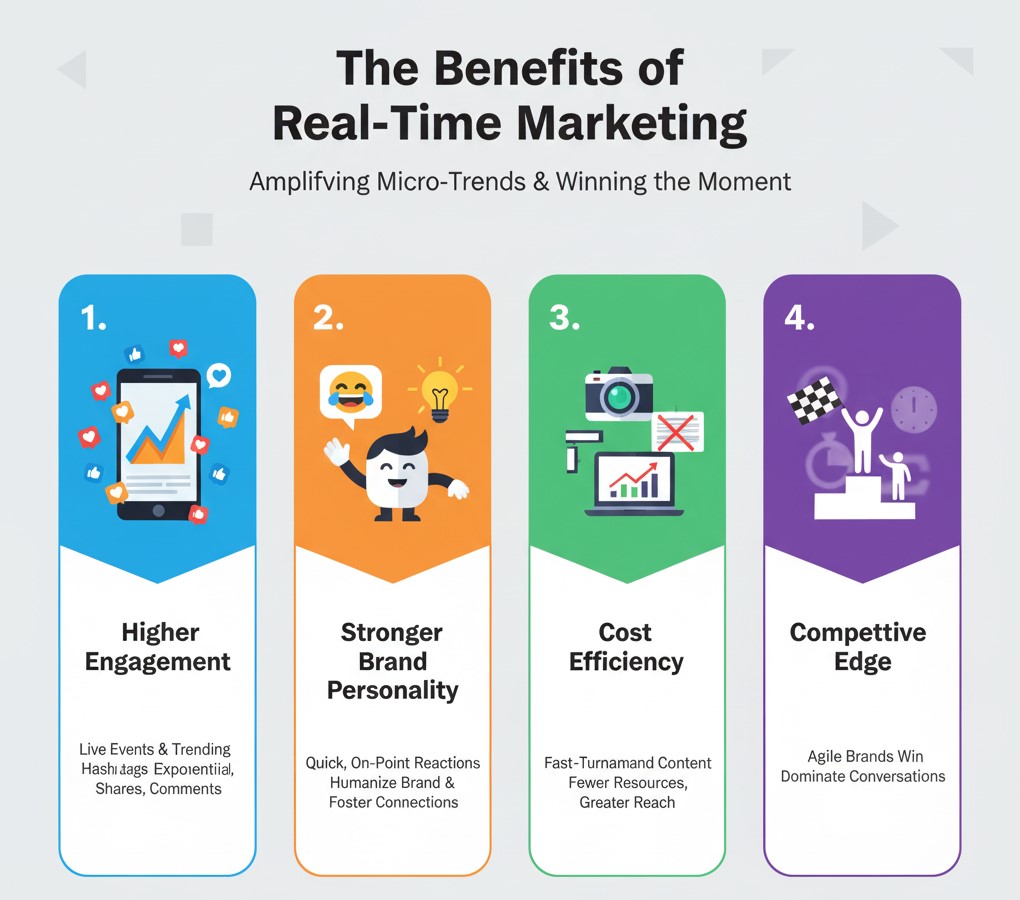
Real-time marketing—leveraging live events, trending topics, and immediate consumer insights—amplifies the power of micro-trends. Some core benefits include:
- Higher Engagement: Posts or ads tied to live events or trending hashtags can see exponentially higher likes, shares, and comments.
- Stronger Brand Personality: Quick, on-point reactions humanize your brand and foster deeper connections.
- Cost Efficiency: Fast-turnaround content often requires fewer resources than large-scale production–yet can yield comparable or greater reach.
- Competitive Edge: While laggard brands scramble on monthly calendars, agile brands win the moment and dominate conversations.
How to Identify the Next Micro-Trend
Spotting micro-trends before they peak is both an art and a science. Follow these steps to stay ahead of the curve:
1. Monitor Niche Communities
Platforms like Reddit, Discord, TikTok, and specialized Facebook groups are hotbeds for emerging conversation threads. Set up alerts for keywords related to your industry and track discussion volume changes.
2. Leverage Social Listening Tools
Tools such as Brandwatch, Sprout Social, or Talkwalker can analyze millions of posts in real time, flagging spikes in mentions related to new memes, hashtags, or product requests.
3. Partner with Influencers and Trendsetters
Influencers often surf the wave of emerging trends before they hit mainstream. Cultivate relationships with micro-influencers in your niche to get early signals about what’s next.
4. Scan Industry Reports and Newsletters
Subscribe to thought-leading newsletters, industry blogs, and research reports. Even if a trend hasn’t fully materialized in your target market, early mentions can spark timely ideation.
Implementing a Micro-Trend Marketing Campaign
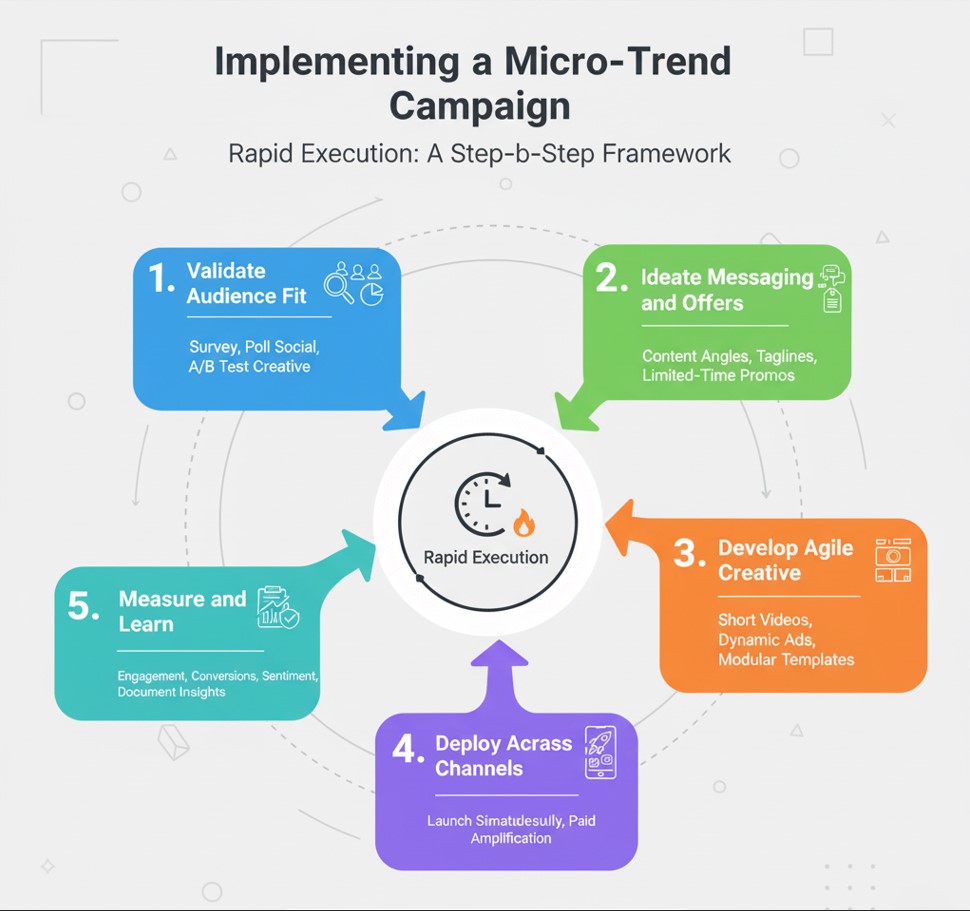
Once you’ve identified a promising micro-trend, rapid execution is critical. Here’s a step-by-step framework:
Step 1: Validate Audience Fit
Not every trend aligns with your brand values or customer base. Run a quick survey, poll your social following, or perform A/B testing on small creative assets to gauge interest.
Step 2: Ideate Messaging and Offers
Brainstorm content angles, taglines, or limited-time promotions that tie directly to the trend. Be authentic and avoid forced connections that feel gimmicky.
Step 3: Develop Agile Creative
Fast-turnaround assets—such as templated graphics, short-form videos, or dynamic social ads—are essential. Equip your design team with modular templates to customize quickly.
Step 4: Deploy Across Channels
Launch simultaneously on platforms where the trend is strongest. Use paid amplification sparingly for maximum organic reach. Track real-time performance and be ready to pivot creative or targeting within hours.
Pro Tip: Want to see your product go viral? Timing is everything. The right micro-trend, paired with clever, trend-aligned creative, can skyrocket visibility and engagement before the window closes.
Step 5: Measure and Learn
Capture engagement rates, click-throughs, conversions, and sentiment analysis. Document insights—what worked, what flopped, and why—to refine your next real-time campaign.
Tools and Technologies That Power Micro-Trend Marketing
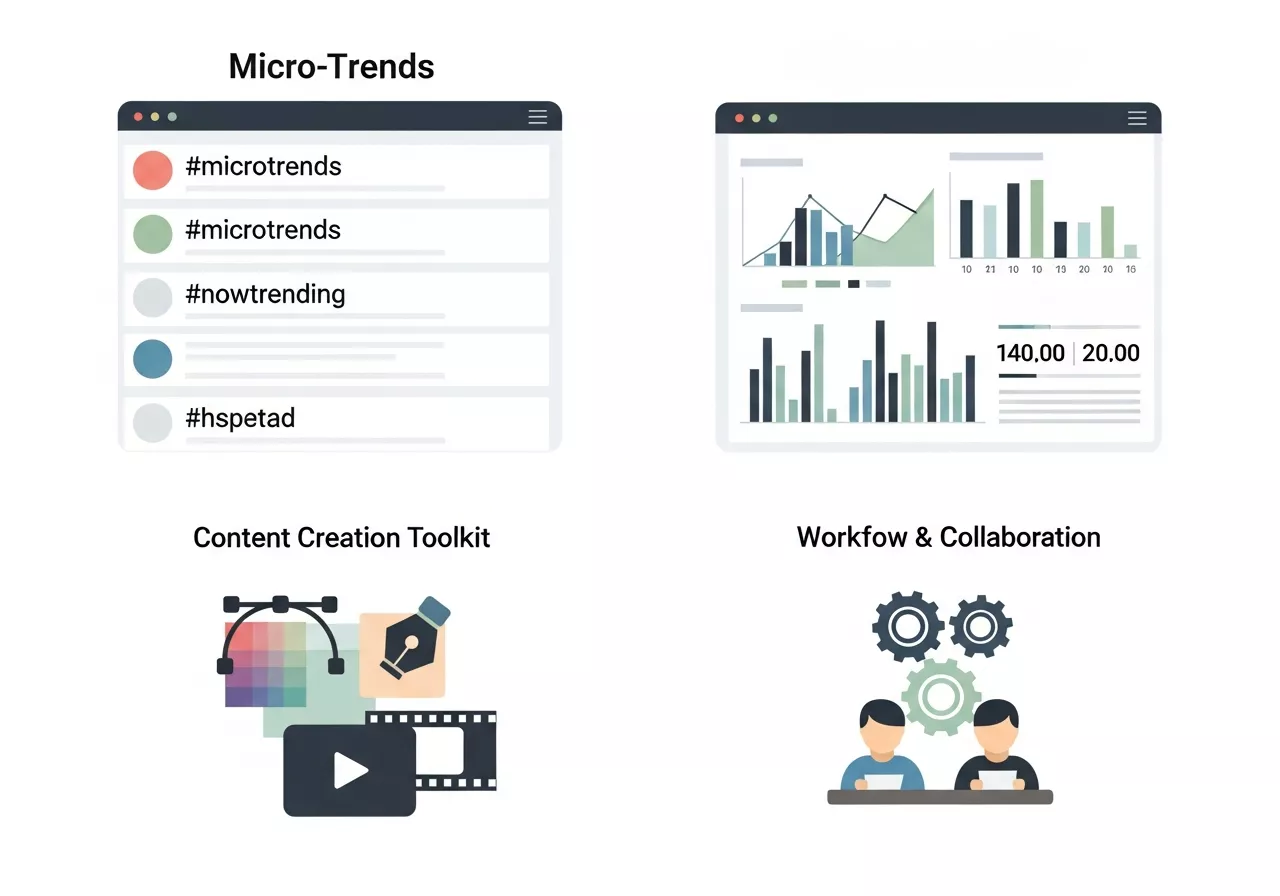
To successfully ride micro-trends, brands need more than intuition—they require smart tools that provide real-time insights. These tools allow marketers to detect shifts in consumer behavior, analyze sentiment, and quickly implement campaigns.
Key Tool Categories and Benefits:
- Social Listening Platforms: Monitor conversations across platforms to spot emerging hashtags, memes, or cultural moments.
- Analytics Dashboards: Track engagement, conversion rates, and trend virality in real time.
- Content Creation Suites: Facilitate rapid production of graphics, videos, and interactive posts.
- Collaboration & Workflow Tools: Ensure agile team coordination for approvals and campaign deployment.
| Tool Type | Example Tools | Purpose | Benefits |
|---|---|---|---|
| Social Listening | Brandwatch, Sprout Social | Detect trending topics and viral content | Early trend spotting, sentiment analysis |
| Analytics & Dashboards | Google Analytics, Tableau | Measure engagement, reach, conversions | Data-driven decisions, performance insights |
| Content Creation | Canva, Adobe Express | Produce fast-turnaround visuals and videos | Saves time, maintains brand quality |
| Collaboration & Workflow | Asana, Trello, Monday.com | Streamline approvals and team coordination | Reduces bottlenecks, accelerates publishing |
Pro Tip: Combining social listening with agile content creation tools can shorten campaign timelines from days to hours.
Real-World Case Studies
Let’s examine two brands that mastered micro-trend marketing with real-time agility:
Case Study 1: Snack Brand that Surfed a Meme Wave
A popular snack brand noticed a viral TikTok audio clip about late-night cravings. Within 48 hours, they released a playful 10-second video featuring their product dancing to the same tune. The post garnered 3 million views and doubled online sales during the weekend.
Case Study 2: Fashion Label and a Regional Festival
Ahead of a local cultural festival trending on Instagram, a fast-fashion label launched a capsule collection inspired by festival colors. They used Instagram Stories polls to co-create designs with followers. The limited drop sold out in 12 hours.
Best Practices for Sustainable Success
- Maintain a Trend Radar: Dedicate team members or tools to continuous monitoring—resting on your laurels means missing the next big moment.
- Build a Flexible Approval Workflow: Simplify sign-offs so content can go live within hours, not days.
- Align Trends with Core Values: Fast reactions should never undermine brand integrity. Establish guardrails to prevent off-brand messaging.
- Document Every Campaign: A trend’s half-life may be short, but learnings have a much longer shelf life. Archive creatives, performance data, and audience feedback.
- Balance Real-Time with Evergreen: While micro-trend campaigns drive spikes, maintain a backbone of evergreen content for consistent brand storytelling.
Mitigating Risks in Micro-Trend Campaigns
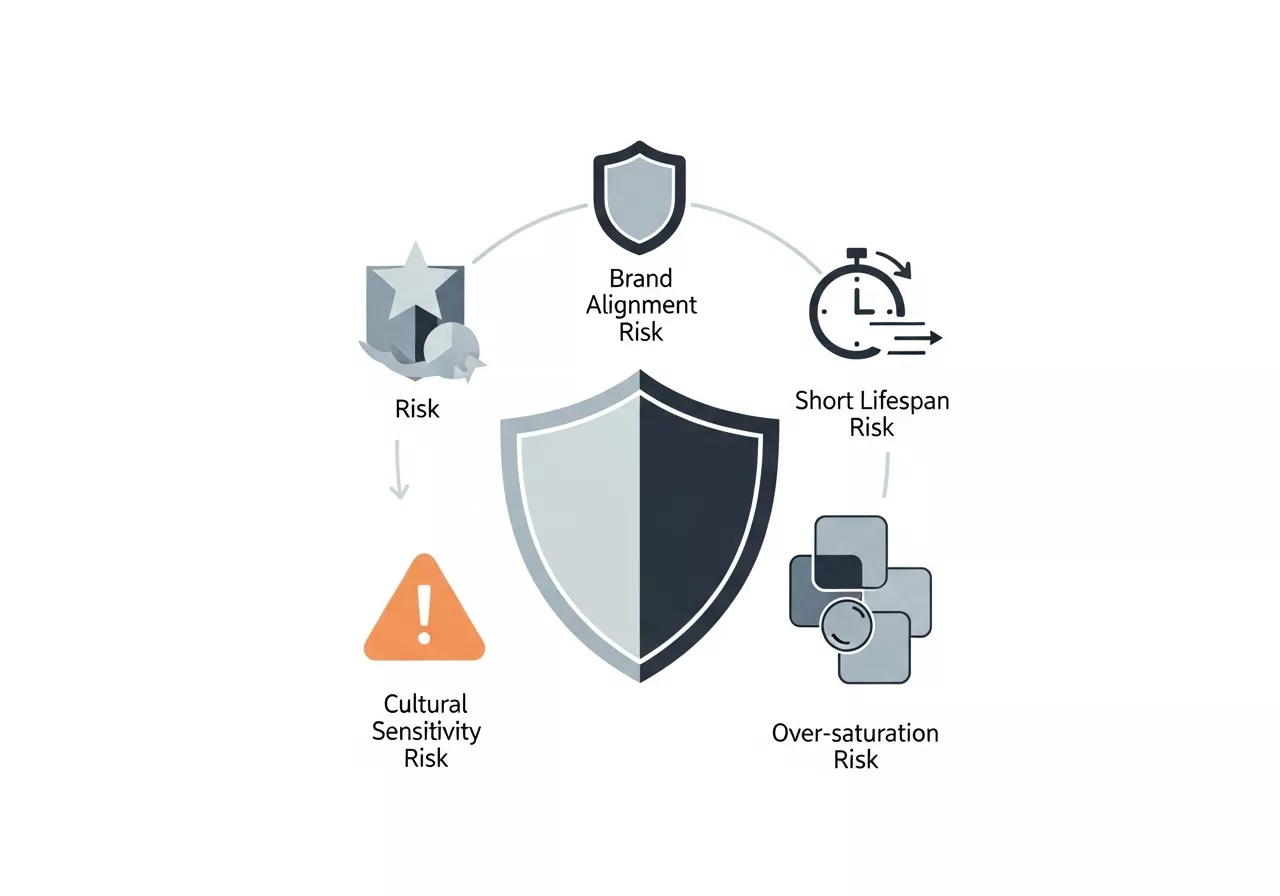
While micro-trends offer enormous opportunities, they come with risks. A misaligned campaign can backfire, damage brand reputation, or result in wasted resources. Understanding potential pitfalls is critical.
Common Risks:
- Brand Mismatch: Jumping on a trend that doesn’t align with your identity can feel forced.
- Short Lifespan: Trends can fade before your campaign goes live if approval workflows are slow.
- Cultural Sensitivity: Viral trends can sometimes touch on sensitive topics—missteps can generate negative publicity.
- Over-Saturation: If everyone jumps on the same trend, your content might get lost in the noise.
Mitigation Strategies:
- Predefine brand-alignment criteria for trend selection.
- Maintain agile approval and deployment processes.
- Use A/B testing for early-stage creative to gauge audience reactions.
- Monitor sentiment continuously and be ready to pivot or pause campaigns.
| Risk | Impact | Mitigation Strategy |
|---|---|---|
| Brand Mismatch | Audience disconnect, negative sentiment | Align trends with core values, run pre-tests |
| Short Trend Lifespan | Missed opportunity | Simplify workflow, use modular creative assets |
| Cultural Sensitivity | Public backlash | Conduct diversity/cultural reviews, monitor sentiment |
| Over-Saturation | Reduced visibility, campaign dilution | Find unique angles, differentiate messaging |
Key Insight: Smart risk management ensures that trend agility does not come at the cost of credibility.
Scaling Micro-Trend Success into Long-Term Strategy
Micro-trends are fleeting, but the skills and infrastructure you develop around them can fuel long-term growth. Brands that treat micro-trend campaigns as experiments build capabilities that benefit broader marketing strategies.
How to Scale Effectively:
- Create a Trend Playbook: Document successful campaigns, creative templates, and audience insights.
- Identify Repeatable Patterns: Some micro-trends signal recurring consumer behavior—plan semi-annual or seasonal activations around them.
- Integrate Data into Strategy: Use performance data to inform product development, content calendars, and broader marketing campaigns.
- Train Teams for Agility: Encourage cross-functional teams to respond rapidly and experiment safely.
Example Framework for Scaling:
| Step | Action | Outcome |
|---|---|---|
| Document Learnings | Capture what worked, what didn’t | Builds a knowledge base for future campaigns |
| Pattern Analysis | Identify recurring themes or viral triggers | Enables preemptive content planning |
| Template Library | Standardize modular creative assets | Speeds up production for future trends |
| Team Training | Cross-functional workshops in trend marketing | Ensures faster execution and better alignment |
Takeaway: Treat each micro-trend as a laboratory for experimentation. Insights and processes gained from one campaign can accelerate the success of future initiatives.
Conclusion
In an era where consumer interests pivot at lightning speed, mastering micro-trend marketing and real-time execution isn’t optional—it’s essential. Brands that develop the right tools, processes, and culture to seize fleeting trends will enjoy heightened engagement, stronger brand affinity, and accelerated growth. Start small: pick one emerging pattern, move fast, learn quickly, and scale your successes. The next viral moment is waiting—make sure your brand is ready to ride the wave.
Ready to supercharge your trend marketing strategy? Begin by auditing your social listening setup today, then map out your first micro-trend campaign for next week. Your competitors will be playing catch-up while you own the moment.
Frequently Asked Questions (FAQ)
1. What is micro-trend marketing?
Micro-trend marketing focuses on identifying and capitalizing on short-lived, highly specific trends that emerge in niche communities, social platforms, or local markets. These trends often arise suddenly, gain rapid popularity, and fade within days or weeks. Brands that act quickly can achieve high engagement and brand relevance.
2. Why should my brand care about micro-trends?
Micro-trends allow brands to:
- Capture peak audience engagement by being timely
- Demonstrate cultural awareness and agility
- Create high-impact campaigns with minimal budget
- Gain a competitive edge over slower, traditional campaigns
By aligning with micro-trends, brands stay top-of-mind and increase social media visibility.
3. How can I identify the next micro-trend?
You can spot micro-trends using:
- Niche community monitoring: Reddit, Discord, TikTok, or specialized Facebook groups
- Social listening tools: Brandwatch, Sprout Social, or Talkwalker
- Influencer collaborations: Early trend adoption signals from micro-influencers
- Industry newsletters and blogs: Early mentions can inspire timely campaigns
Early detection is key to executing a successful micro-trend campaign.
4. What is real-time marketing and how does it relate to micro-trends?
Real-time marketing leverages current events, trending topics, and immediate consumer insights to create timely content. It complements micro-trends by allowing brands to respond quickly and stay relevant, maximizing engagement and visibility while the trend is active.
5. How do I execute a micro-trend marketing campaign effectively?
A successful campaign follows these steps:
- Validate audience fit to ensure the trend aligns with your brand
- Ideate messaging and offers that feel authentic
- Develop agile creative for fast deployment
- Launch across relevant platforms with real-time monitoring
- Measure engagement, conversions, and sentiment, and document learnings
Speed, authenticity, and agility are critical for success.
6. Can small brands leverage micro-trends successfully?
Absolutely. In fact, micro-trends level the playing field: small brands can act faster, create niche-targeted content, and engage audiences with clever, authentic campaigns. The key is preparation, monitoring, and a willingness to experiment quickly.
7. What are the risks of micro-trend marketing?
- Trend misalignment: Jumping on a trend that doesn’t fit your brand can appear inauthentic
- Short-lived impact: Micro-trends fade quickly, so campaigns must act fast to gain value
- Resource strain: Rapid content creation and approvals can overwhelm teams if processes aren’t streamlined
Establishing clear guidelines and agile workflows mitigates most risks.
8. How do I measure the success of micro-trend campaigns?
Key metrics include:
- Social engagement (likes, shares, comments)
- Video views or impressions
- Click-through and conversion rates
- Sentiment analysis to assess audience perception
- Sales lift during the trend’s active period
Documenting insights also helps refine future real-time campaigns.
9. Should micro-trend campaigns replace my long-term marketing strategy?
No. Micro-trend marketing complements your core marketing. While trends drive spikes in engagement, evergreen content ensures consistent brand storytelling and long-term growth. Balance is key: use micro-trends to amplify your brand without neglecting foundational strategies.
10. How do I prepare my team for micro-trend marketing?
- Set up continuous trend monitoring and social listening
- Build flexible content approval processes
- Establish brand guidelines for quick, on-brand messaging
- Encourage cross-team collaboration between marketing, creative, and social media teams
Being prepared enables rapid execution and reduces the risk of errors or off-brand content.
Learn more about: How to Master Trend Marketing Strategy (Without Looking Desperate)








Leave a Reply