

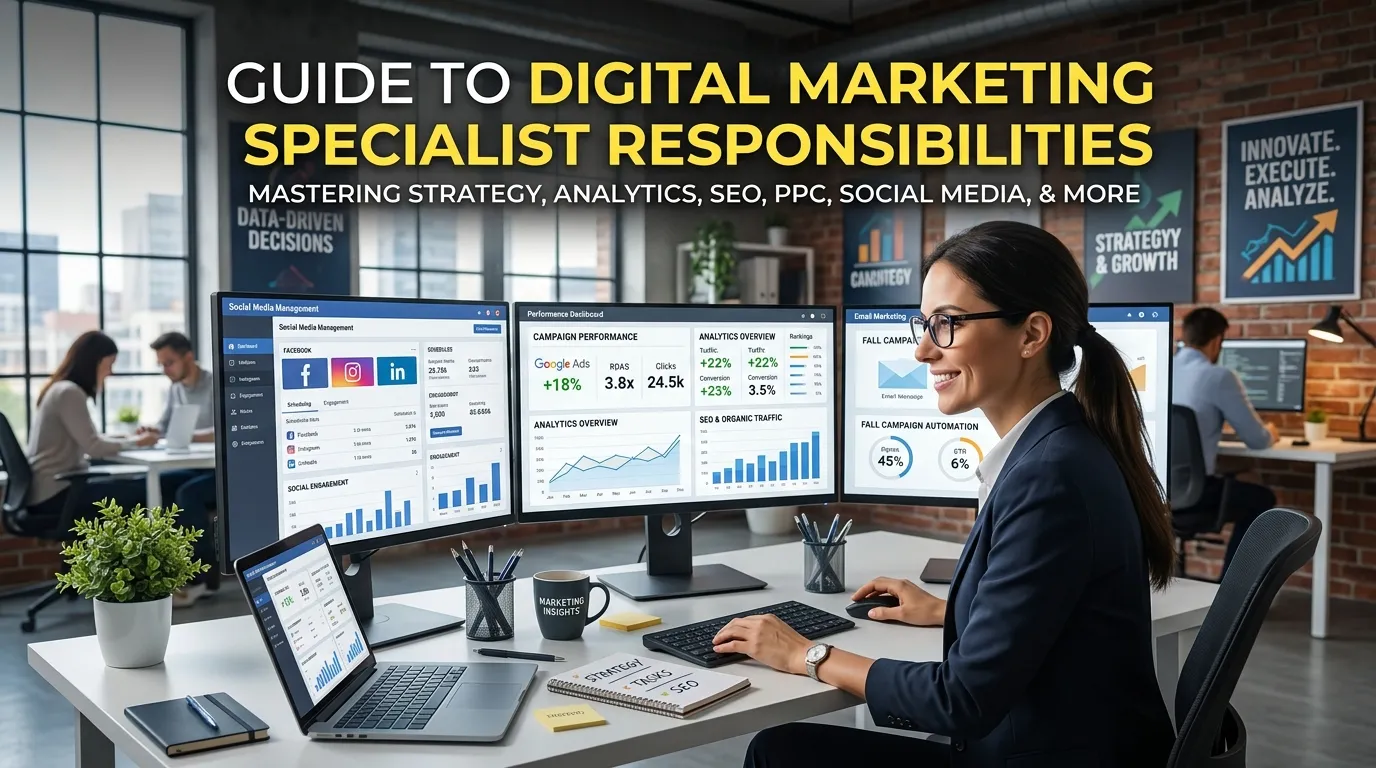
This comprehensive guide details the daily tasks, core competencies, and critical tools required for digital marketing specialists. You will learn about campaign management, essential soft skills, industry-standard platforms, and practical tips to avoid common pitfalls while advancing your marketing career.
The scope of digital marketing specialist responsibilities varies by company size and industry. However, professionals in this role generally manage a diverse portfolio of online channels to drive brand awareness and customer acquisition.
Content Creation and Management

A robust content strategy serves as the foundation for digital growth. Specialists plan, write, and distribute engaging material across blogs, landing pages, and social channels. They ensure all copy aligns with brand guidelines and speaks directly to the target audience. Writing compelling calls-to-action and managing editorial calendars keeps the pipeline full of high-quality assets. Read more about content frameworks on HubSpot.
Search Engine Optimization (SEO) Strategies
Visibility on search engines dictates organic traffic flow. Marketers conduct thorough keyword research, optimize meta tags, and improve website architecture for SEO optimization. They also build backlinks and monitor search engine algorithms to maintain high rankings. You can explore our internal guide on [Advanced On-Page SEO Techniques] to master these specific tasks.
Pay-Per-Click (PPC) and Paid Advertising
Allocating budget efficiently requires a deep understanding of search engine marketing. Specialists design, launch, and monitor ad campaigns on platforms like Google Ads and Bing. They focus on minimizing cost-per-click while maximizing conversion rate optimization. Daily duties include adjusting bids, refining target demographics, and testing ad copy.
Social Media Marketing and Engagement
Building a community requires active social media management. Professionals curate posts, respond to customer inquiries, and analyze engagement metrics across platforms like LinkedIn, Instagram, and X. They launch targeted social ads to capture new audiences and drive direct sales.
Email Marketing and Automation
Email remains a highly effective channel for lead generation and retention. Specialists build subscriber lists, segment audiences, and design newsletter templates. They implement marketing automation workflows to send personalized messages based on user behavior, such as abandoned cart reminders or welcome sequences.
Data Analytics and Performance Monitoring
Without accurate tracking, campaigns waste valuable resources. Marketers utilize data analytics to measure the success of their initiatives. They track key performance indicators (KPIs) like bounce rate, return on ad spend (ROAS), and customer lifetime value (CLV). Regularly generating reports helps stakeholders understand campaign effectiveness. Check out Google’s Analytics documentation for advanced implementation techniques.
Essential Skills for Success (Technical vs. Soft Skills)
To execute digital marketing specialist responsibilities effectively, professionals need a balanced mix of hard and soft skills.
Technical Skills:
- HTML/CSS basics for website adjustments
- Proficiency in customer relationship management (CRM) software
- Advanced spreadsheet manipulation for data modeling
- Copywriting and editing for digital formats
Soft Skills:
- Creative problem-solving to overcome campaign plateaus
- Adaptability to keep up with rapid algorithm changes
- Strong communication skills to present data to non-technical stakeholders
- Time management to juggle multiple channels simultaneously
Key Tools and Platforms
Familiarity with industry-standard software enables marketers to execute campaigns efficiently.
- Google Analytics: Tracks website traffic, user behavior, and conversion paths.
- Google Ads: Powers search, display, and video advertising campaigns.
- SEMrush / Ahrefs: Provides deep insights into competitor keywords, backlink profiles, and overall SEO health. Learn how to use SEMrush.
- Mailchimp / HubSpot: Facilitates email design, list segmentation, and automated workflows.
- Hootsuite / Sprout Social: Schedules posts and monitors brand mentions across multiple social networks.
Career Outlook and Path to Advancement
The demand for digital marketing expertise continues to climb as businesses transition fully into the digital economy. Professionals usually begin as coordinators or analysts before moving into specialist roles. From there, the career path branches into management positions like Digital Marketing Manager, Director of Marketing, or specialized tracks such as Head of SEO. Building a diverse portfolio and demonstrating a track record of positive ROI accelerates this progression.
Common Mistakes to Avoid in Digital Marketing
Even experienced professionals encounter pitfalls. Avoid these common errors to protect your campaigns:
- Ignoring Mobile Users: Failing to optimize landing pages for mobile devices destroys conversion rates.
- Neglecting A/B Testing: Relying on assumptions instead of testing headlines, images, and button colors limits campaign growth.
- Setting Unrealistic Goals: Promising overnight results sets teams up for failure. Sustainable growth requires time and consistent optimization.
- Overlooking Data Privacy: Mishandling customer data violates regulations like GDPR and damages brand trust.
Expert Insights and Pro Tips
To stand out in this competitive field, industry leaders recommend focusing on the customer journey rather than isolated metrics. Integrate your channels so that a user who clicks a social ad receives a highly relevant email follow-up. Always document your campaign strategy before spending ad dollars, and cross-reference your findings with internal resources like our [Guide to Audience Segmentation].
Comparison Table of Marketing Roles
|
Role |
Primary Focus |
Key Tools |
Core Metric |
|---|---|---|---|
|
Digital Marketing Specialist |
Omnichannel growth, campaign execution |
Google Analytics, HubSpot, SEMrush |
ROI, Total Conversions |
|
SEO Specialist |
Organic search visibility, technical site health |
Ahrefs, Screaming Frog, Search Console |
Organic Traffic, Keyword Rankings |
|
Social Media Manager |
Community building, brand awareness |
Sprout Social, Canva, Meta Business |
Engagement Rate, Follower Growth |
|
PPC Analyst |
Paid search/display, budget management |
Google Ads, Microsoft Ads, Optmyzr |
ROAS, Cost Per Acquisition |
Taking the Next Step in Your Career
Mastering digital marketing specialist responsibilities requires continuous learning and adaptability. By refining your technical skills and embracing strategic thinking, you can significantly boost brand visibility and revenue. Start experimenting with new platforms, earn relevant certifications, and consistently optimize your campaigns to build a highly successful and rewarding marketing career. Take the next step today.
FAQs
1. What does a digital marketing specialist do on a daily basis?
A specialist typically starts the day reviewing campaign performance metrics. They spend the remaining hours creating content, adjusting ad bids, scheduling social media posts, and coordinating with design teams to launch new marketing assets.
2. Do I need a degree to become a digital marketing specialist?
While a bachelor’s degree in marketing or communications helps, it is not strictly required. Many professionals build successful careers through practical experience, bootcamps, and industry certifications like Google Analytics or HubSpot Inbound Marketing.
3. How much coding knowledge is required?
You do not need to be a software engineer, but understanding basic HTML and CSS is highly beneficial. This knowledge allows you to troubleshoot landing page formatting, adjust email templates, and insert tracking pixels without waiting for a developer.
4. What is the most challenging aspect of this role?
Keeping pace with constant algorithm updates across search engines and social platforms presents the biggest challenge. Marketers must remain agile and frequently adjust their strategies to maintain visibility.
5. How do digital marketers measure success?
Success depends on the specific campaign goals. Common metrics include Return on Investment (ROI), Cost Per Acquisition (CPA), conversion rates, organic traffic growth, and email open rates.
6. What is the difference between B2B and B2C digital marketing?
B2B (business-to-business) marketing involves longer sales cycles, focuses on logic and ROI, and heavily utilizes platforms like LinkedIn and email nurturing. B2C (business-to-consumer) marketing relies on emotional triggers, faster purchases, and visual platforms like Instagram and TikTok.
7. How long does it take to see results from digital marketing?
Paid advertising (PPC) can generate traffic and leads almost immediately after launch. In contrast, organic strategies like SEO and content marketing often take three to six months to show significant momentum.
8. Is artificial intelligence replacing digital marketing jobs?
AI is augmenting the role, not replacing it. Tools like ChatGPT assist with brainstorming and data analysis, allowing specialists to work faster. However, human strategy, creativity, and empathy remain essential for building genuine brand connections.
9. Which certification should I get first?
The Google Analytics certification provides the best starting point. Data analysis forms the backbone of all digital marketing channels, and understanding how to track user behavior gives you a massive advantage.
10. How can I gain experience if I have never worked in marketing?
Start by marketing your own projects. Create a blog, grow a social media account around a hobby, or offer to run a small Google Ads campaign for a local business or non-profit organization. Building a portfolio of real-world results speaks louder than a resume.





Leave a Reply