


Brands gain a competitive edge by predicting and leveraging emerging consumer trends. Effective trend marketing combines forecasting, authentic campaigns, cross-platform integration, and real-time acceleration, creating emotional resonance, driving engagement, and turning micro-trends into sustainable growth and brand leadership.
In an era where consumer behaviors shift overnight, brands that master trend marketing gain a powerful edge. Trend marketing goes beyond reacting to viral moments—it’s about anticipating shifts in consumer values, technology adoption, and cultural movements before they become mainstream. This comprehensive guide will walk you through advanced strategies for identifying, forecasting, and leveraging emerging trends and beyond.
1. Why Trend Marketing Matters
As markets saturate and attention spans shorten, traditional marketing tactics lose impact. Trend marketing offers several advantages:
- Proactive Positioning: Brands can position themselves as innovators rather than followers, capturing early adopters and media attention.
- Deeper Engagement: By aligning campaigns with authentic cultural or technological shifts, you forge stronger emotional connections.
- Optimized ROI: Investing in emerging trends early often costs less and yields higher returns compared to saturated channels.
2. Building a Robust Trend Forecasting System
Effective forecasting combines qualitative and quantitative methods. Follow this five-step framework:
- Data Collection: Aggregate data from social listening tools (e.g., Brandwatch, Sprinklr), search trends (Google Trends), and emerging platform analytics (TikTok Creative Center).
- Expert Insights: Interview industry experts and micro-influencers for anecdotal perspectives on nascent movements.
- Pattern Analysis: Use AI-driven analytics to detect spikes and co-occurrence of keywords, hashtags, and sentiment shifts across channels.
- Scenario Planning: Develop multiple future scenarios (best case, worst case, base case) to stress-test your assumptions.
- Validation and Iteration: Pilot small-scale campaigns, measure performance, and refine forecasts monthly.
3. Trend Mapping: From Macro to Micro
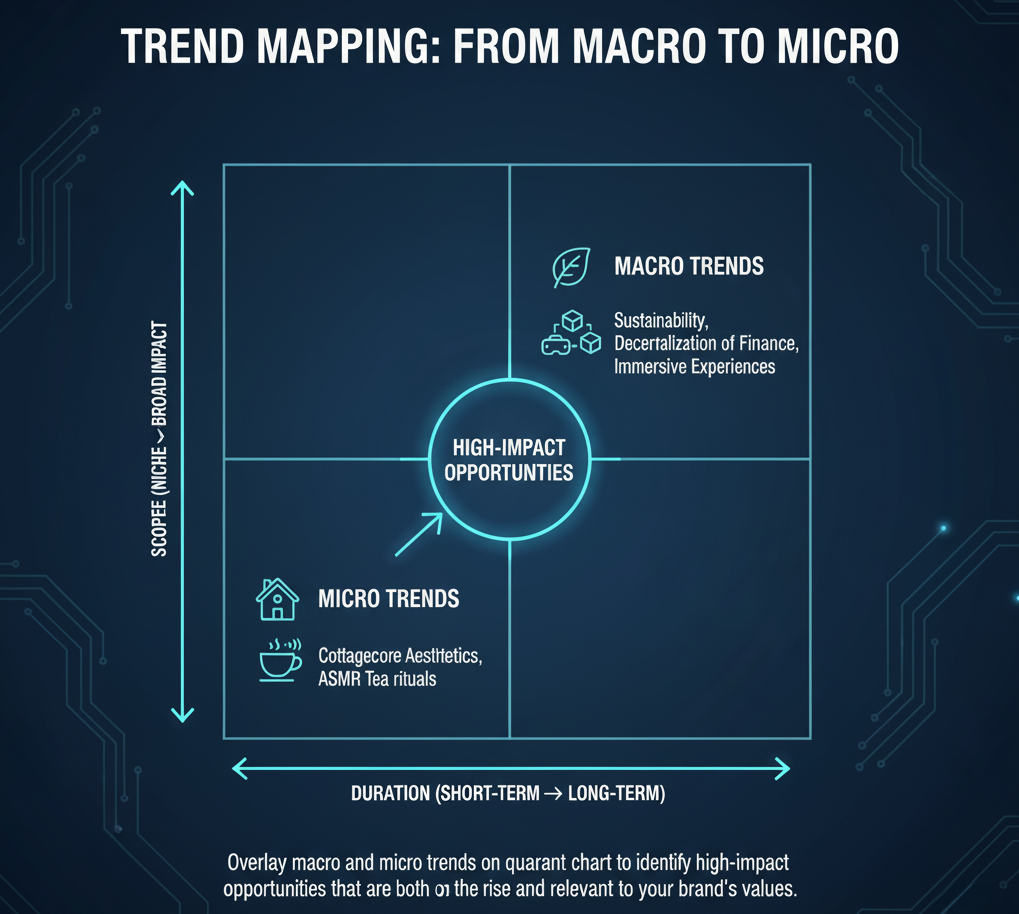
Understanding how Business Trends evolve across different layers helps brands prioritize what truly matters. Not all trends are created equal. Map them across two dimensions:
- Macro Trends: Broad, long-term shifts (e.g., sustainability, decentralization of finance, immersive experiences).
- Micro Trends: Short-lived spikes driven by viral content, niche communities, or emerging subcultures (e.g., cottagecore aesthetics, ASMR tea rituals).
Overlay macro and micro trends on a quadrant chart to identify high-impact opportunities that are both on the rise and relevant to your brand’s values.
4. Crafting Trend-Driven Campaigns
Once high-potential trends are identified, design campaigns that integrate them naturally into your brand narrative. Here’s a six-step process:
- Trend Translation: Define how the trend resonates with your audience’s needs and your product’s unique promise.
- Creative Ideation: Host cross-functional brainstorming sessions to generate A- and B-level concepts, ensuring one Big Idea anchors the campaign.
- Channel Strategy: Prioritize platforms where the trend is most active—be it niches on Reddit or viral challenges on TikTok.
- Influencer Alignment: Partner with micro-influencers who embody the trend authentically, avoiding overly polished celebrity endorsements.
- Agile Execution: Launch a pilot version, gather real-time feedback, and iterate within 48–72 hours to stay relevant.
- Measurement Framework: Track both leading (engagement rate, sentiment delta) and lagging indicators (sales lift, share of voice) with unified dashboards.
5. Case Study: EcoTech’s Sustainable Gadget Launch
EcoTech, a mid-size consumer electronics company, spotted an emerging macro trend—eco-conscious tech—and a micro trend around zero-waste packaging challenges on Instagram. They:
- Hosted a user-generated “Unbox the Future” contest, encouraging followers to showcase creative ways to reuse packaging.
- Partnered with three eco-influencers to co-create limited-edition biodegradable cases, dropping teaser videos on Reels.
- Deployed sentiment-tracking bots to pivot messaging when interest spiked among Gen Z audiences.
Result: 45% increase in pre-orders and a 60% rise in Instagram mentions within two weeks—a testament to proactive trend alignment.
6. Overcoming Common Challenges
Trend marketing isn’t without pitfalls. Key challenges include:
- Data Overload: Too many signals can paralyze decision-making. Mitigate by focusing on 2–3 critical metrics per trend.
- Trend Misfires: Misreading a fad as a sustainable shift can backfire. Run micro-tests before full-scale rollouts.
- Resource Constraints: Agile trend campaigns require rapid creative and operational bandwidth. Build an internal “Trend Task Force” to streamline approvals.
- Authenticity Risk: Audiences reject inauthentic or opportunistic pivots. Stay true to your core brand values and only chase trends that align organically.
7. Tools & Technologies to Supercharge Your Efforts
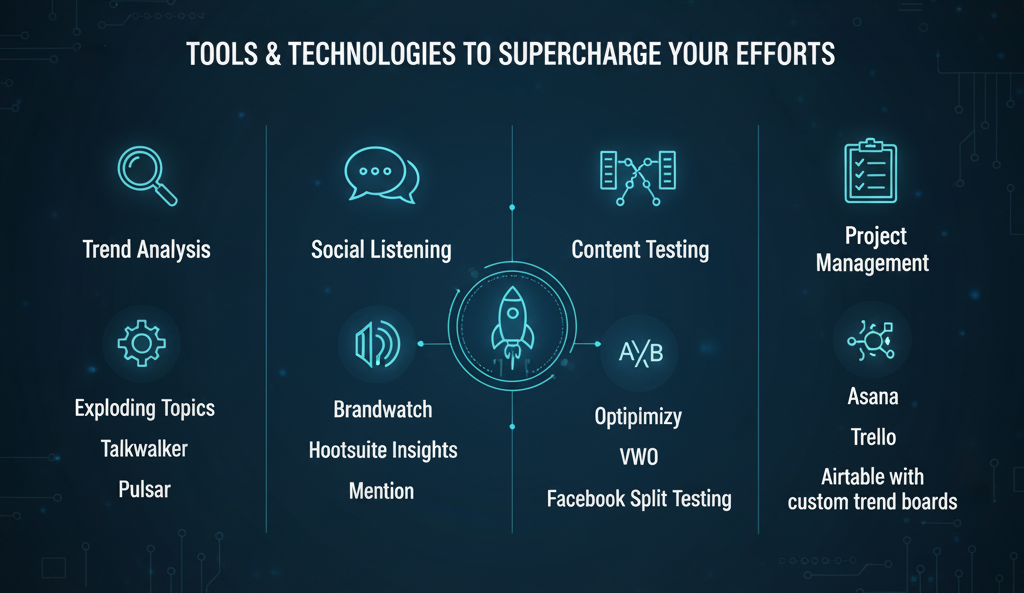
Equip your team with best-in-class tools:
- Trend Analysis: Exploding Topics, Talkwalker, Pulsar.
- Social Listening: Brandwatch, Hootsuite Insights, and Mention.
- Content Testing: Optimizely, VWO, Facebook Split Testing.
- Project Management: Asana, Trello, Airtable with custom trend boards.
8. Step-by-Step Implementation Roadmap
Follow this 90-day plan to institutionalize trend marketing:
- Weeks 1–3: Set up data pipelines, assemble cross-functional task force, define success metrics.
- Weeks 4–6: Conduct deep-dive trend workshops, develop 3 pilot campaign briefs.
- Weeks 7–9: Launch pilots, gather real-time feedback, and refine creative on the fly.
- Weeks 10–12: Scale winning campaigns, integrate learnings into quarterly planning, and document playbooks.
9. Measuring Success & Scaling Up
Evaluate trend marketing performance across three dimensions:
- Engagement Depth: Time spent on campaign pages, repeat visits, and UGC submissions.
- Brand Lift: Changes in brand awareness, purchase intent, and sentiment scores.
- Revenue Impact: Incremental sales, average order value, and customer lifetime value improvements.
Replicate successful trend campaigns across regions or product lines, always adapting to local nuances.
10. The Future of Trend Marketing
Looking ahead, AI and machine learning will refine trend prediction accuracy, while immersive technologies (AR/VR) create entirely new micro-trends. Brands that marry human intuition with data-driven foresight will continue to lead the pack. Prepare your organization to embrace adaptive, trend-centric workflows, and you’ll not only ride waves—you’ll create them.
11. Building a Trend-Ready Brand Culture
Trend marketing succeeds only when the entire organization—not just the marketing team—embraces a culture of agility, experimentation, and curiosity. A trend-ready brand culture empowers teams to spot opportunities early and respond faster than competitors.
Key Pillars of a Trend-Ready Culture
1. Curiosity at Every Level
Encourage employees to explore emerging platforms, subcultures, and technologies. Weekly sharing sessions or “Trend Fridays” help surface new ideas before they reach mainstream awareness.
2. Fast Decision-Making
Traditional corporate approvals kill trend relevance. Brands thriving in trend cycles operate with decentralized decision-making, enabling teams to execute micro-campaigns without waiting weeks for approval.
3. Failure-Friendly Mindset
Trend marketing is experimental by nature. Cultures that penalize imperfect campaigns or small misfires limit creativity. Instead, focus on rapid learning cycles—what worked, what didn’t, and why.
4. Continuous Upskilling
New trends often emerge from new tools. Investing in training around AI tools, short-form video creation, cultural research, and social listening ensures the team stays ahead of the curve.
12. Consumer Psychology in Trend Adoption
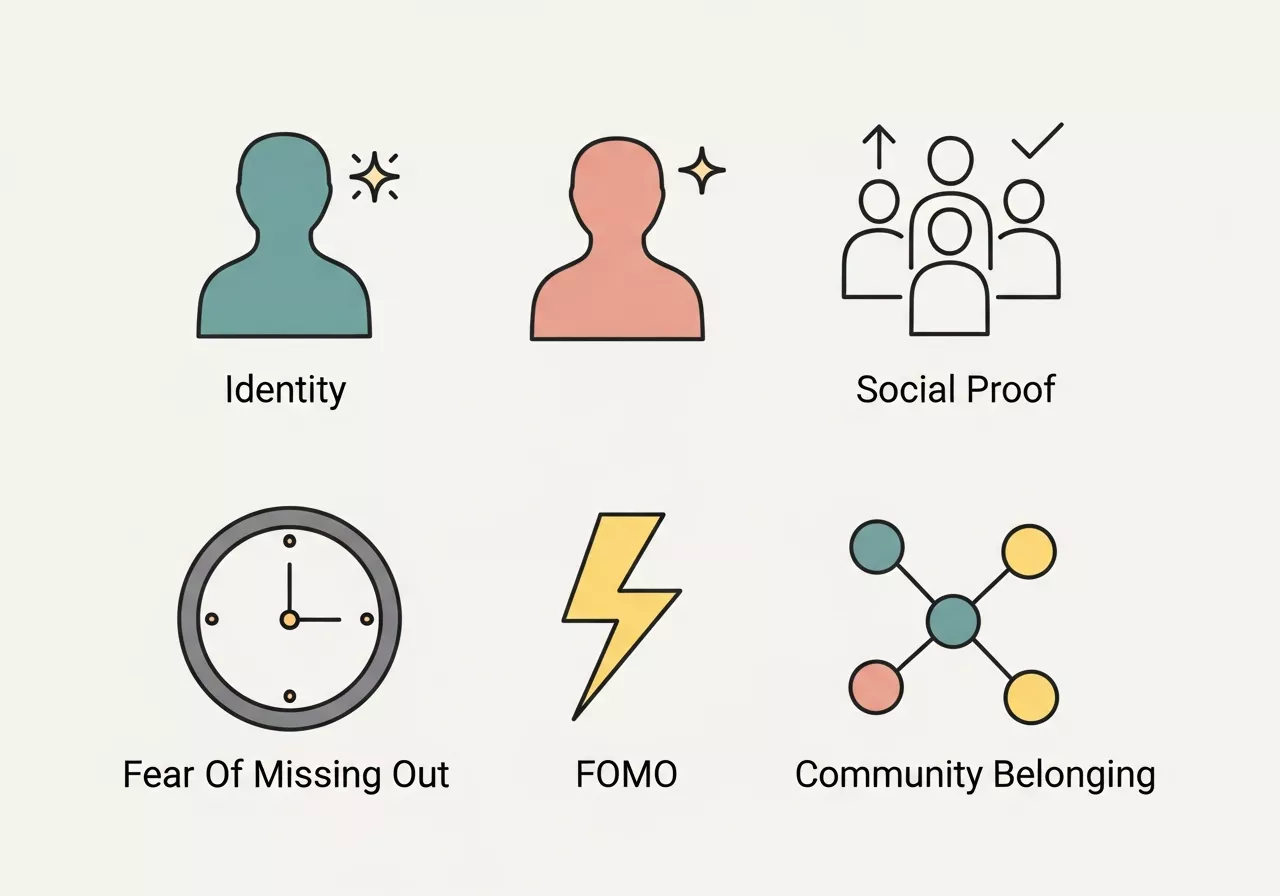
Understanding why consumers follow trends is as important as predicting which trends will rise. Effective trend marketing taps into human behavior patterns that drive participation, sharing, and brand loyalty.
Core Psychological Drivers Behind Trend Engagement
Identity Expression
Consumers adopt trends that help express who they are—or who they aspire to be. Successful campaigns allow audiences to show off their evolving identity through content, communities, or branded challenges.
Social Proof & Herd Behavior
People follow what others are doing, especially when content visibly gains traction. Brands should amplify early engagement, highlight UGC, and showcase influencers to accelerate herd adoption.
Fear of Missing Out (FOMO)
Limited-time drops, exclusive challenges, and early-access events trigger urgency. Trend-driven campaigns with scarcity—time, quantity, or exclusivity—perform significantly better.
Community Belonging
Trends today often start in niche communities. Brands that build “micro-communities” around emerging trends foster loyalty and participation, strengthening long-term momentum.
Table: Psychological Drivers and Ideal Campaign Tactics
| Psychological Driver | Ideal Campaign Format | Example Strategy |
|---|---|---|
| Identity Expression | UGC challenges, aesthetic videos | “Show Your Version Of…” campaigns |
| Social Proof | Influencer waves, stitchable content | Encourage duets, reactions, and remixes |
| FOMO | Limited-edition products | 48-hour product drops tied to micro-trends |
| Community Belonging | Private groups, early-access invites | Trend-focused Discord communities |
This psychological foundation ensures your trend campaigns don’t just follow hype—they create emotional resonance.
13. Avoiding Trend Fatigue & Maintaining Brand Consistency
Jumping on trends without a strategic filter can dilute your brand and exhaust your audience. Trend fatigue happens when brands chase every viral moment, losing authenticity and overwhelming customers.
How to Prevent Trend Fatigue
1. Establish a Trend Filter Framework
Create a simple internal checklist:
- Does this trend align with our brand values?
- Can we add value instead of noise?
- Will this trend still matter in 30–60 days?
- Do we have a unique angle or creative edge?
Only engage when the trend passes 3 out of 4 criteria.
2. Maintain a Core Narrative
Trends should amplify your message—not replace it. Whether the trend is around sustainability, aesthetics, or tech innovation, tie it back to your core brand story.
3. Prioritize Depth Over Frequency
Instead of reacting to 20 trends per month, choose 2–3 that provide meaningful opportunities. This increases impact, reduces fatigue, and keeps your messaging consistent.
4. Use a Campaign Calendar
Blend evergreen campaigns with trend-driven bursts. This stabilizes your brand presence and ensures you’re not overly reliant on unpredictable viral cycles.
5. Monitor Audience Sentiment
If comments shift from excitement to annoyance (“Another trend? Seriously?”), pause and recalibrate. Sentiment analysis tools can detect fatigue early.
14. Building Collaborative Trend Ecosystems With Creators & Communities
Modern trends rarely start with brands—they emerge from creators, niche communities, and cultural hubs. Instead of simply responding to trends, brands can co-create them by building collaborative ecosystems that inspire organic momentum.
How to Build a Trend Ecosystem
1. Co-Creation With Micro-Communities
Tap into tight-knit groups—gaming clans, eco communities, local art collectives, hobby forums—who are often the first to test new ideas.
These communities provide:
- Early signals
- Honest feedback
- Creative concepts
- Built-in evangelists
2. Creator-Led Concept Development
Instead of hiring influencers for promotion, bring them into the brainstorming phase. Creators understand platform mechanics and cultural nuance better than brands, making them valuable collaborators.
3. Open Innovation Challenges
Launch branded creative challenges that invite followers to contribute ideas, designs, or content.
These challenges help:
-
Identify hidden trendsetters
-
Generate fresh content
-
Spark viral sharing
-
Strengthen emotional loyalty
4. Community Incubation Spaces
Host digital spaces (Discord, Reddit-style hubs, private groups) where fans can gather, share ideas, and test aesthetic or content trends before you go live.
By becoming a collaborator—not a spectator—your brand can help shape the next wave of cultural shifts.
15. Operationalizing Trend Marketing Across the Organization
Trend marketing fails when it’s limited to the marketing department. To consistently capitalize on emerging trends, companies must integrate the process into all functional areas—from product development to customer experience.
Key Areas Where Trend Marketing Should Be Integrated
1. Product Development
Trend forecasting should inform product features, packaging, limited-edition drops, and customization options.
Example: A rising micro-trend around “AI-personalized experiences” could inspire a customizable product line.
2. Sales & Customer Support
Train frontline teams on rising trends so they can:
- Speak the language of emerging communities
- Address new consumer expectations
- Offer trend-aligned recommendations
- Recognize new opportunities during customer interactions
3. Supply Chain & Operations
Trends often require rapid adaptation. Operations teams must prepare for:
- Faster production cycles
- Limited drops
- Localized variations
- Seasonal spikes
4. Leadership & Strategy
Executives must adopt agile planning cycles (quarterly, not yearly) to support trend-driven campaigns.
Leadership alignment is critical for speed, budget allocation, and risk tolerance.
Operational Trend Adoption Model (Simple & Effective)
No table—just a clean framework:
Observe → Evaluate → Prototype → Launch → Scale
- Observe: Monitor signals from social, creators, data tools, and communities
- Evaluate: Check alignment with brand values and market opportunity
- Prototype: Run micro-tests and early creative sprints
- Launch: Execute fast, agile campaign versions
- Scale: Expand only when traction is proven
Trend marketing becomes significantly more powerful when it evolves from a marketing tactic into an organizational capability.
Conclusion
Trend marketing is no longer optional—it’s a strategic imperative. By building a robust forecasting system, crafting authentic campaigns, and measuring with precision, your brand can stay several steps ahead in an ever-evolving landscape. Start small, iterate fast, and scale smart to make emerging consumer trends your greatest growth lever.
Ready to revolutionize your marketing strategy? Begin your trend marketing journey today and lead tomorrow’s conversations.
FAQ: Next-Gen Trend Marketing Strategies
1. What is trend marketing?
Trend marketing refers to the process of identifying emerging cultural, technological, and behavioral shifts and using them to shape marketing campaigns before they hit the mainstream. Instead of reacting once a trend becomes popular, brands use forecasting tools and consumer insights to anticipate what audiences will care about next and position themselves as early leaders.
2. Why is trend marketing important today?
Consumer preferences change faster than ever, and traditional campaigns often lose impact because they fail to adapt quickly. Trend marketing helps brands stay relevant, connect emotionally with their audience, and capture attention while competition is still low. It also improves return on investment because early adoption typically costs less than entering a trend after it becomes saturated.
3. How can small businesses use trend marketing without big budgets?
Small businesses can benefit from trend marketing by monitoring niche online communities, using free tools like Google Trends, experimenting with short-form video content, and collaborating with micro-influencers who naturally understand local or emerging trends. Small-scale tests and simple campaign concepts allow small businesses to move quickly without needing complex systems.
4. What tools help with predicting emerging trends?
Predicting trends often involves a mix of social listening tools, trend discovery platforms, and content analytics. Tools like Exploding Topics, Talkwalker, Brandwatch, Pulsar, and TikTok Creative Center help marketers analyze consumer conversations, rising keywords, and niche movements. These platforms provide early signals that allow teams to prepare campaigns before trends become obvious.
5. How do brands determine if a trend aligns with their identity?
Brands should evaluate whether a trend reflects their core values, fits naturally with their product promise, and resonates with their target audience. A trend should enhance a brand’s existing identity rather than force it into unfamiliar territory. If a trend requires a brand to behave unnaturally or contradict its values, it’s not a sustainable fit.
6. How do companies avoid chasing the wrong trends?
Avoiding trend misfires starts with testing. Instead of launching large campaigns immediately, brands can run small experiments, limited content drops, or A/B tests to gauge audience interest. If engagement, sentiment, or early performance indicators fall flat, the brand can easily pivot without significant loss. Trend marketing succeeds when strategy stays flexible and experimental.
7. What’s the difference between macro and micro trends in marketing?
Macro trends represent long-term shifts such as sustainability, wellness, AI adoption, or decentralized finance. These trends have influenced consumer behavior for years. Micro trends, on the other hand, emerge quickly from niche communities and viral content, such as aesthetic movements or short-lived challenges. Effective brands learn to leverage both macro trends for long-term direction and micro trends for short-term cultural relevance.
8. How often should a trend marketing strategy be updated?
Trend marketing works best with regular updates. Most companies refine their strategy every month, reviewing new data and audience behavior. Quarterly deep dives help brands reassess larger trends and long-term shifts. This rhythm ensures that campaigns remain fresh without reacting impulsively.
9. Can trend marketing work beyond social media?
Absolutely. While many trends emerge on digital platforms, their impact extends far beyond social media. Trend insights can shape product design, packaging choices, customer experience, branding, retail merchandising, email strategy, and even internal culture. Trends influence how consumers think, not just what they share online.
10. How do marketers measure the success of trend-based campaigns?
Success is usually measured across engagement, brand impact, and revenue results. Brands track how deeply audiences interact with campaign content, observe changes in brand awareness or sentiment, and analyze whether trend-driven campaigns generate meaningful sales or customer growth. Combining leading and lagging indicators provides a complete picture of performance.
11. What’s the most common mistake brands make with trend marketing?
The biggest mistake is chasing trends that don’t feel authentic to the brand. When a company jumps onto a trend simply because everyone else is doing it, audiences quickly sense the disconnect. Successful trend marketing always prioritizes authenticity, ensuring the trend enhances the brand story instead of overshadowing it.
12. How can brands stay consistently ahead of emerging trends?
Staying ahead requires a balance of data and intuition. Brands that excel in trend marketing create dedicated teams, monitor niche communities, follow cultural leaders, collaborate with creators early, and move quickly when signals appear. Combining real-time analytics with human understanding helps brands recognize which emerging ideas could influence their audience next.
Learn more about: 10 Secrets of a Viral Video Campaign That Converts






Leave a Reply