

Social listening has become an essential part of modern digital marketing because it helps businesses understand what people are saying about their brands, products, competitors, and industries online. The right Social Listening Platforms allow marketers to track conversations, analyze customer sentiment, identify emerging trends, monitor brand reputation, and improve customer engagement. From small businesses to large organizations, these tools provide valuable insights that support smarter marketing decisions and stronger customer relationships. This guide explores the best platforms, their important features, and how businesses can use them to improve their social media strategies.
Social media has transformed the way businesses communicate with customers. People regularly share opinions, ask questions, discuss products, recommend services, and express their experiences across different online platforms. These conversations provide valuable information that businesses can use to understand their audiences and improve their marketing strategies. However, keeping track of thousands of online conversations manually is difficult. This is where Social Listening Platforms become useful. They help businesses collect and analyze conversations from social networks, websites, blogs, forums, and other digital channels. Unlike traditional social media management tools that mainly focus on publishing content and managing accounts, social listening solutions help organizations understand broader online discussions. They reveal what customers think, what competitors are doing, which topics are gaining attention, and how public opinions change over time. Whether a company wants to improve customer satisfaction, protect its reputation, or identify new market opportunities, choosing the right listening solution can make a significant difference.
Best Social Listening Platforms
The best Social Listening Platforms help businesses understand their audiences by collecting relevant online conversations and turning them into meaningful insights. These platforms allow marketing teams to monitor brand mentions, discover trending topics, identify customer concerns, and evaluate public reactions to their products or services. Some popular solutions include Brandwatch, Sprout Social, Talkwalker, Meltwater, and Hootsuite. Each platform offers different capabilities depending on business requirements, marketing objectives, and available budgets.
Brandwatch is particularly useful for organizations that need advanced consumer intelligence and detailed audience research. Sprout Social combines listening capabilities with social media management and engagement features. Talkwalker supports brand monitoring, trend identification, and image recognition, while Meltwater provides broader media intelligence and monitoring capabilities. When comparing different options, businesses should consider data coverage, reporting features, sentiment analysis, competitor tracking, ease of use, and integration capabilities. Pricing is another important consideration because advanced enterprise solutions may require larger budgets. The most suitable option is not necessarily the platform with the greatest number of features. Businesses should select a solution that addresses their actual marketing challenges and provides insights their teams can use.
Social Media Listening Tools
Social media listening tools help businesses discover conversations happening across platforms such as Facebook, Instagram, LinkedIn, TikTok, YouTube, and X. These conversations can include brand mentions, customer complaints, product recommendations, industry discussions, and questions about specific services. Modern Social Listening Platforms make this process easier by automatically collecting relevant mentions and organizing information into searchable dashboards. Marketing teams can use keywords, hashtags, brand names, product names, and industry terms to discover conversations that matter to their businesses.
For example, a company launching a new skincare product can monitor discussions about skincare routines, product ingredients, customer expectations, and competing brands. This information helps the company understand what potential customers want before investing in additional promotional activities. Listening tools also help businesses identify customer questions that may require immediate responses. When someone shares a problem or asks for assistance, the customer support team can respond more quickly and provide relevant information.
Video content is another important source of audience conversations. Businesses can use insights from social discussions to develop more relevant campaigns and explore social media video marketing strategies that connect with customer interests. By understanding what people discuss online, businesses can create more useful content, improve communication, and develop stronger relationships with their audiences.
Social Listening Software
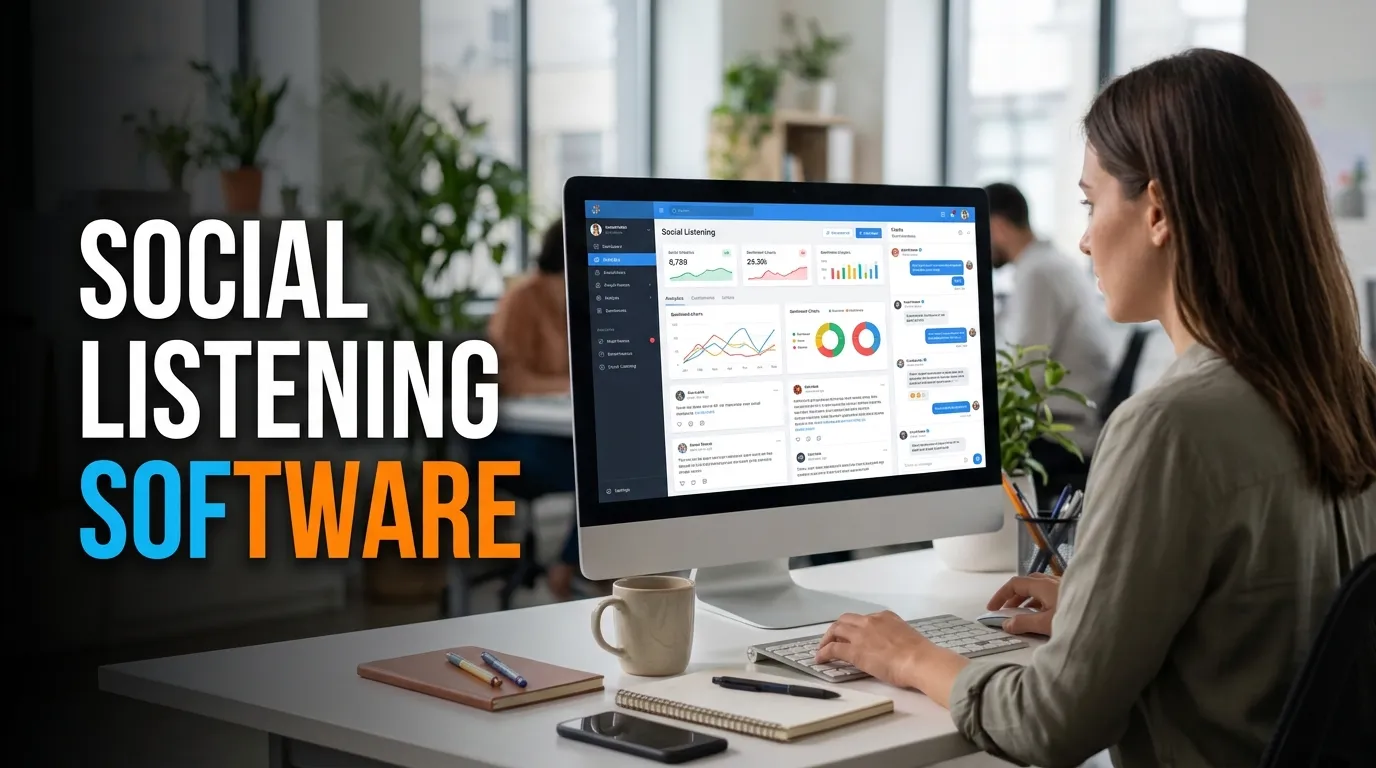 Social listening software provides businesses with a centralized system for tracking, organizing, and analyzing online conversations. Instead of checking multiple social media accounts manually, marketers can use a single dashboard to monitor important discussions and identify changes in audience behavior. Many Social Listening Platforms offer features such as automated mention tracking, keyword monitoring, sentiment analysis, competitor research, customizable alerts, and performance reporting. These features help businesses understand the overall perception of their brands and discover potential opportunities.
For instance, a software company might monitor conversations about its product features, customer support, pricing, and competitors. If several users mention difficulties with a particular feature, the marketing and product development teams can share this information with the appropriate department. Another advantage is historical data analysis. Businesses can compare conversations over different periods to understand whether customer sentiment is improving, declining, or remaining consistent.
When choosing software, organizations should consider how easily the platform integrates with their existing marketing systems. A solution that connects with customer relationship management software, analytics applications, and reporting tools can make information more useful across different departments. The best software should also provide understandable reports rather than overwhelming users with large amounts of unorganized information. This makes it easier for marketing professionals to identify important patterns and take appropriate action.
Social Media Monitoring Platforms
Social media monitoring platforms help businesses track what is being published about their brands, products, services, and competitors. Although monitoring and listening are closely connected, they serve slightly different purposes. Monitoring generally focuses on collecting mentions and identifying conversations that require attention. Listening goes further by analyzing those conversations to understand customer opinions, market trends, and audience expectations.
Businesses using Social Listening Platforms can combine both approaches to create a more complete understanding of their online presence. For example, monitoring can notify a company when customers mention its brand, while listening can reveal why those customers are discussing it and whether their experiences are positive or negative. These platforms are particularly valuable during product launches, promotional campaigns, public relations activities, and unexpected customer service situations.
A company might receive several complaints about delayed deliveries after launching a new product. Monitoring helps identify the complaints, while listening reveals whether the problem is isolated or part of a wider customer experience issue. Companies should establish monitoring rules for their brand names, product names, common misspellings, campaign hashtags, and important industry keywords. This helps reduce the chances of missing relevant discussions. Consistent monitoring also allows businesses to respond professionally, protect customer relationships, and maintain a positive digital presence.
Brand Monitoring Tools
Brand monitoring tools help organizations understand how their businesses are perceived across the internet. Brand reputation is influenced by customer experiences, online reviews, news coverage, social media discussions, influencer opinions, and recommendations from other consumers. Social Listening Platforms make brand monitoring more efficient by collecting relevant mentions and showing how conversations develop over time. Businesses can use these insights to identify positive feedback, investigate complaints, and recognize potential reputation risks.
For example, if customers repeatedly praise a company’s delivery service, the business can use this information to identify an important competitive advantage. On the other hand, repeated complaints about product quality may indicate an issue that requires immediate attention. Online reviews are another important part of brand reputation. Consumers often research other people’s experiences before purchasing products or services. Businesses should therefore monitor customer opinions and respond to feedback professionally.
Companies interested in improving their review management strategies can explore this complete guide to customer reviews. It explains how customer feedback supports trust, credibility, and business growth. Brand monitoring should also include competitor mentions and industry discussions. Understanding how customers compare different businesses helps organizations identify opportunities to improve their products, services, and communication. A proactive approach to reputation management can help businesses maintain customer confidence and respond more effectively to changing public perceptions.
Social Media Analytics Tools
 Social media analytics tools help businesses measure the performance of their social media activities. They provide information about audience growth, engagement, reach, impressions, clicks, content performance, and other important marketing indicators. While analytics tools explain how social media content performs, Social Listening Platforms help marketers understand the conversations and opinions behind those results. Combining both approaches gives businesses a clearer picture of their digital marketing performance.
For example, a company may notice that a particular campaign receives a large number of comments and shares. Analytics can measure the engagement, while listening can reveal whether people are responding positively, asking questions, expressing concerns, or recommending the product. These insights help marketing teams understand which campaigns create meaningful interactions instead of focusing only on surface-level engagement numbers.
Businesses can also use analytics to compare content performance across different platforms. A video may perform well on TikTok but receive limited engagement on LinkedIn. Understanding these differences helps marketers adjust their content strategies according to audience preferences. Reporting is another important feature. Regular reports allow businesses to evaluate marketing progress, identify successful campaigns, and make improvements based on measurable results. For better performance, organizations should connect their social media analytics with broader marketing objectives, including website traffic, lead generation, customer acquisition, and sales conversions.
Online Reputation Management Tools
Online reputation management tools help businesses monitor and improve how customers perceive their brands across digital channels. These solutions can track reviews, customer feedback, social mentions, business listings, and discussions that influence purchasing decisions. A positive reputation can increase customer confidence, encourage recommendations, and strengthen long-term relationships. However, negative experiences can spread quickly when businesses fail to address customer concerns.
Using Social Listening Platforms alongside reputation management solutions allows organizations to identify potential problems before they become larger issues. For example, if customers repeatedly complain about slow customer support, the company can investigate response times and improve its service process. If people frequently praise a particular product feature, the business can highlight that strength in future marketing campaigns.
Reputation management is not simply about removing negative comments or collecting positive reviews. It requires understanding customer experiences and taking meaningful action to improve them. Businesses should respond to criticism respectfully, provide accurate information, and avoid making promises they cannot fulfill. Transparency is essential because customers appreciate organizations that acknowledge problems and demonstrate a willingness to resolve them. Companies can also strengthen their reputation through educational content, helpful customer communication, and consistent promotional activities. For businesses using different marketing channels, combining digital reputation management with effective direct mail marketing strategies can support a more consistent brand experience.
Customer Sentiment Analysis Tools
 Customer sentiment analysis tools help businesses understand the emotions and opinions expressed in online conversations. These solutions generally classify content as positive, negative, or neutral, allowing marketers to evaluate how audiences feel about particular brands, products, or topics. Modern Social Listening Platforms use natural language processing and artificial intelligence to analyze large volumes of customer conversations. This makes it easier to identify recurring complaints, positive experiences, and changes in public perception.
For example, a restaurant chain might monitor conversations about food quality, delivery speed, customer service, and pricing. Sentiment analysis can help identify which areas receive positive feedback and which areas require improvement. However, automated sentiment analysis is not always completely accurate. Sarcasm, slang, regional expressions, humor, and context can make it difficult for software to interpret certain comments correctly.
For this reason, businesses should combine automated analysis with human review, especially when dealing with sensitive customer complaints or important reputation-related discussions. Sentiment analysis can also support product development. If customers consistently express dissatisfaction with a particular feature, the company can investigate the issue and consider improvements. Similarly, positive feedback can reveal which product benefits customers appreciate most. Businesses can use these insights to improve product messaging, develop relevant campaigns, and create better customer experiences.
Competitor Social Media Monitoring
Competitor social media monitoring helps businesses understand how other companies communicate with their audiences, promote their products, and respond to customer feedback. Analyzing competitor activities can reveal market trends, content opportunities, customer expectations, and potential weaknesses in competing products or services.
Social Listening Platforms allow businesses to monitor competitor brand mentions, campaign hashtags, audience reactions, product announcements, and industry discussions. These insights help marketing teams understand what is working in their market and where their own strategies can improve. For example, a clothing retailer might notice that a competitor receives strong engagement from behind-the-scenes videos and customer styling content. This information could inspire the retailer to experiment with similar content formats while maintaining its own brand identity.
Competitor monitoring can also reveal customer dissatisfaction with competing products. If people repeatedly complain about limited product options or poor customer support, another business may have an opportunity to address those unmet needs. However, competitor analysis should focus on learning rather than copying. Every business has different audiences, resources, and marketing objectives. Organizations should compare content quality, engagement patterns, audience discussions, customer sentiment, and promotional approaches. This creates a more complete understanding of the competitive landscape. By regularly reviewing competitor activity, businesses can identify opportunities, improve their positioning, and make more informed marketing decisions.
Social Media Engagement Tracking Tools
Social media engagement tracking tools help businesses measure how audiences interact with their content. Important engagement activities include likes, comments, shares, saves, mentions, direct messages, link clicks, and other meaningful interactions. Engagement tracking is important because it helps businesses understand whether their content attracts attention and encourages participation.
When combined with Social Listening Platforms, engagement tracking provides additional context about audience behavior. Businesses can discover not only how many people interact with their content but also what they say, which topics interest them, and what questions they ask. For example, a company may publish two product-related posts and notice that one receives significantly more comments and shares. By examining the conversations, marketers may discover that customers prefer educational content over direct promotional messages.
These findings can guide future content planning and improve audience communication. Engagement tracking is also useful for evaluating influencer campaigns, product announcements, live sessions, and promotional activities. Businesses can compare different campaigns to understand which formats generate the most valuable interactions.
However, high engagement does not always mean successful marketing. Companies should also evaluate lead quality, website visits, conversions, customer retention, and overall business results. A successful engagement strategy focuses on building genuine relationships rather than collecting likes alone. Businesses should respond to questions, acknowledge feedback, participate in relevant discussions, and create content that addresses audience needs.
Conclusion
Understanding online conversations is essential for businesses that want to build strong brands and maintain meaningful relationships with customers. The right listening solutions provide valuable information about customer opinions, competitor activities, industry developments, and brand reputation. Social Listening Platforms help organizations move beyond basic social media monitoring by transforming online discussions into actionable marketing insights. From sentiment analysis and reputation management to competitor research and engagement tracking, these solutions support better decision-making across different business functions. However, selecting the right platform requires understanding business objectives, available budgets, required features, and the channels most relevant to the target audience. Businesses should focus on tools that provide accurate information, useful reporting, and practical insights. By consistently analyzing online conversations and responding to customer needs, organizations can improve their marketing strategies, strengthen customer trust, and create sustainable business growth.
Conclusion
Choosing the right social listening solution is essential for businesses that want to understand their audiences, strengthen brand reputation, and improve their digital marketing strategies. Social Listening Platforms help organizations monitor online conversations, analyze customer sentiment, track competitors, identify emerging trends, and measure audience engagement. These insights allow businesses to make informed decisions and respond more effectively to customer needs.
FAQ
1. What are social listening platforms?
Social listening platforms are software solutions that help businesses monitor and analyze online conversations about their brands, products, competitors, and industries. They collect information from social media networks, websites, blogs, forums, and other digital sources to provide insights into customer opinions and market trends.
2. Why is social listening important for businesses?
Social listening helps businesses understand customer expectations, identify complaints, monitor brand reputation, discover industry trends, and improve customer relationships. It also provides useful information for developing marketing campaigns and making better business decisions.
3. What are the best social listening tools?
Some popular options include Brandwatch, Sprout Social, Talkwalker, Meltwater, and Hootsuite. Each offers different features, pricing structures, and capabilities. Businesses should compare their requirements before selecting a suitable solution.
4. What is the difference between social listening and social media monitoring?
Social media monitoring focuses on tracking brand mentions, comments, messages, and other online interactions. Social listening goes further by analyzing these conversations to understand customer sentiment, identify patterns, and discover broader market insights.
5. Can small businesses use social listening software?
Yes. Small businesses can use social listening software to monitor customer feedback, discover relevant conversations, understand competitors, and improve their marketing strategies. Many solutions offer different pricing plans and features suitable for smaller organizations.
6. How does sentiment analysis work in social listening?
Sentiment analysis uses natural language processing and machine learning to evaluate the opinions expressed in online conversations. It generally classifies discussions as positive, negative, or neutral, helping businesses understand how customers perceive their brands and products.
7. Can social listening tools monitor competitors?
Yes. Many tools allow businesses to track competitor mentions, campaign discussions, customer feedback, hashtags, and audience engagement. These insights help organizations understand competing brands and identify opportunities to improve their own marketing strategies.
8. What features should businesses look for in a social listening platform?
Businesses should consider brand mention tracking, keyword monitoring, sentiment analysis, competitor research, automated alerts, historical data, reporting, and integration capabilities. The best features depend on the company’s marketing objectives and operational requirements.
9. How can social listening improve customer engagement?
Social listening helps businesses understand what customers want, which questions they ask, and what problems they experience. Companies can use this information to create relevant content, respond to feedback, provide better support, and participate in meaningful conversations.
10. How much do social listening platforms cost?
The cost varies depending on the provider, available features, data coverage, number of users, and subscription plan. Some tools offer limited free features, while advanced solutions may require monthly or annual subscriptions. Businesses should compare pricing and functionality to find a solution that matches their budgets and requirements.






Leave a Reply