

Social media has changed how customers discover, discuss, and evaluate businesses. A single customer review, positive recommendation, or negative comment can influence how people perceive a company. This makes Social Media Brand Monitoring an essential part of modern digital marketing. It helps businesses track brand mentions, understand customer opinions, monitor competitors, and identify opportunities to improve their online reputation. By using the right monitoring tools and social listening strategies, companies can build stronger customer relationships, respond to feedback, and maintain a positive brand image across digital platforms.
In today’s competitive digital environment, maintaining a strong online presence requires more than regularly publishing social media posts. Businesses must understand what people are saying about their products, services, and overall brand identity. Customers frequently share their experiences on platforms such as Facebook, Instagram, LinkedIn, TikTok, YouTube, and X. These conversations can influence purchasing decisions and shape public opinions about a company. Social Media Brand Monitoring allows businesses to observe these conversations and understand how their audiences interact with their brands. It involves tracking brand mentions, customer reviews, hashtags, comments, discussions, and other online activities related to a business. Instead of waiting for customers to contact customer support, companies can identify important conversations and respond proactively. Whether you operate a small business, an online store, or an established company, monitoring your brand online can help you identify customer needs, prevent potential reputation problems, and improve marketing decisions. It also provides valuable information about competitors and changing industry trends.
Social Media Monitoring Tools
Social media monitoring tools help businesses collect, organize, and analyze information from different online platforms. These tools make it easier to identify brand mentions, follow relevant hashtags, monitor customer conversations, and measure audience engagement. Without proper monitoring software, businesses may struggle to keep track of hundreds or thousands of daily interactions across multiple social networks. Popular monitoring platforms include Brandwatch, Hootsuite, Sprout Social, Mention, Talkwalker, and Brand24. Each platform offers different features, including keyword tracking, automated notifications, sentiment analysis, competitor research, and reporting dashboards. Businesses can select tools according to their marketing objectives, budget, and monitoring requirements.
An effective monitoring system should track more than the official brand name. Companies should also monitor product names, campaign hashtags, common misspellings, industry keywords, and important employee or spokesperson mentions. This approach helps identify conversations that might otherwise remain unnoticed. Social Media Brand Monitoring becomes more effective when businesses combine automated tools with human analysis. Software can identify patterns and notify teams about unusual activity, but people are still needed to understand context, humor, sarcasm, and customer expectations. Businesses can also use real-time consumer insights to improve their marketing decisions. Understanding emerging conversations and industry developments can support a broader trend marketing strategy and help companies respond to changing customer interests.
Brand Reputation Management
Brand reputation management involves maintaining a positive public image by understanding customer opinions, responding to concerns, and communicating consistently across digital channels. A company’s reputation is influenced by product quality, customer service, advertising messages, employee behavior, and the experiences people share online. Customers frequently research businesses before making purchasing decisions. They may read online reviews, examine social media comments, watch product demonstrations, or ask other users for recommendations. Even a small number of unresolved complaints can create doubts among potential customers.
Social Media Brand Monitoring helps businesses recognize reputation-related issues before they become larger problems. For example, if several customers complain about delayed deliveries, a company can investigate the issue, communicate with affected customers, and explain the steps being taken to resolve it. A successful reputation management strategy requires transparency and consistency. Businesses should acknowledge genuine mistakes instead of ignoring negative feedback or making unrealistic promises. Professional responses demonstrate that the company values customer experiences and takes responsibility for improving its services. Companies should also encourage satisfied customers to share honest reviews and experiences. Positive customer stories can strengthen credibility and help new audiences understand the value of a brand. Reputation management should be part of a wider business development plan. Companies can explore an effective business strategy to understand how customer relationships, market research, and long-term planning contribute to sustainable business growth.
Social Media Brand Tracking
 Social media brand tracking focuses on measuring how frequently people discuss a business and how its visibility changes over time. It helps marketers understand whether brand awareness is increasing, which platforms generate the most conversations, and what types of content attract audience attention. Important tracking measurements include total brand mentions, hashtag usage, audience reach, engagement rates, share of voice, follower growth, and referral traffic. These indicators provide a clearer picture of how people interact with a brand across different digital channels.
For example, a company launching a new product might track its product name, campaign hashtag, and related keywords. By reviewing conversations before, during, and after the campaign, marketers can understand how public interest develops and whether their promotional activities are reaching the intended audience. Social Media Brand Monitoring also helps businesses compare their performance across different platforms. A brand might receive substantial engagement on Instagram but generate more professional discussions on LinkedIn. Understanding these differences allows marketers to distribute their resources more effectively. Consistency is important when tracking performance. Businesses should establish a regular reporting schedule and compare results across similar periods. This makes it easier to identify meaningful improvements instead of reacting to temporary increases in engagement. The collected information can also help companies identify new content opportunities, improve their communication style, and develop campaigns that reflect audience interests.
Online Brand Reputation Monitoring
Online brand reputation monitoring extends beyond traditional social media platforms. It includes tracking customer discussions, online reviews, blogs, forums, news websites, product review platforms, and other digital spaces where people discuss a business. Customers do not always share their opinions directly on a company’s official social media pages. Someone might publish a detailed product review on a third-party website or discuss a customer service experience in an online community. Businesses that monitor only their own accounts can miss these important conversations.
Social Media Brand Monitoring should therefore be connected with a wider online reputation monitoring process. Companies can create keyword alerts for their business name, products, executives, and industry-related topics. These alerts help identify new discussions and allow teams to investigate potentially important issues. Google Alerts, Mention, Brand24, and other monitoring solutions can support this process. Businesses should also review customer feedback on relevant marketplaces and industry websites to understand how their products and services are perceived.
Another important consideration is brand consistency. Promotional messages should communicate the same values across websites, advertisements, and social media accounts. Businesses using multiple marketing channels should ensure that their messaging supports a recognizable identity. Companies can strengthen their online visibility through a coordinated social media marketing strategy that combines useful content, consistent communication, audience engagement, and regular performance analysis.
Social Listening Strategies
Social listening involves analyzing online conversations to understand why people discuss a brand, what they expect from its products, and which issues influence their opinions. While basic monitoring identifies mentions, social listening focuses on understanding the meaning behind those conversations. An effective social listening strategy begins with identifying relevant keywords. Businesses should monitor their brand name, product categories, competitor names, industry terminology, and common customer questions. Following these conversations can reveal emerging preferences and recurring customer concerns.
Another useful approach is monitoring industry communities. Online groups, discussion forums, and social media communities often provide honest opinions that customers may not share directly with a business. These discussions can reveal product weaknesses, service expectations, and opportunities for innovation. Social Media Brand Monitoring becomes more valuable when the collected information influences actual business decisions. For example, if customers repeatedly request a particular product feature, the company can share this feedback with its product development team.
Businesses should also monitor trending topics and relevant hashtags. However, joining every popular conversation is not a suitable strategy. Companies should participate only when a topic aligns with their brand identity and provides genuine value to the audience. By combining customer conversations with industry research, businesses can create more relevant campaigns and develop stronger relationships with their target audiences.
Brand Sentiment Analysis
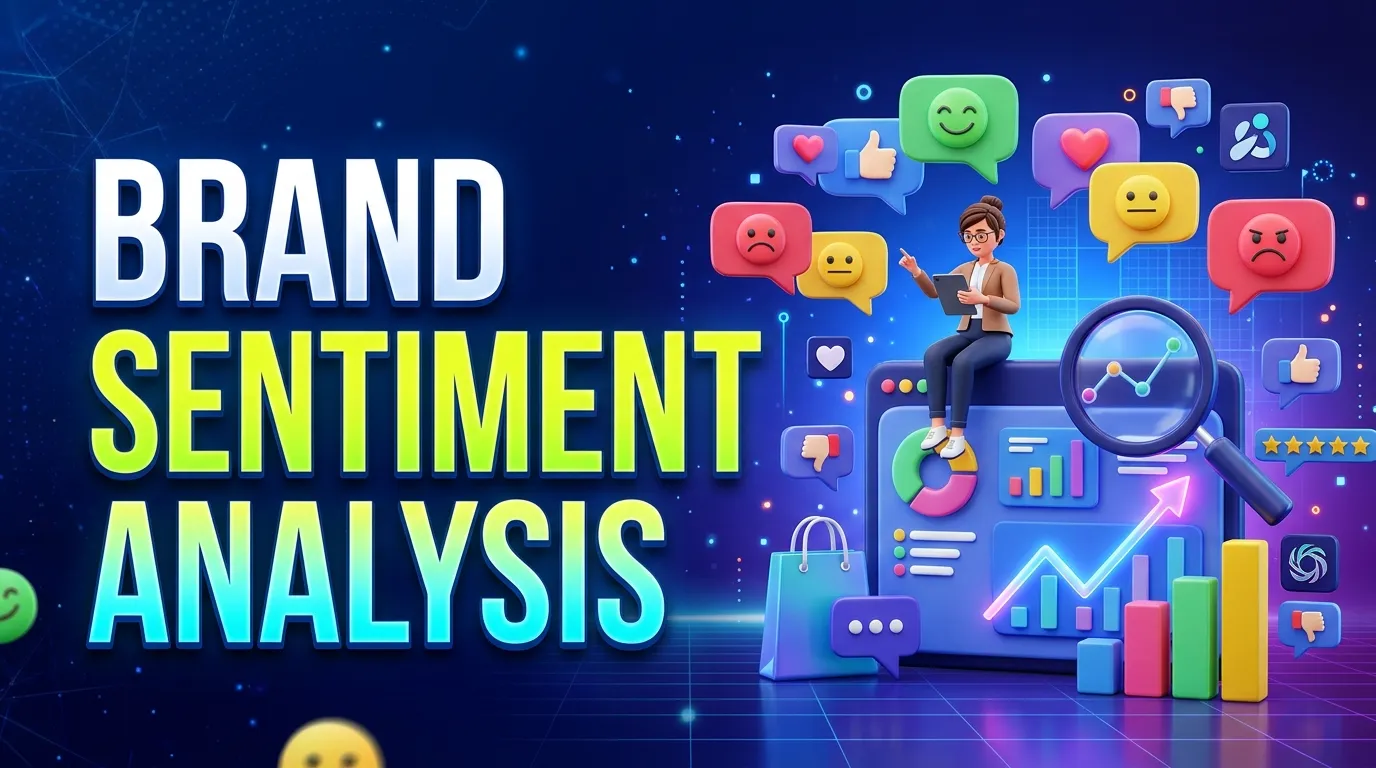 Brand sentiment analysis measures the emotional tone of online conversations about a company. It generally classifies mentions as positive, negative, or neutral, helping businesses understand how audiences perceive their products, services, and marketing activities. Positive sentiment may include customer recommendations, product appreciation, and expressions of satisfaction. Negative sentiment can involve complaints, disappointment, service problems, or criticism. Neutral mentions may include general questions, product comparisons, and factual discussions.
Social Media Brand Monitoring can use sentiment analysis to identify changes in public perception. For example, a sudden increase in negative comments following a product launch may indicate that customers are experiencing an issue that requires immediate attention. Many monitoring platforms use artificial intelligence and natural language processing to analyze large amounts of text. These technologies can help identify patterns and categorize conversations more efficiently. However, automated sentiment analysis is not always accurate because sarcasm, cultural expressions, and complicated language can be difficult to interpret.
Businesses should therefore review important conversations manually before making major decisions. A negative-looking comment might actually be humorous, while a neutral product question could reveal a serious customer concern. Sentiment analysis can also help companies evaluate advertising campaigns. If a campaign receives positive reactions and meaningful conversations, marketers can identify which messages connect most effectively with their audience.
Social Media Engagement Tracking
Social media engagement tracking measures how audiences interact with a brand’s content. These interactions include likes, comments, shares, saves, clicks, mentions, direct messages, and other activities that demonstrate audience participation. Engagement provides useful information about whether content is attracting attention and encouraging meaningful interactions. However, businesses should not evaluate performance using likes alone. A post receiving fewer likes might generate more valuable customer inquiries or website visits than a widely shared promotional image.
Social Media Brand Monitoring allows businesses to connect engagement data with customer conversations. Marketers can identify which topics generate positive discussions, which posts encourage questions, and which types of content lead to complaints or confusion. Companies should monitor engagement across different platforms because audience behavior varies. Instagram users may respond strongly to visual content, while LinkedIn audiences may prefer educational articles, industry insights, and professional discussions.
A consistent publishing schedule can help businesses maintain visibility, but content quality should remain the priority. Educational resources, product demonstrations, customer stories, behind-the-scenes videos, and useful industry information can encourage stronger interactions. Paid campaigns can also support engagement goals by reaching audiences beyond existing followers. Businesses interested in expanding their promotional activities can learn more about paid advertising strategies and how targeted campaigns can complement organic social media efforts.
Competitor Brand Monitoring
Competitor brand monitoring involves observing how competing businesses communicate with their audiences, promote their products, and respond to customer feedback. It helps companies understand their position in the market and identify opportunities to differentiate themselves. Businesses can monitor competitor brand mentions, campaign hashtags, product launches, customer reviews, engagement levels, and public discussions. These observations provide valuable information about competitor strengths and weaknesses.
For example, if customers frequently complain about limited customer support from competing businesses, another company can differentiate itself by offering faster responses and more helpful assistance. Similarly, repeated requests for missing product features may reveal an opportunity to improve an existing offering. Social Media Brand Monitoring also helps businesses compare their share of voice. Share of voice measures how much of the relevant online conversation belongs to a particular brand compared with its competitors. A growing share may indicate stronger visibility, although it should always be evaluated alongside sentiment and engagement quality.
Competitor analysis should focus on learning rather than copying. Every business has a different audience, identity, and value proposition. Successful companies use competitor insights to improve their own products, customer experiences, and communication strategies. Monitoring competitor advertising can also reveal how other companies position their products and attract customers. Businesses using both traditional and digital channels may find it useful to understand the differences between online business TV advertising and digital promotional methods when planning a broader marketing strategy.
Customer Feedback Monitoring
Customer feedback monitoring involves collecting and analyzing opinions shared through reviews, comments, surveys, direct messages, and other communication channels. It helps businesses understand customer expectations and identify areas where products or services need improvement. Customers often provide valuable information through everyday social media interactions. A question about product availability, a complaint about delivery, or a suggestion about a new feature can reveal something important about the customer experience.
Social Media Brand Monitoring makes it easier to identify these conversations and organize feedback into useful categories. Businesses can examine recurring complaints, frequently asked questions, product suggestions, and positive customer experiences. A practical approach is to create a feedback management process. Customer comments should be reviewed regularly, important issues should be assigned to the appropriate team, and responses should be provided within a reasonable timeframe.
Companies should also look for patterns instead of treating every comment as an isolated incident. If multiple customers report the same problem, it may indicate a broader issue that requires operational changes. Feedback can also support the development of new products and services. Businesses selling downloadable resources, for example, can use customer questions to identify useful product ideas. Companies exploring digital products for beginners can apply customer research to understand audience needs and create more relevant digital offerings. The most important part of feedback monitoring is taking action. Customers are more likely to trust a business when they can see that their opinions are being considered and meaningful improvements are being made.
Brand Mentions Tracking
 Brand mentions tracking involves identifying every relevant online reference to a company, its products, services, campaigns, or representatives. These mentions can appear in social media posts, comments, hashtags, videos, blogs, forums, and online reviews. Not every mention includes a direct tag or link to the official business account. Customers may discuss a company without tagging it, making keyword-based monitoring especially important.
Businesses should create a list of tracking terms that includes their official brand name, product names, alternative spellings, campaign names, and frequently used abbreviations. Monitoring these terms can help identify conversations that would otherwise remain unnoticed. Social Media Brand Monitoring enables companies to discover both positive and negative brand mentions. Positive references can create opportunities to thank customers, share testimonials with permission, and strengthen community relationships. Negative mentions can alert businesses to service problems and potential reputation risks.
It is also important to distinguish between different types of mentions. A casual reference, a genuine product recommendation, a customer complaint, and an influential industry discussion may require different responses. Businesses should prioritize mentions according to urgency, audience reach, customer impact, and relevance. Serious complaints and rapidly spreading negative discussions should receive attention before routine conversations. Tracking mentions consistently helps organizations understand their visibility, improve customer communication, and build a more reliable picture of their online reputation.
Conclusion
Maintaining a positive digital presence requires businesses to understand what customers are saying and how their brand is perceived across online platforms. Monitoring tools, reputation management, sentiment analysis, competitor research, and customer feedback all contribute to a stronger marketing approach. Social Media Brand Monitoring is not simply about counting mentions or tracking likes. It is about understanding customer expectations, identifying emerging problems, recognizing opportunities, and making informed business decisions. Companies that regularly analyze online conversations can improve their communication, strengthen customer relationships, and respond more effectively to changes in market expectations. By combining the right monitoring tools with consistent social listening and practical action, businesses can protect their reputation and build lasting trust with their audiences.
FAQ
1. What is social media brand monitoring?
Social media brand monitoring is the process of tracking online conversations, mentions, comments, reviews, and discussions related to a business. It helps companies understand customer opinions, measure brand visibility, identify potential problems, and improve their online reputation.
2. Why is social media brand monitoring important?
It is important because customers frequently share their experiences and opinions online. Monitoring these conversations helps businesses respond to complaints, recognize positive feedback, understand customer expectations, and protect their public image.
3. Which are the best social media monitoring tools?
Popular tools include Brandwatch, Hootsuite, Sprout Social, Mention, Talkwalker, and Brand24. The best option depends on your business requirements, budget, preferred social platforms, and the features you need for tracking and reporting.
4. How often should businesses monitor their brand online?
Businesses should monitor important brand mentions and customer conversations regularly. Companies with active social media accounts may benefit from daily monitoring, while automated alerts can help identify urgent issues immediately.
5. What is the difference between social media monitoring and social listening?
Social media monitoring focuses on identifying and tracking mentions, comments, and online interactions. Social listening goes further by analyzing conversations to understand customer opinions, industry trends, audience expectations, and potential business opportunities.
6. How does sentiment analysis help businesses?
Sentiment analysis helps businesses understand whether online conversations are generally positive, negative, or neutral. It can reveal customer satisfaction levels, highlight reputation problems, and help marketers evaluate how audiences respond to products and campaigns.
7. Can small businesses benefit from brand monitoring?
Yes. Small businesses can use affordable monitoring tools and simple keyword alerts to track customer feedback, respond to questions, and understand their online reputation. Consistent monitoring can help smaller companies compete more effectively and build customer trust.
8. How can businesses monitor competitor brands?
Businesses can track competitor names, product mentions, campaign hashtags, customer reviews, and public engagement. Analyzing these conversations helps identify market opportunities, competitor weaknesses, and ways to improve their own products and services.
9. How can negative brand mentions be handled?
Businesses should respond professionally, acknowledge genuine concerns, and provide practical solutions. When necessary, they can move sensitive discussions to private communication channels while maintaining transparency about the issue and its resolution.
10. What metrics should businesses track when monitoring their brands?
Important metrics include total brand mentions, audience reach, engagement rate, sentiment distribution, share of voice, customer response time, review ratings, and referral traffic. Tracking these measurements consistently helps businesses evaluate performance and improve their marketing strategies.






Leave a Reply