

Social media has become one of the most important platforms for businesses to connect with customers, understand their audiences, and build brand awareness. Every day, people share opinions, discuss products, review services, and interact with brands across different social platforms. Understanding these conversations can help businesses make smarter marketing decisions. This is where social listening tools become valuable. They allow companies to monitor online conversations, identify customer opinions, track brand mentions, and discover opportunities to improve their marketing strategies.
Whether you run a small business, manage a marketing agency, or work for a large organization, choosing the right social listening tools can help you understand your audience and stay ahead of competitors. From tracking brand reputation to analyzing customer sentiment, these solutions provide valuable insights that support long-term business growth.
Best Social Listening Tools
Finding the best social listening tools is important for businesses that want to understand what customers are saying about their brands online. These platforms collect conversations from social media networks, blogs, forums, and other online channels, helping marketers identify important discussions and customer opinions. Instead of manually checking different platforms, businesses can use one solution to monitor multiple conversations from a centralized dashboard.
Some popular options include Brandwatch, Sprout Social, Hootsuite, Mention, Talkwalker, and Meltwater. Each platform offers different features depending on business requirements. For example, Brandwatch provides advanced consumer intelligence and audience insights, while Sprout Social combines social listening with publishing, engagement, and reporting features. Mention is useful for tracking brand mentions across different online sources, making it suitable for businesses that need straightforward monitoring.
When comparing social listening tools, businesses should consider their budget, supported platforms, reporting capabilities, keyword tracking options, and ease of use. A suitable solution should provide accurate information without making the monitoring process unnecessarily complicated. Companies should also consider whether they need basic brand monitoring or advanced analytics for larger marketing campaigns. The right platform can help businesses discover customer expectations, identify trending topics, and improve their communication strategies. Investing in reliable technology also makes it easier to understand how audiences respond to marketing activities and brand messaging.
Social Media Monitoring Tools
Social media monitoring tools help businesses track conversations, comments, mentions, and discussions related to their products, services, and industry. These solutions allow marketers to understand what people are saying about their businesses across platforms such as Facebook, Instagram, LinkedIn, X, TikTok, and YouTube. Monitoring social media activity is important because customers do not always tag a company when discussing its products. Someone might mention a brand in a public post, share a negative experience, or recommend a product without directly contacting the business. Effective monitoring helps companies discover these conversations and respond when appropriate.
Many social listening tools include monitoring features that allow users to create keyword alerts, track hashtags, and identify brand mentions. Businesses can also monitor specific product names, campaign hashtags, and industry-related terms to understand relevant discussions. For example, a restaurant can monitor conversations about its food quality, customer service, and delivery experience. If customers repeatedly mention long waiting times, management can investigate the issue and improve its operations. Monitoring also supports better marketing planning. Businesses can identify popular discussions, understand audience interests, and create content that addresses real customer needs. For additional marketing inspiration, companies can explore current website design trends to understand how modern digital experiences influence customer engagement and brand perception.
Social Listening Software
 Social listening software helps organizations collect, organize, and analyze conversations happening across digital platforms. Unlike basic monitoring solutions that mainly notify businesses about mentions, advanced software can provide deeper insights into customer behavior, brand perception, industry trends, and audience interests. These platforms generally use keyword tracking, data analysis, sentiment detection, and reporting features to transform large amounts of online information into useful insights. Marketing teams can use this information to understand customer preferences, discover frequently discussed topics, and identify areas where their products or services could improve.
When selecting social listening software, businesses should look beyond the number of features available. Data accuracy, platform coverage, customization, integrations, and reporting quality are equally important. A user-friendly dashboard can also save time by allowing marketing teams to access important information without navigating multiple systems. Another important consideration is scalability. Small businesses may initially need simple monitoring and reporting features, while larger organizations may require competitor tracking, historical data, automated alerts, and advanced analytics.
Reliable social listening tools can also support different departments within an organization. Marketing teams can use them to develop campaigns, customer support teams can identify service problems, and management teams can evaluate brand perception. By connecting online conversations with business objectives, organizations can make more informed decisions and develop stronger relationships with their audiences.
Social Media Analytics Tools
Social media analytics tools help businesses measure the performance of their social media activities. They collect information about engagement, impressions, reach, audience growth, content performance, and other important metrics. These insights allow marketers to understand which campaigns are successful and which areas require improvement. Analytics becomes more valuable when businesses combine performance data with customer conversations. For example, a campaign might receive thousands of impressions but generate negative comments. Looking only at reach and engagement would not provide a complete understanding of its performance.
This is why social listening tools and analytics platforms can work effectively together. Analytics explains how audiences interact with content, while listening helps businesses understand why people respond in particular ways. Companies can use these insights to improve content strategies, identify their most engaging topics, and determine the best ways to communicate with their target audiences. They can also compare campaign performance over time and identify changes in customer interests.
Businesses should choose metrics that directly support their marketing goals. For example, an awareness campaign may focus on reach and brand mentions, while a customer engagement campaign may prioritize comments, shares, and meaningful interactions. Combining analytics with audience insights creates a more complete picture of social media performance and helps businesses build strategies based on actual customer behavior rather than assumptions.
Brand Monitoring Tools
Brand monitoring tools help companies understand how their businesses are discussed across the internet. They track brand mentions, product references, customer reviews, news coverage, and conversations that may influence public perception. A positive brand reputation can encourage customer trust, while negative feedback can affect purchasing decisions. Therefore, businesses need to understand what people are saying about them and respond appropriately.
Modern social listening tools make brand monitoring easier by collecting relevant mentions from multiple online sources. Businesses can monitor their company names, product names, executive mentions, campaign keywords, and common brand-related phrases. For example, if a customer shares a negative experience with a company’s product on a public platform, monitoring software can help the business discover the conversation. The company can then investigate the problem, provide assistance, and take steps to prevent similar issues.
Brand monitoring is also useful for identifying positive feedback. Businesses can discover customer testimonials, user-generated content, and recommendations that may support future marketing campaigns. However, monitoring alone is not enough. Companies should also focus on building credibility through consistent communication, reliable products, and quality customer service. Businesses looking to strengthen customer confidence can learn more from this guide on brand trust and the foundation of long-term business success. When used consistently, brand monitoring tools help businesses protect their reputation, understand customer expectations, and maintain a positive online presence.
Social Media Sentiment Analysis
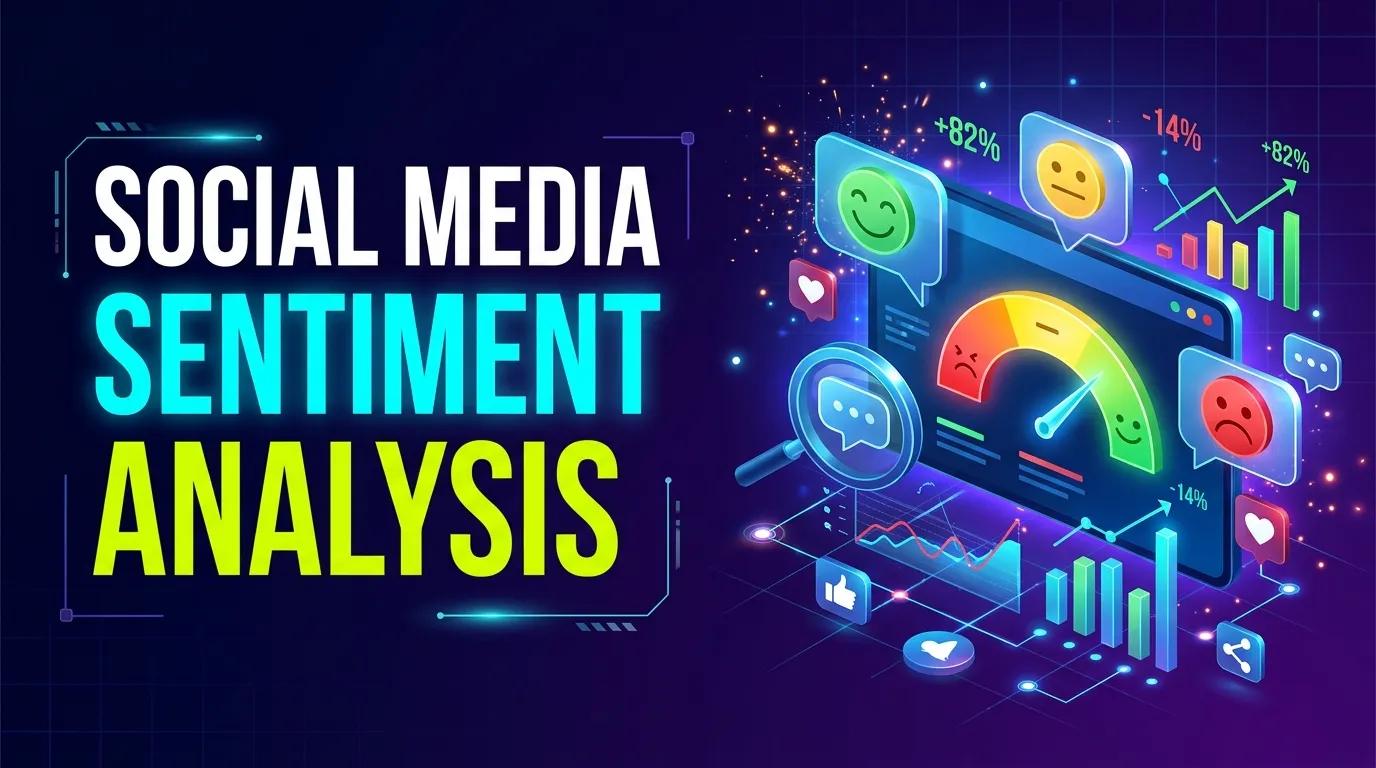 Social media sentiment analysis is the process of identifying whether online conversations express positive, negative, or neutral opinions about a brand, product, service, or topic. It helps businesses understand the emotions and attitudes behind customer discussions. For example, a customer might write a positive review about a product’s quality, while another person may complain about its delivery time. Sentiment analysis helps organizations categorize these opinions and identify common patterns in customer feedback.
Many social listening tools use artificial intelligence and natural language processing to analyze conversations at scale. These technologies can process large volumes of text and identify general sentiment trends much faster than manual analysis. Sentiment analysis can support product development, customer service, and marketing decisions. If customers frequently express dissatisfaction with a particular feature, a business can investigate the issue and consider improvements. Similarly, positive feedback can reveal which product features customers appreciate most.
However, automated sentiment analysis is not always perfect. Sarcasm, slang, cultural differences, and complicated language can sometimes lead to inaccurate results. Businesses should therefore review important conversations manually rather than depending entirely on automated classifications. When combined with human judgment, sentiment analysis provides useful information about audience expectations and brand perception. It also helps companies understand how their reputation changes after product launches, promotional campaigns, or public announcements.
Online Reputation Management Tools
Online reputation management tools help businesses maintain a positive image across digital platforms. They allow companies to monitor reviews, track brand mentions, respond to customer feedback, and identify conversations that could influence public opinion. A company’s reputation is influenced by more than its official website and advertising campaigns. Customer reviews, social media discussions, online publications, and community recommendations can all affect how potential customers view a business.
This makes reputation management an important part of a complete digital marketing strategy. Businesses need to understand where conversations are happening and how customers are responding to their products and services. Social listening tools support reputation management by identifying relevant discussions and helping companies respond quickly. For example, if several customers complain about a service issue, the business can investigate the problem and communicate a solution before the situation becomes more serious.
These platforms can also help businesses discover positive reviews and customer experiences. Sharing genuine customer feedback, with appropriate permission, can strengthen credibility and encourage potential customers to consider a brand. For businesses that use online events and educational content to build relationships, reputation management can also support stronger audience engagement. A useful resource on this subject is online webinar marketing, which explains how webinars can support audience communication and business promotion. Successful reputation management requires consistency, transparency, and genuine customer care. Technology can identify problems, but businesses must take meaningful action to resolve them.
Social Media Engagement Tracking
Social media engagement tracking helps businesses understand how audiences interact with their content. It involves measuring activities such as likes, comments, shares, mentions, replies, clicks, and other meaningful interactions. Engagement is an important indicator of how well a brand connects with its audience. A post that receives meaningful comments and shares may create more value than content that receives many views but generates little interaction.
Social listening tools can help businesses monitor engagement beyond their own profiles. They can identify conversations where customers mention their products, participate in industry discussions, or share content related to their services. This information allows marketing teams to understand which topics generate interest and which types of content encourage audience participation.
For example, a company promoting video content can track how viewers discuss its videos, respond to specific topics, and share recommendations. Businesses interested in improving their video campaigns can also explore this guide to YouTube video marketing strategy. Engagement tracking is particularly useful when evaluating the effectiveness of different content formats. Businesses can compare educational posts, promotional updates, short-form videos, and customer stories to understand which approaches generate meaningful responses. Instead of focusing only on follower numbers, companies should pay attention to the quality of interactions. Genuine conversations, customer questions, and positive recommendations can provide valuable opportunities to strengthen brand relationships.
Competitor Social Media Analysis
Competitor social media analysis helps businesses understand how other companies communicate with their audiences, promote their products, and participate in industry discussions. Studying competitors can reveal useful information about content strategies, customer expectations, market trends, and potential opportunities. Businesses can monitor competitors’ brand mentions, campaign hashtags, product discussions, and customer feedback. This information can help them understand which topics generate interest and how audiences respond to different marketing approaches.
Many social listening tools offer competitor tracking features that allow companies to compare online conversations and brand visibility. Businesses can use these insights to identify gaps in their own marketing strategies and discover opportunities to differentiate their products or services. For example, a company may notice that competitors receive frequent questions about a particular product feature. This could indicate an opportunity to create educational content that answers those questions and highlights the company’s own strengths.
Competitor analysis can also help businesses understand customer dissatisfaction with alternative products. If people frequently discuss the same problem with competing services, a business may be able to address that need through better customer support or product improvements. However, competitor research should focus on learning from market activity rather than copying another company’s strategy. Every business has different customers, resources, and objectives. By combining competitor research with customer insights, companies can make more informed marketing decisions and develop a stronger position in their industry.
Real-Time Social Media Monitoring
 Real-time social media monitoring allows businesses to identify online conversations and brand mentions as they happen or shortly after they are published. It is particularly valuable when companies need to respond quickly to customer concerns, trending discussions, or unexpected public reactions. Online conversations can spread rapidly, especially when they involve popular products, public complaints, or viral content. Businesses that discover these discussions early have a better opportunity to provide accurate information and communicate with their audiences. Social listening tools can support real-time monitoring through automated notifications, keyword alerts, hashtag tracking, and centralized dashboards. Marketing and customer support teams can use these features to identify important conversations without continuously checking every social media platform.
For example, if a company launches a new product and customers begin discussing a technical problem, real-time monitoring can help the support team identify the issue and communicate with affected customers. This can prevent confusion and demonstrate that the company takes customer feedback seriously. Real-time monitoring is also useful during product launches, promotional campaigns, online events, and public announcements. Businesses can observe audience reactions and adjust their communication strategies when necessary.
However, speed should not come at the expense of accuracy. Companies should verify information before responding, especially when conversations involve sensitive issues or incorrect claims. An effective monitoring strategy combines automated alerts with human review and a clear communication process. This helps businesses remain responsive while protecting their brand reputation.
Conclusion
Understanding online conversations is essential for businesses that want to build stronger customer relationships and improve their digital marketing performance. From tracking brand mentions to analyzing customer sentiment, social media insights can help organizations understand what their audiences expect and how their brands are perceived. The right social listening tools provide a practical way to monitor conversations, evaluate competitors, identify emerging trends, and manage online reputation. They also help marketing teams understand engagement patterns and discover opportunities to improve their content and communication strategies.
FAQ
1. What are social listening tools?
Social listening tools are software platforms that help businesses monitor and analyze conversations about their brands, products, competitors, and industries across social media and other online channels. They provide insights into customer opinions, trending topics, brand mentions, and audience sentiment.
2. Why are social listening tools important for businesses?
They are important because they help businesses understand customer expectations, identify problems, monitor brand reputation, and discover new marketing opportunities. Companies can use the information to improve customer service, develop better content, and make more informed business decisions.
3. What is the difference between social listening and social media monitoring?
Social media monitoring mainly focuses on tracking mentions, comments, and conversations about a brand. Social listening goes further by analyzing those conversations to understand customer sentiment, industry trends, audience behavior, and the reasons behind online discussions.
4. Which are the best social listening platforms?
Popular platforms include Brandwatch, Sprout Social, Hootsuite, Mention, Talkwalker, and Meltwater. The best option depends on business requirements, budget, supported social networks, reporting features, and the level of analysis needed.
5. Can small businesses use social listening software?
Yes. Many platforms offer affordable plans and basic monitoring features suitable for small businesses. These solutions can help smaller companies track customer feedback, monitor competitors, identify brand mentions, and understand their target audiences without requiring a large marketing team.
6. How does sentiment analysis help improve brand reputation?
Sentiment analysis identifies positive, negative, and neutral opinions in online conversations. Businesses can use these insights to understand customer satisfaction, identify recurring complaints, recognize positive feedback, and improve their products or services.
7. Can businesses monitor competitors through social listening?
Yes. Many platforms provide competitor monitoring features that help businesses track competitor mentions, campaigns, customer feedback, and industry conversations. These insights can reveal market opportunities and help companies improve their marketing strategies.
8. Are social listening tools useful for reputation management?
Yes. They help businesses discover online discussions, customer complaints, reviews, and positive recommendations. By identifying important conversations and responding appropriately, companies can manage their online reputation and maintain stronger customer relationships.
9. Do social listening platforms provide real-time monitoring?
Many platforms offer real-time or near-real-time monitoring through keyword alerts, brand mention notifications, and automated dashboards. However, monitoring speed and data availability depend on the platform, social network, and subscription plan.
10. How can a business choose the right social listening platform?
A business should consider its marketing goals, budget, required social media coverage, keyword tracking capabilities, sentiment analysis accuracy, competitor monitoring features, reporting options, and ease of use. Comparing these factors can help organizations select a platform that meets their current needs and supports future growth.






Leave a Reply