

Social media has become one of the most important communication channels between businesses and their customers. People regularly share opinions, experiences, complaints, and recommendations about brands across platforms such as Facebook, Instagram, LinkedIn, TikTok, and X. Understanding these conversations can help businesses improve their marketing strategies, build stronger customer relationships, and maintain a positive online reputation. This is where social media listening best practices become essential.
Unlike traditional social media monitoring, listening goes beyond tracking mentions and comments. It involves understanding what people are saying, identifying their emotions, recognizing emerging trends, and using those insights to make better business decisions. By following effective social media listening best practices, companies can understand customer expectations, identify opportunities, respond to problems, and stay ahead of competitors. This guide explores the most effective strategies businesses can use to turn social conversations into meaningful insights and long-term growth.
Social Media Listening Strategies
Developing an effective listening strategy starts with understanding what your business wants to achieve. Every company has different objectives, so it is important to identify whether you want to improve brand awareness, understand customer needs, discover industry trends, or evaluate marketing campaigns. Clear objectives help businesses focus on relevant conversations instead of collecting unnecessary information.
One of the most effective social media listening best practices is identifying the right keywords, hashtags, brand names, product names, and industry-related phrases. Businesses should also monitor common misspellings of their brand names and conversations where customers discuss products without directly tagging the company. This approach helps uncover valuable discussions that traditional monitoring might miss.
Another important part of an effective strategy is selecting the right social media platforms. For example, a B2B company may receive valuable insights from LinkedIn, while a fashion or lifestyle brand may benefit more from Instagram and TikTok conversations. Understanding where your target audience spends time allows you to collect more relevant information. Companies should also regularly review their listening strategy and adjust it according to changing customer behavior. If you want to develop a stronger foundation, explore this guide on social media listening strategy for business to understand how listening can support business growth.
Social Media Monitoring Best Practices
Social media monitoring involves tracking brand mentions, comments, messages, hashtags, and relevant conversations across different platforms. It helps businesses understand what customers are discussing and identify situations that require immediate attention. However, effective monitoring requires more than simply checking notifications throughout the day.
Businesses should establish a consistent monitoring schedule to ensure that important conversations are not overlooked. Depending on the size of the company and its online activity, monitoring can take place continuously or at specific intervals throughout the day. High-volume brands should consider automated alerts to identify urgent customer complaints and potential reputation issues.
Another important practice is organizing conversations according to their purpose. Customer questions, product complaints, positive reviews, competitor mentions, and general industry discussions should be categorized separately. This makes it easier for marketing and customer support teams to understand which conversations need attention.
Following social media listening best practices also means establishing clear response guidelines. Businesses should determine who is responsible for answering customer questions, handling negative comments, and escalating serious complaints. A quick and helpful response can prevent a small customer concern from becoming a larger public issue.
Monitoring should also include campaign performance and audience reactions. When combined with an effective content marketing approach, these insights help businesses understand which messages connect with their audience. For example, companies investing in a video content marketing strategy can monitor comments, shares, and audience reactions to discover which video topics generate the most interest.
Benefits of Social Media Listening
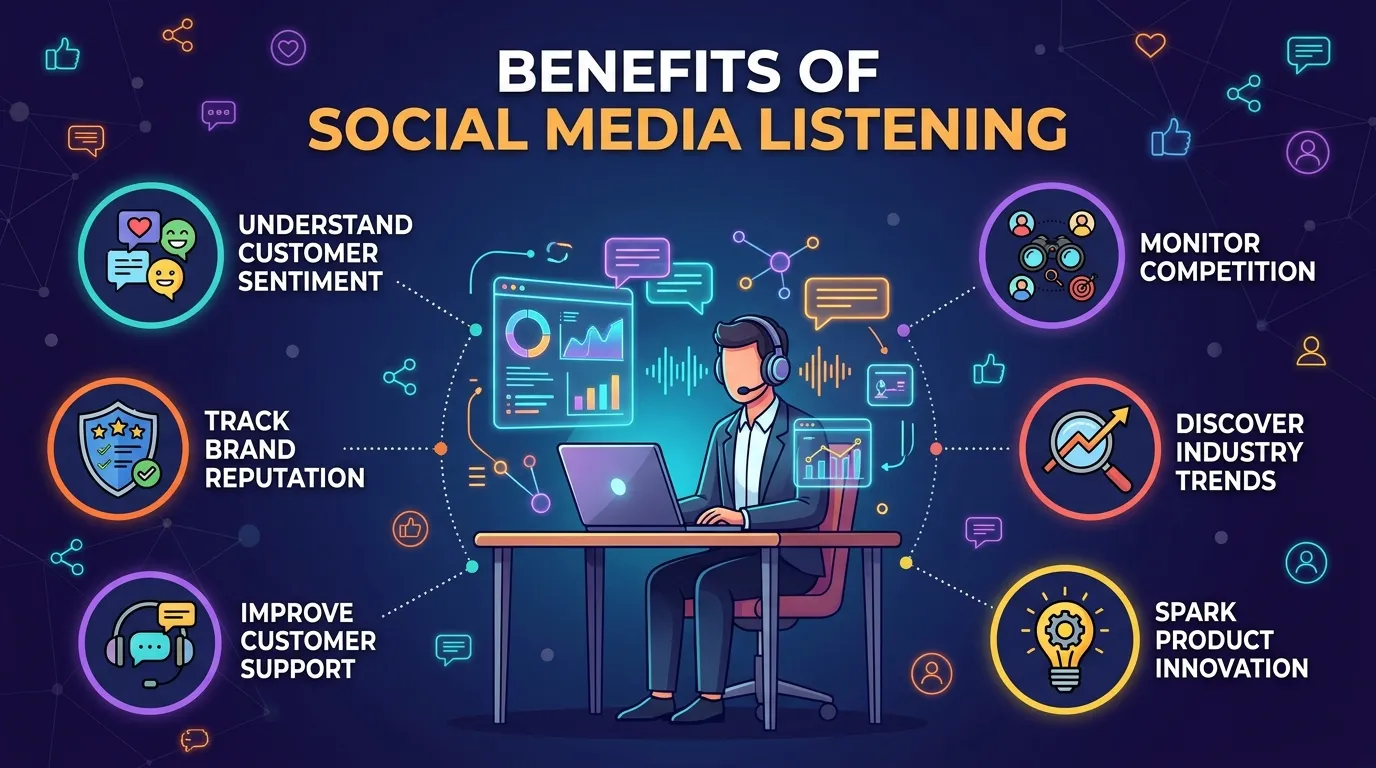 Social media listening provides businesses with valuable information that can improve several areas of their operations. One of its biggest advantages is helping companies understand customer expectations. By analyzing public conversations, businesses can identify what people appreciate, what frustrates them, and what improvements they expect from products or services.
Another major benefit is identifying new business opportunities. Customers frequently discuss problems they want solutions for, products they wish existed, and features they would like companies to introduce. These conversations can provide useful ideas for product development, service improvements, and future marketing campaigns.
Social listening can also strengthen customer relationships. When businesses respond to feedback and demonstrate that they value customer opinions, people are more likely to develop trust in the brand. This can contribute to stronger customer retention and long-term loyalty.
Businesses can also use listening insights to improve their promotional activities. For example, understanding which topics interest an audience can help marketers create more relevant campaigns, webinars, and educational content. Companies developing a webinar marketing strategy can use social conversations to identify audience questions and select topics that potential attendees genuinely want to learn about. Ultimately, social media listening best practices help businesses make informed decisions instead of relying entirely on assumptions. The insights gained can support customer satisfaction, marketing effectiveness, brand awareness, and sustainable growth.
Social Media Sentiment Analysis
Social media sentiment analysis is the process of identifying the emotions and opinions expressed in online conversations. It helps businesses understand whether customers generally have positive, negative, or neutral feelings toward their brand, products, or services.
Positive sentiment may include customer recommendations, product appreciation, and favorable reviews. Negative sentiment can involve complaints, dissatisfaction, service problems, or criticism. Neutral conversations generally include questions, factual discussions, and mentions without a clearly expressed emotional opinion.
One of the most useful social media listening best practices is analyzing sentiment over time rather than focusing on individual comments. A single negative review does not necessarily indicate a reputation problem. However, a sudden increase in negative conversations may suggest a product issue, poor customer experience, or an unsuccessful marketing campaign.
Businesses can use sentiment analysis tools to categorize conversations automatically. These tools often use artificial intelligence and natural language processing to identify emotional patterns across large volumes of social media content. However, automated analysis is not always accurate because sarcasm, humor, slang, and cultural differences can affect interpretation.
For this reason, human review remains important when analyzing sensitive or complicated conversations. Combining automated analysis with human judgment provides a more accurate understanding of audience emotions. By regularly reviewing sentiment trends, companies can improve communication, identify customer concerns, and make better decisions about their products and marketing activities.
Brand Reputation Management
A company’s online reputation can significantly influence customer trust and purchasing decisions. People often research brands, read reviews, and explore social media discussions before choosing a product or service. Therefore, businesses need to understand how their brand is perceived across digital platforms.
Brand reputation management involves tracking public conversations, responding to criticism, addressing customer complaints, and maintaining consistent communication. Social listening makes this process more effective because it helps businesses identify potential reputation problems before they become widespread.
For example, if several customers report the same issue with a product, a company can investigate the problem and communicate an appropriate solution. Ignoring these conversations may lead to additional complaints and negative publicity.
Another important practice is recognizing positive feedback. Businesses should appreciate customers who share good experiences and encourage satisfied customers to continue engaging with the brand. These interactions help strengthen relationships and create a positive online community.
Strong brand reputation management also supports customer loyalty. Businesses that consistently listen and respond to their audiences are more likely to build lasting relationships. Companies interested in improving long-term customer relationships can explore this guide on brand loyalty to understand how positive customer experiences contribute to stronger brand connections. Following social media listening best practices allows companies to identify reputation risks, understand public perceptions, and maintain a consistent brand image across different channels.
Social Media Engagement Strategies
 Social media engagement is about creating meaningful interactions between businesses and their audiences. Likes, comments, shares, mentions, and direct messages can reveal how people respond to a brand’s content and communication. An effective engagement strategy begins with understanding what your audience wants to discuss. Social listening helps businesses discover popular topics, common questions, and trending conversations. These insights can guide content creation and make social media communication more relevant.
Businesses should also prioritize responding to comments and messages in a natural and helpful way. Instead of using generic responses for every interaction, brands should provide personalized answers that address the customer’s actual concerns. Another useful approach is participating in relevant industry discussions. Businesses can share helpful information, answer questions, and contribute meaningful opinions without making every interaction promotional. This helps establish credibility and encourages audiences to engage with the brand.
Visual content, short videos, polls, and educational posts can also increase engagement when they match audience interests. Understanding current website and digital experience expectations is equally important. Businesses can explore website design trends to discover how modern design approaches can support a better online experience and complement social media marketing activities. The best social media listening best practices connect audience insights with actual engagement improvements. By understanding what people discuss and responding appropriately, businesses can build more active and loyal communities.
Audience Insights and Analytics
Audience insights and analytics help businesses understand who their customers are, what interests them, and how they behave online. Social media platforms provide different types of data, including demographic information, engagement rates, audience growth, content performance, and interaction patterns. However, businesses should look beyond basic follower counts. A large audience does not automatically mean a successful marketing strategy. Engagement quality, customer interests, audience sentiment, and conversation relevance often provide more meaningful information.
Social listening can reveal the topics customers discuss most frequently, the problems they want to solve, and the types of content they prefer. These insights help businesses create targeted campaigns that better match audience expectations. For example, a company may discover that its audience frequently asks questions about product features. This information can inspire educational videos, tutorials, blog posts, and product demonstrations.
Another important practice is comparing audience insights across different platforms. Customers may use LinkedIn for professional discussions but prefer Instagram for visual content and product recommendations. Understanding these differences helps businesses adapt their communication style. Companies should also track key performance indicators such as engagement rate, share of voice, sentiment changes, response time, and recurring customer concerns. Reviewing these metrics regularly makes it easier to identify successful strategies and areas that require improvement. Using social media listening best practices alongside analytics allows businesses to transform audience conversations into measurable marketing improvements.
Customer Feedback Monitoring
Customer feedback is one of the most valuable sources of information for improving products and services. Customers frequently share their experiences through comments, reviews, direct messages, discussion forums, and online communities. Monitoring these conversations helps businesses understand what is working and what needs improvement. An effective feedback monitoring process should include both positive and negative responses. Positive feedback reveals which features, services, and experiences customers appreciate. Negative feedback highlights problems that may affect customer satisfaction and purchasing decisions.
Businesses should organize feedback into meaningful categories, such as product quality, pricing, delivery, customer service, website experience, and technical issues. This makes it easier to identify recurring patterns and share relevant insights with different departments. One of the most important social media listening best practices is treating feedback as an opportunity for improvement rather than criticism. Companies should investigate recurring complaints, communicate solutions, and follow up when necessary.
It is also important to close the feedback loop. When customers take the time to explain a problem, businesses should let them know that their feedback has been received and, where possible, explain what actions are being taken. Companies can also compare feedback before and after making improvements. This helps determine whether changes have successfully addressed customer concerns. Consistent feedback monitoring creates a better understanding of customer expectations and helps businesses improve the overall customer experience.
Social Listening Tools and Techniques
 Managing social conversations manually can become difficult when a business receives hundreds or thousands of mentions across multiple platforms. Social listening tools make the process easier by collecting, organizing, and analyzing conversations from different online sources.
Popular platforms such as Brandwatch, Talkwalker, Sprout Social, and Hootsuite offer different capabilities for monitoring brand mentions, tracking keywords, analyzing sentiment, and measuring social media performance. The right choice depends on business size, budget, marketing objectives, and reporting requirements. Businesses should select tools that support the platforms where their target audience is most active. They should also consider features such as real-time alerts, competitor tracking, historical data, sentiment analysis, and customizable reports.
In addition to using software, companies should develop practical listening techniques. Creating keyword groups, monitoring industry hashtags, tracking competitor discussions, and reviewing customer questions can provide valuable insights. Another useful technique is identifying influencers and industry experts who frequently discuss relevant topics. Their conversations may reveal emerging trends and help businesses understand what matters to their target audience.
Data privacy should also be considered when selecting tools and collecting information. Businesses must follow applicable privacy laws and platform policies while using publicly available information responsibly. Following social media listening best practices means combining the right technology with human analysis. Tools can collect large amounts of information, but experienced marketing teams are needed to interpret the findings and turn them into meaningful actions.
Competitor Social Media Analysis
Understanding competitors is an important part of developing a successful social media strategy. Competitor analysis helps businesses discover how other brands communicate, which content performs well, and what audiences appreciate or criticize about their experiences. Companies can begin by identifying their main competitors and monitoring their public social media conversations. This includes reviewing popular posts, audience engagement, frequently discussed topics, customer complaints, and promotional activities.
One valuable approach is comparing share of voice. This metric helps businesses understand how frequently their brand is mentioned compared with competitors within relevant online conversations. A growing share of voice may indicate increasing brand awareness, while a decline may suggest the need to review marketing activities. Competitor listening can also reveal market gaps. For example, if customers frequently complain about a competitor’s delivery service or customer support, another business may be able to differentiate itself by providing a better experience.
However, competitor analysis should focus on learning rather than copying. Every brand has a different audience, identity, and marketing objective. Businesses should use competitor insights to identify opportunities and develop their own communication strategies. Another important social media listening best practices approach is tracking competitor sentiment over time. Understanding why customers appreciate or criticize competing brands can help businesses improve their own products and services. By combining competitor analysis with audience research and customer feedback, companies can develop more effective marketing strategies and build a stronger position in their industry.
Conclusion
Social media conversations contain valuable information that businesses can use to improve customer relationships, strengthen brand reputation, and make smarter marketing decisions. However, collecting mentions and comments is only the beginning. Companies need to understand the meaning behind conversations and take appropriate action based on what their audiences are saying. By implementing effective strategies, monitoring conversations consistently, analyzing sentiment, and using the right tools, businesses can gain a deeper understanding of customer expectations. They can also identify emerging trends, discover market opportunities, and improve their competitive position.
FAQ
1. What is social media listening?
Social media listening is the process of tracking and analyzing online conversations about a brand, product, industry, or relevant topic. It helps businesses understand customer opinions, identify trends, monitor sentiment, and make informed marketing decisions.
2. What is the difference between social media listening and monitoring?
Social media monitoring focuses on tracking brand mentions, comments, messages, and other social activities. Social media listening goes further by analyzing conversations to understand customer emotions, opinions, trends, and underlying issues.
3. Why is social media listening important for businesses?
Social media listening is important because it helps businesses understand customer expectations, improve products and services, identify reputation risks, discover market opportunities, and develop stronger customer relationships.
4. What are the best social media listening tools?
Some popular social listening tools include Brandwatch, Talkwalker, Sprout Social, and Hootsuite. These platforms offer features such as brand mention tracking, sentiment analysis, competitor monitoring, and social media reporting.
5. How does social media listening improve customer engagement?
Social listening helps businesses understand what their audiences want to discuss. Companies can use these insights to create relevant content, respond to questions, address concerns, and participate in meaningful conversations.
6. What is social media sentiment analysis?
Social media sentiment analysis identifies whether online conversations express positive, negative, or neutral opinions about a brand, product, or service. It helps businesses understand public perception and identify changes in customer satisfaction.
7. How often should businesses conduct social media listening?
Businesses should monitor important conversations regularly. High-volume brands may benefit from continuous monitoring, while smaller businesses can review relevant conversations daily or several times a week, depending on their activity and resources.
8. Can social media listening help manage brand reputation?
Yes. Social listening helps businesses identify negative feedback, detect potential reputation problems, and respond to customer concerns before they become larger issues. It also helps brands recognize and appreciate positive customer experiences.
9. How can small businesses use social media listening?
Small businesses can start by tracking their brand name, product keywords, industry hashtags, customer questions, and competitor mentions. Free platform analytics and affordable listening tools can help them understand audience behavior without requiring a large marketing budget.
10. What metrics should businesses track in social media listening?
Important metrics include brand mention volume, share of voice, positive and negative sentiment, engagement rate, customer response time, conversation trends, and recurring feedback topics. Tracking these metrics helps businesses measure performance and identify opportunities for improvement.






Leave a Reply