

Setting up marketing automation software is easy — using it well is where most businesses struggle. This guide walks through the marketing automation best practices that separate campaigns that convert from ones that quietly annoy leads into unsubscribing, covering segmentation, timing, personalization, compliance, and ongoing optimization.
Marketing automation platforms make it technically simple to send hundreds or thousands of messages automatically, but that ease of use is exactly what causes so many businesses to get it wrong. Following proven marketing automation best practices is what separates a system that nurtures leads thoughtfully from one that floods inboxes with generic, poorly timed messages that damage the brand relationship instead of strengthening it.
This guide covers the marketing automation best practices that consistently separate high-performing programs from underperforming ones — from how you segment your audience to how you handle compliance and ongoing optimization. Whether you’re launching your first automated welcome sequence or auditing a mature program with dozens of overlapping workflows, the same core principles apply, just at different levels of complexity. If you want a broader foundation first, our guide on building a marketing automation workflow covers the mechanics of workflow design that these best practices build directly on top of.
Why Marketing Automation Best Practices Matter
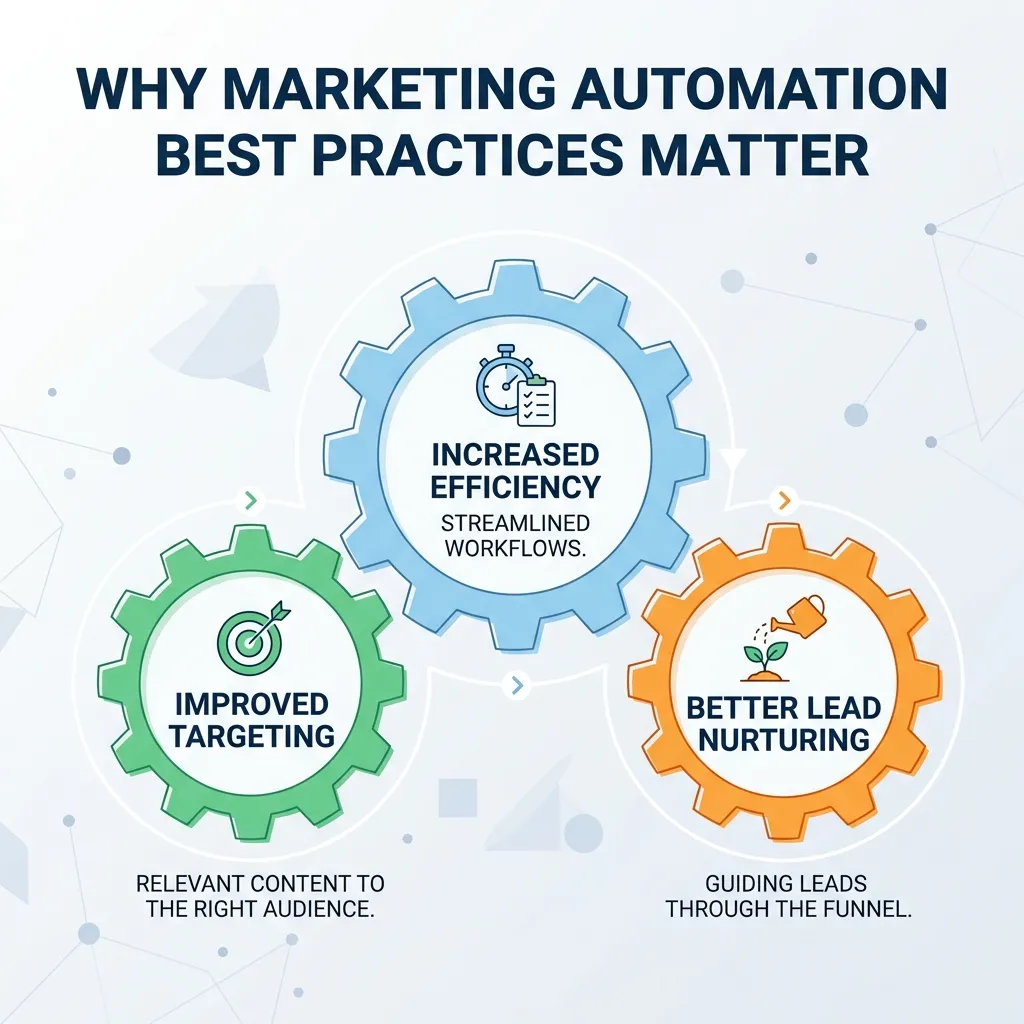
Automation amplifies whatever strategy sits behind it — a well-designed program reaches the right person with the right message at the right time, while a poorly designed one reaches everyone with the same generic message regardless of relevance. Following marketing automation best practices isn’t about following rules for their own sake; it’s about protecting the trust and attention of the very leads and customers the automation is meant to nurture.
Ignoring these principles doesn’t just reduce performance — it actively damages deliverability, brand reputation, and customer relationships, since automated mistakes tend to repeat themselves at scale far faster than a human sending messages manually ever could.
1. Start With Clear Segmentation
One of the most foundational marketing automation best practices is proper audience segmentation. Sending the same message to your entire list regardless of their behavior, interests, or stage in the buying journey is one of the fastest ways to reduce engagement and increase unsubscribes. Effective segmentation might be based on:
- Purchase history and product interest
- Engagement level (active vs. dormant contacts)
- Lifecycle stage (new lead, active customer, churned customer)
- Demographic or firmographic data relevant to your business
Strong segmentation is the difference between automation that feels personally relevant and automation that feels like generic spam, regardless of how sophisticated the underlying workflow logic is.
2. Personalize Beyond Just a First Name
Among the marketing automation best practices that get overlooked most often is treating personalization as something deeper than inserting a contact’s first name into a subject line. True personalization considers what a contact has actually done — pages visited, products viewed, content downloaded — and tailors the message accordingly. Our guide on marketing automation strategy covers how to build this kind of behavior-based personalization directly into your workflow logic rather than treating it as an afterthought.
3. Respect Timing and Frequency
Sending too many messages too quickly is one of the most common ways automated programs violate marketing automation best practices, even when every individual message is well-written. Give contacts enough time to actually engage with one message before sending the next, and consider frequency caps across all your active workflows combined, not just within a single sequence, since overlapping workflows can quietly overwhelm a contact without anyone noticing until unsubscribe rates spike.
4. Always Include Clear Exit Conditions
A surprisingly common violation of marketing automation best practices is failing to remove someone from a workflow once they’ve already completed the intended action. A customer who already purchased shouldn’t keep receiving abandoned cart reminders for the same product; a lead who already booked a demo shouldn’t keep getting emails asking them to book one. Building reliable exit conditions into every workflow protects the customer experience and keeps your automation feeling intentional rather than careless.
5. Keep Your Data Clean
Marketing automation is only as good as the data feeding it, which is why maintaining clean, accurate data is one of the most important marketing automation best practices, even though it’s rarely the most exciting part of the job. Regularly removing invalid email addresses, updating outdated contact information, and merging duplicate records prevents automated workflows from sending confusing or embarrassing messages based on stale or incorrect data.
6. Test Before You Launch
Rushing a new marketing automation workflow live without testing is one of the riskiest mistakes a team can make, since automation errors tend to compound quickly once they’re running unsupervised. Best practice is to always send a live test through the entire sequence as an internal contact, checking for broken links, formatting issues, incorrect personalization tokens, and confirming that timing and branching logic actually work the way they were designed to.
7. Align Automation With Sales and Customer Support
Among the more overlooked marketing automation best practices is ensuring sales and support teams know what automated messages a contact has already received. A lead shouldn’t get a cold outreach call the same day they received an automated email addressing the exact same topic, and support teams should be aware if a customer is currently in a re-engagement or win-back sequence. Keeping automation, sales, and support aligned prevents contacts from receiving contradictory or redundant communication from different parts of the business.
8. Stay Compliant With Privacy and Anti-Spam Regulations
Compliance is a non-negotiable piece of marketing automation best practices, particularly as privacy regulations continue to expand globally. This means maintaining clear opt-in records, honoring unsubscribe requests promptly, including required sender information in every email, and being transparent about what data is being collected and how it’s used. Automated systems make it easy to accidentally continue emailing someone who unsubscribed if integrations aren’t properly connected, so regularly auditing your suppression lists and unsubscribe handling is essential.
9. Use Lead Scoring Thoughtfully
Lead scoring is a powerful tool when applied correctly, but it’s frequently misused in ways that violate good marketing automation best practices — either scoring too aggressively, marking unqualified leads as sales-ready, or scoring too conservatively, leaving genuinely interested prospects stuck in nurture sequences far longer than necessary. Regularly reviewing and adjusting your scoring model based on actual conversion outcomes, rather than setting it once and leaving it unchanged indefinitely, keeps this system accurate over time.
10. Monitor Performance Continuously
Treating an automated workflow as “set it and forget it” is one of the most common ways businesses fail to follow marketing automation best practices over the long term. Open rates, click-through rates, conversion rates, and unsubscribe rates should all be reviewed regularly, with underperforming steps revised or removed rather than left running unchanged simply because they were built correctly once.
11. Don’t Over-Automate the Human Moments
Not every interaction should be automated, and recognizing this is an important part of marketing automation best practices that’s easy to forget once a system is running smoothly. High-value conversations, sensitive customer service issues, or moments where a genuine human touch matters more than efficiency are often better handled manually, even if triggering an automated response would technically be possible.
12. Document and Maintain Your Workflows
As a marketing automation program grows, keeping clear documentation of what each workflow does, who it targets, and when it was last updated becomes one of the most practical marketing automation best practices for avoiding confusion and overlap. Without this documentation, it becomes easy to accidentally build two workflows that target the same audience with conflicting messages, or to lose track of outdated sequences that should have been retired long ago.
How These Best Practices Work Together
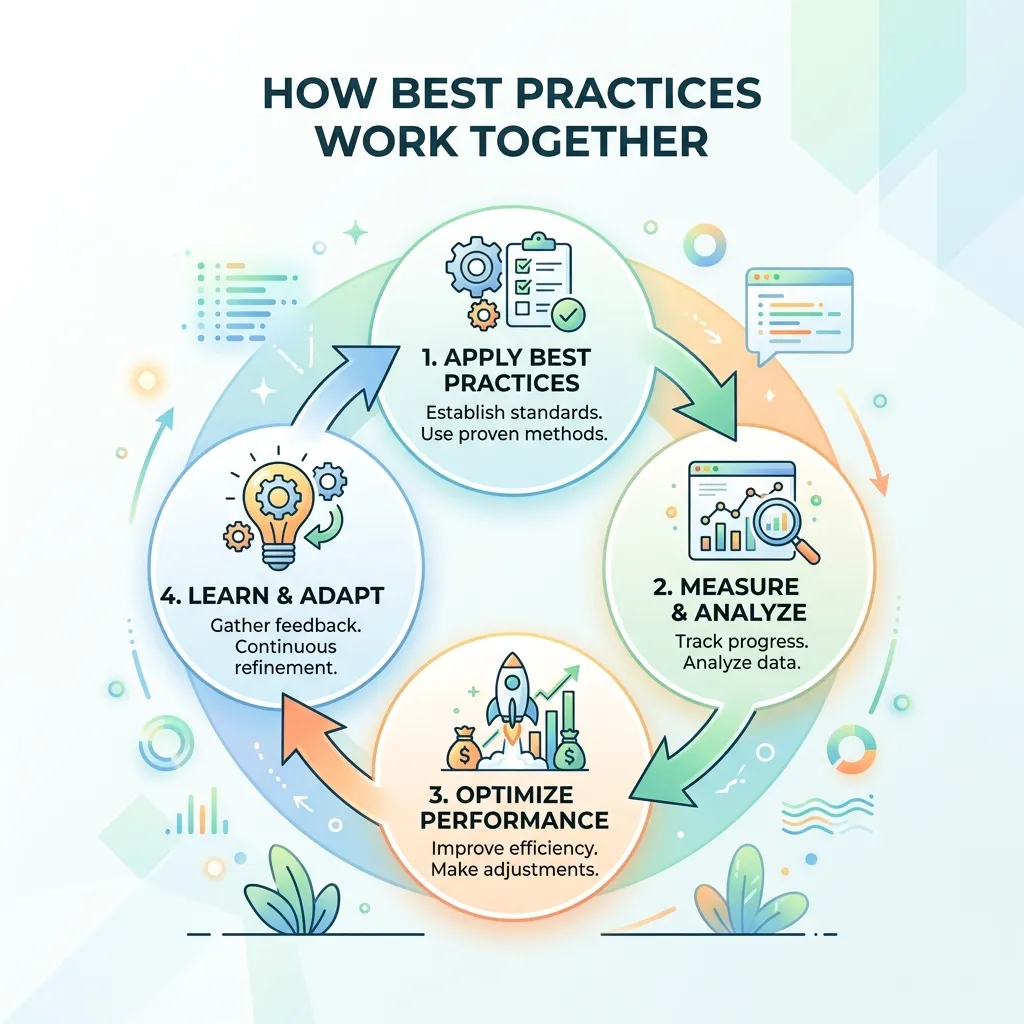
None of these marketing automation best practices function well in isolation — they reinforce each other as part of a complete system. Clean data makes segmentation possible; good segmentation makes personalization meaningful; proper testing catches errors before they reach real contacts; and ongoing monitoring ensures the whole system keeps improving rather than quietly degrading over time as your business, audience, and offerings evolve.
Our guide on marketing automation tools for small business covers platforms that make it easier to implement several of these best practices even with limited internal resources, since many modern tools now include built-in features for segmentation, testing, and compliance management.
Industry-Specific Considerations
While the core marketing automation best practices apply broadly, some industries need additional attention in specific areas. Healthcare and financial services businesses face stricter compliance requirements around what can be automated and how personal data is handled, making privacy-focused best practices especially critical, often requiring legal review of automated messaging before it goes live. E-commerce businesses benefit enormously from behavior-based segmentation given the wealth of purchase and browsing data typically available, allowing highly specific triggers like abandoned browsing sessions or repeat purchase patterns. B2B companies with longer sales cycles need to place extra emphasis on lead scoring accuracy and sales alignment, since a mismatched handoff between automation and a sales team can waste weeks of nurturing effort in a single miscommunication, and can even damage a prospect’s overall impression of how organized the company is internally.
Common Mistakes That Violate Marketing Automation Best Practices
Even experienced marketers slip up in predictable ways:
- Buying email lists and automating messages to contacts who never opted in, which damages deliverability and violates most regulations
- Ignoring mobile formatting, sending automated emails that render poorly on the majority of devices where they’re actually opened
- Failing to update outdated content within long-running evergreen workflows, leaving stale offers or broken links live for months
- Treating every lead the same, regardless of source, intent, or engagement level
- Never archiving old workflows, leading to a cluttered system where it’s unclear which sequences are actually active and performing well
Building a Culture Around These Best Practices

Marketing automation best practices work best when they’re treated as a team standard rather than knowledge held by a single person. Documenting these principles, reviewing workflows collaboratively, and building a regular audit process into the marketing calendar helps ensure quality doesn’t slip as team members change or as the number of active workflows grows over time. For a broader look at what marketing automation makes possible in the first place, our external resource on what marketing automation is offers a useful refresher on the fundamentals these best practices are designed to protect.
Key Takeaways
Before wrapping up, here’s a condensed summary of the marketing automation best practices covered in this guide: segment your audience thoughtfully rather than treating every contact the same, personalize based on real behavior rather than surface-level details, respect timing and frequency across all active workflows combined, keep data clean and exit conditions reliable, stay compliant with privacy regulations at every step, and never stop monitoring performance once a workflow goes live. Treating these marketing automation best practices as an ongoing discipline rather than a one-time setup task is what ultimately determines whether automation strengthens or damages the relationships it’s meant to support.
Businesses that build a regular audit habit — reviewing active workflows, refreshing outdated content, and adjusting segmentation as customer behavior evolves — tend to see automation compound in value over time, much like a well-maintained garden that keeps producing results year after year rather than being planted once and left unattended. This ongoing attention is ultimately what separates marketing automation best practices in theory from marketing automation best practices actually delivering measurable results in day-to-day campaign performance.
Conclusion
Marketing automation best practices aren’t a one-time checklist — they’re an ongoing discipline that determines whether automation becomes a genuine competitive advantage or a source of quiet, compounding damage to customer relationships. By prioritizing segmentation, personalization, careful timing, clean data, compliance, and continuous monitoring, businesses can build automated systems that actually strengthen trust with leads and customers rather than eroding it. The technology makes automation easy; following these marketing automation best practices is what makes it actually effective.
Frequently Asked Questions (FAQs)
1. What are the most important marketing automation best practices?
Segmentation, personalization, respecting send frequency, clean data, compliance, and continuous performance monitoring are among the most critical marketing automation best practices.
2. How often should marketing automation workflows be reviewed?
Most businesses benefit from reviewing active workflows at least monthly or quarterly, checking performance data and updating outdated content as needed.
3. What happens if I don’t follow marketing automation best practices?
Ignoring these practices typically leads to higher unsubscribe rates, damaged sender reputation, poor deliverability, and weaker overall campaign performance.
4. How does segmentation improve marketing automation results?
Segmentation ensures messages are relevant to each contact’s specific behavior or interests, significantly improving engagement compared to generic, one-size-fits-all messaging.
5. Why is data cleanliness considered a marketing automation best practice?
Automated workflows rely entirely on the accuracy of underlying data, so outdated or incorrect information can lead to embarrassing or irrelevant automated messages.
6. What compliance issues should marketing automation programs watch for?
Programs need to maintain clear opt-in records, honor unsubscribe requests promptly, and follow relevant privacy regulations depending on their audience’s location.
7. Should sales teams be involved in marketing automation best practices?
Yes, aligning sales and automation prevents contacts from receiving redundant or contradictory communication from different parts of the business.
8. How do I know if my marketing automation workflows are too aggressive?
Rising unsubscribe rates, declining open rates over time, and direct complaints from contacts are common signs that frequency or messaging needs to be adjusted.
9. Is lead scoring necessary for good marketing automation practices?
While not mandatory, lead scoring helps prioritize sales follow-up effectively when implemented thoughtfully and reviewed regularly against actual conversion data.
10. Can small businesses realistically follow all marketing automation best practices?
Yes, most modern automation platforms include built-in features that make segmentation, testing, and compliance management accessible even with limited resources.
11. What’s the biggest mistake businesses make with marketing automation?
Treating workflows as “set it and forget it” rather than continuously monitoring and refining them is one of the most common and damaging mistakes.
12. How do marketing automation best practices differ by industry?
Industries like healthcare and finance require extra attention to compliance, while e-commerce benefits most from behavior-based segmentation and B2B companies need stronger sales alignment.






Leave a Reply