

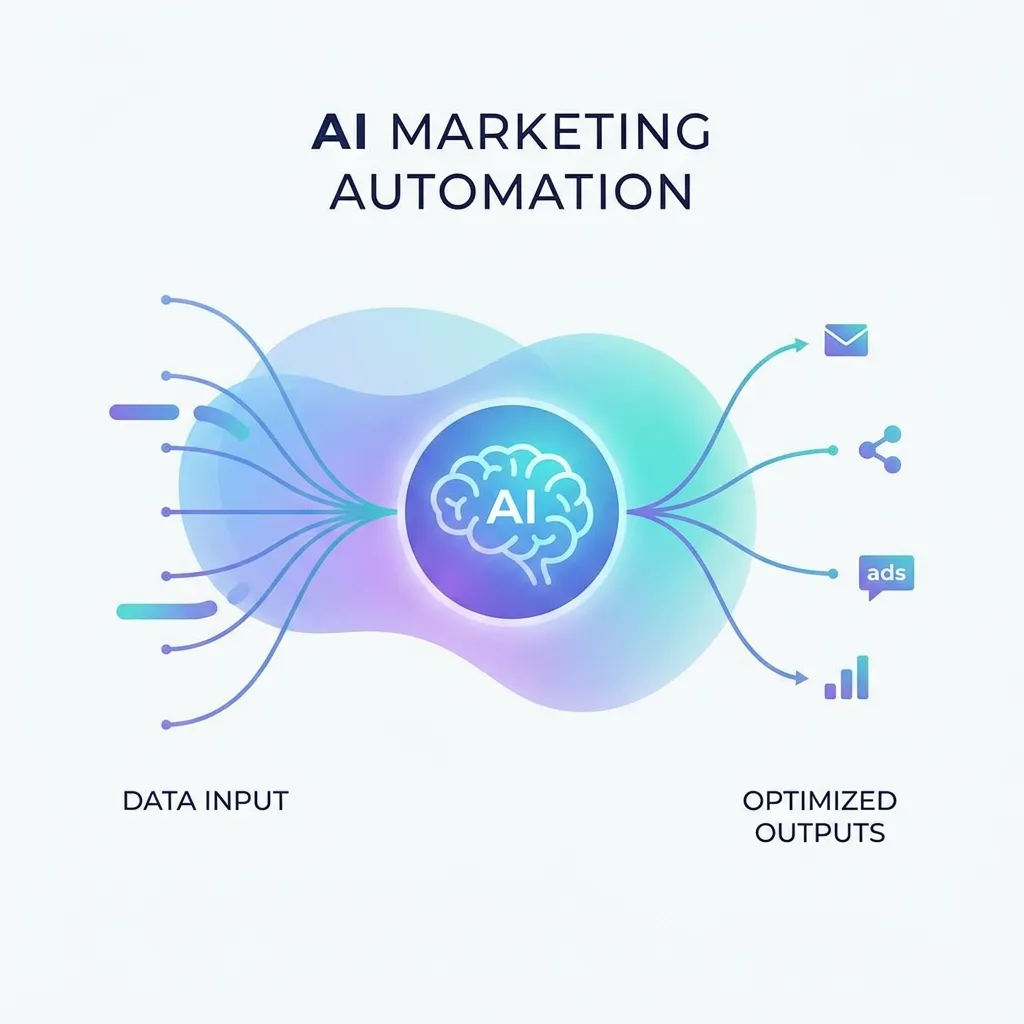
AI marketing automation combines the rule-based logic of traditional automation with machine learning models that predict, personalize, and optimize in real time. Instead of relying on fixed timing and static segments, AI-powered systems learn from individual behavior to decide the best time to send a message, which content is most likely to convert, and which leads deserve the most attention. This guide covers what AI marketing automation actually does differently, the core use cases reshaping modern campaigns, how to get started, and the mistakes to avoid as AI capabilities get layered into existing marketing systems.
Marketing automation has existed for years in the form of simple triggered emails and fixed workflows, but the addition of artificial intelligence has changed what’s possible. Instead of a marketer manually deciding every rule — when to send, who to target, what content to show — AI models now analyze patterns across thousands of data points to make those decisions dynamically, often outperforming static rules built on assumption alone.
This guide breaks down how AI marketing automation works in practice, building on the fundamentals covered in this complete guide to marketing automation strategy, and showing exactly where AI adds the most value on top of a traditional automation setup. Whether you’re running a lean small-business marketing stack or managing a complex, multi-channel enterprise program, the same core principles apply: use AI to sharpen decisions you’re already making, not to replace the strategic thinking behind them.
What Makes AI Marketing Automation Different?
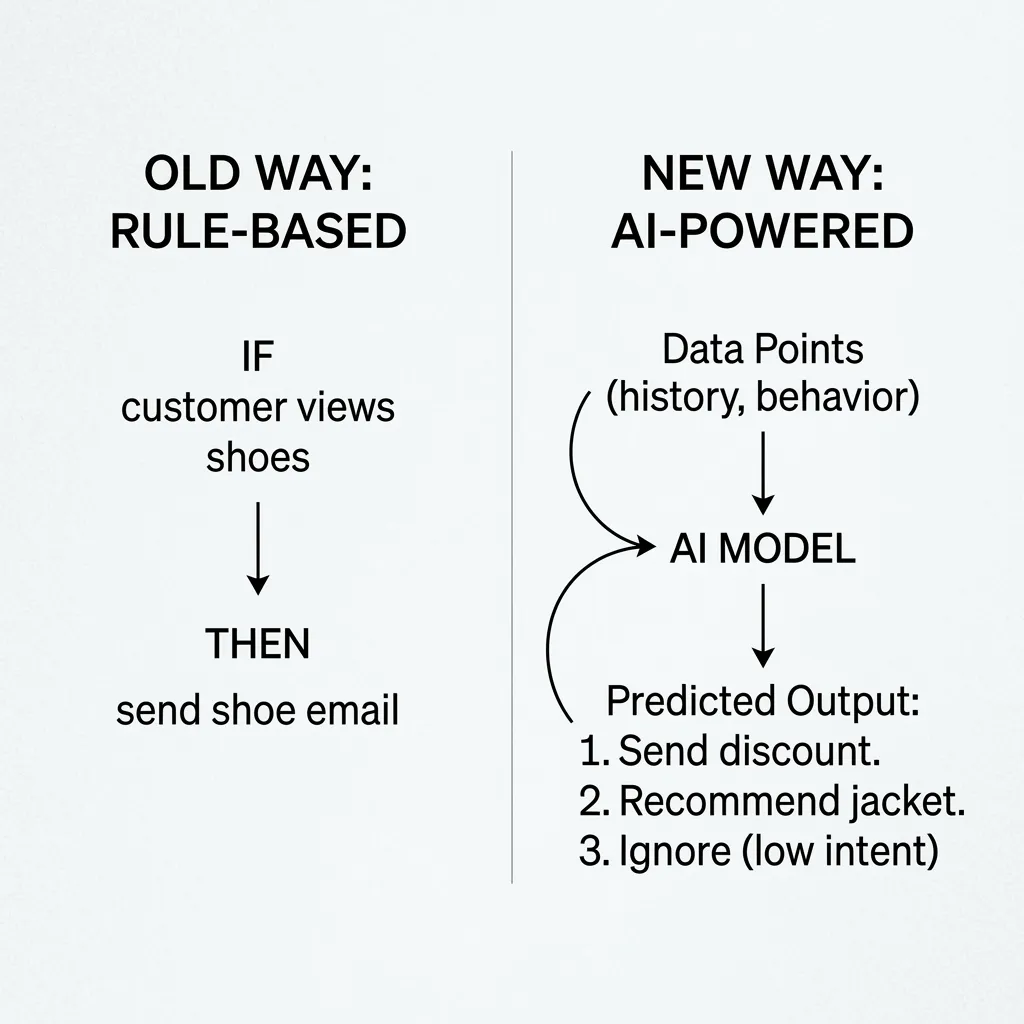
Traditional marketing automation relies on rules a human sets in advance: send this email three days after signup, tag this contact if they click a link, move this lead to sales after five site visits. AI marketing automation adds a predictive layer on top of those rules, using historical and real-time data to make more nuanced decisions than a fixed rule ever could.
Rather than treating every contact within a segment identically, AI models can identify subtle behavioral patterns that predict who is genuinely close to converting, who needs more nurturing, and who is unlikely to respond no matter what’s sent. This shift from static segmentation to dynamic, individual-level prediction is the core difference between traditional and AI-powered automation.
Core Use Cases for AI Marketing Automation
1. Predictive Lead Scoring
Instead of manually assigning point values to specific actions, AI models analyze which combinations of behaviors historically led to conversions and score new leads accordingly. This often surfaces high-intent leads that traditional scoring rules would have missed or under-prioritized.
2. Send-Time Optimization
AI can determine the specific time each individual contact is most likely to open and engage with a message, rather than sending an entire segment’s emails at the same fixed hour. Over time, this personalized timing consistently improves open and click-through rates compared to a single blanket send time.
3. Dynamic Content Personalization
AI-driven systems can automatically select which product recommendations, images, or messaging angles to show each recipient based on their individual browsing and purchase history, rather than relying on a single static template for an entire segment.
4. Churn and Win-Back Prediction
Machine learning models can flag customers showing early signs of disengagement before they fully churn, triggering a win-back sequence automatically rather than waiting for a fixed “hasn’t purchased in 90 days” rule that may act too late.
5. Conversational AI and Chatbots
AI-powered chat and messaging tools can qualify leads, answer common questions, and guide visitors toward a purchase decision automatically, extending automation beyond email into real-time conversation. This is especially impactful in e-commerce, where AI chatbots have been shown to lift conversions by resolving buyer hesitation at the exact moment it happens.
6. Trend and Demand Forecasting
AI models can analyze search behavior, social signals, and historical sales data to anticipate emerging trends before they peak, informing which products or messages to prioritize in upcoming campaigns. This guide to AI-powered trend forecasting in marketing explores how forecasting models are increasingly built directly into automation platforms, feeding predictions straight into campaign triggers.
How to Build an AI-Powered Marketing Automation Strategy
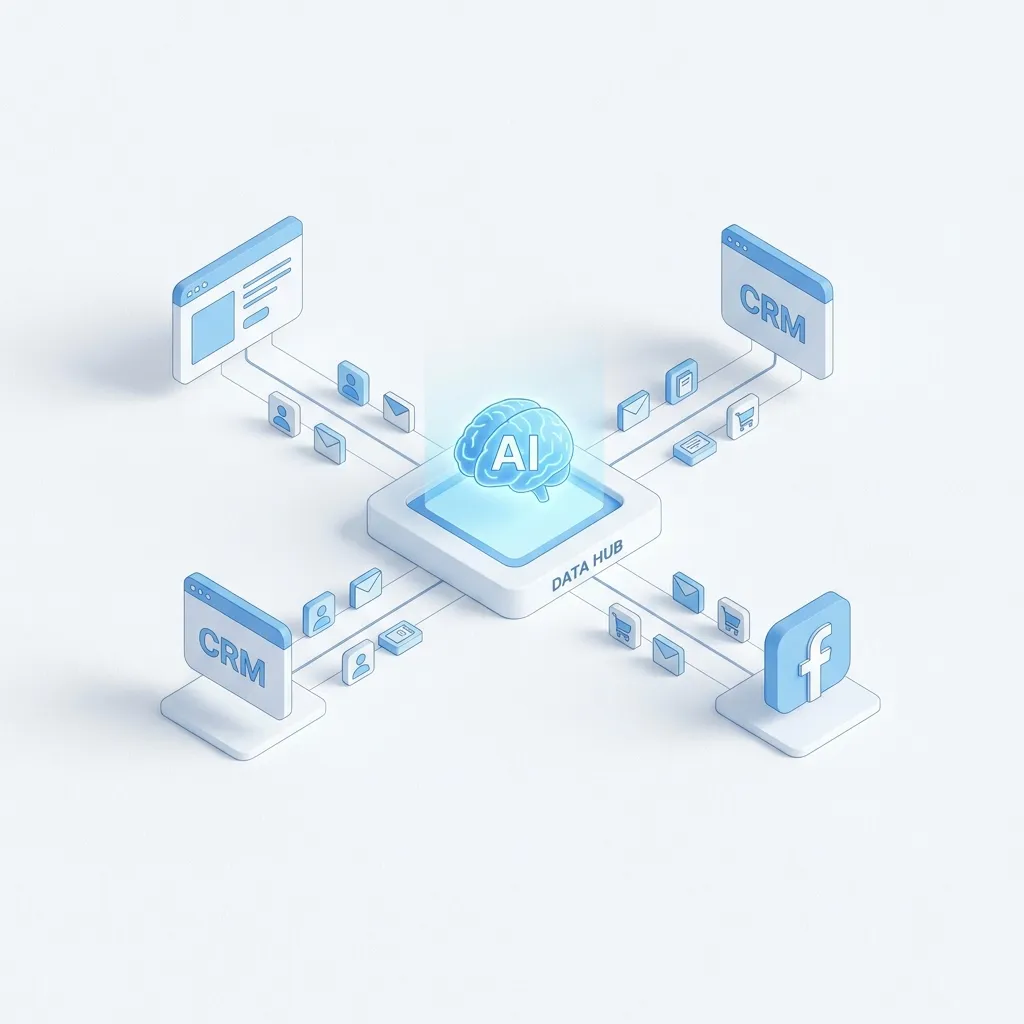
Step 1: Start With a Solid Automation Foundation
AI performs best when layered on top of clean, well-structured data and existing workflows rather than replacing the basics entirely. Reviewing a marketing automation workflow guide first ensures your underlying triggers and segments are sound before adding predictive layers on top.
Step 2: Identify High-Value Use Cases
Rather than trying to add AI everywhere at once, identify the specific bottlenecks where prediction would add the most value — commonly lead scoring, send-time optimization, or churn prediction — and start there.
Step 3: Ensure Data Quality and Volume
AI models depend on sufficient historical data to identify meaningful patterns. Businesses with limited customer history or inconsistent data tracking should focus on improving data collection before expecting strong predictive accuracy.
Step 4: Choose the Right Platform
Many modern marketing automation platforms now include built-in AI features rather than requiring a separate tool. Evaluate whether your current platform’s AI capabilities meet your needs before investing in additional software, referencing a broader marketing automation tools guide if you’re still comparing options.
Step 5: Test AI-Driven Decisions Against Existing Rules
Run AI-powered send times, scoring, or content selection alongside your existing rule-based system for a defined period to confirm the predictive approach actually outperforms your current setup before fully replacing it.
Step 6: Monitor for Bias and Drift
AI models can develop blind spots or become less accurate over time as customer behavior shifts. Regularly review model performance and retrain or adjust as needed, rather than assuming an AI system will remain accurate indefinitely without oversight.
AI Marketing Automation for Small Businesses
Smaller teams often assume AI-driven automation requires enterprise-level budgets, but many affordable platforms now include predictive features out of the box. A marketing automation guide for small business shows how starting with simpler workflows and gradually adopting built-in AI features — rather than building custom models from scratch — makes AI marketing automation accessible even for lean teams.
AI, Trend Marketing, and Real-Time Decision-Making
AI marketing automation increasingly overlaps with broader trend marketing strategies, since both rely on identifying patterns quickly enough to act before an opportunity passes. This exploration of predictive analytics in trend marketing and this deeper look at using AI to forecast consumer behavior both illustrate how the same predictive techniques powering automated campaigns are also reshaping how brands anticipate broader shifts in what customers want next.
AI Personalization Beyond Email
AI-driven personalization now extends well beyond email automation into on-site experiences, product recommendations, and even pricing. In e-commerce specifically, AI personalization strategies show how the same predictive principles used in email automation can shape an entire customer journey, from the first product a visitor sees to the recommendations that appear at checkout. Broader industry perspective on how AI is changing digital marketing is also useful context for teams deciding how much of their strategy to shift toward AI-driven decision-making.
Ethics, Privacy, and Transparency in AI Marketing Automation
As AI marketing automation relies on increasingly granular behavioral data, questions around privacy and transparency become impossible to ignore. Customers are generally comfortable with reasonable personalization — product recommendations based on past purchases, for example — but can feel uneasy when messaging seems to reveal knowledge of behavior they didn’t expect a brand to track, such as browsing on an unrelated site or a sensitive personal search.
A few practical principles help keep AI-driven personalization on the right side of that line:
- Be transparent about data use. Clear privacy policies and opt-in preferences build trust and reduce the risk of personalization feeling invasive.
- Avoid overly specific callbacks to sensitive behavior. Referencing a general interest is usually fine; referencing an unusually specific or sensitive action can feel unsettling even if it’s technically accurate.
- Respect regulatory requirements. Regulations like GDPR and CCPA place real limits on how customer data can be collected, stored, and used for automated decision-making, and compliance should be built into the automation strategy from the start rather than addressed after the fact.
- Give customers control. Easy-to-find unsubscribe options and preference centers help customers manage the level of personalization they’re comfortable with, which in turn improves long-term list quality and engagement.
Brands that treat privacy and transparency as a core part of their AI marketing automation strategy — rather than an afterthought — tend to build stronger long-term trust, which ultimately supports better campaign performance than aggressive personalization alone.
Common Mistakes in AI Marketing Automation
- Treating AI as a replacement for strategy. AI optimizes decisions within a strategy — it doesn’t replace the need for clear goals and messaging direction.
- Feeding AI models poor-quality data. Inaccurate or incomplete customer data leads to unreliable predictions, regardless of how sophisticated the underlying model is.
- Ignoring the “why” behind AI recommendations. Blindly following AI-suggested segments or content without understanding the reasoning can make it harder to catch errors or biased outcomes.
- Over-personalizing to the point of feeling invasive. Highly specific AI-driven personalization can occasionally feel unsettling to customers if it’s too obviously tied to sensitive browsing behavior.
- Failing to monitor performance over time. AI models can drift as customer behavior changes, so ongoing monitoring is essential rather than a one-time setup.
- Assuming AI eliminates the need for human review. Automated decisions should still be periodically reviewed by a human to catch edge cases and ensure brand tone remains consistent.
Measuring the Impact of AI Marketing Automation

To evaluate whether AI is genuinely improving performance, compare key metrics before and after implementation:
- Conversion rate lift in AI-optimized workflows versus previous rule-based versions.
- Engagement metrics such as open and click-through rates under AI-driven send-time optimization.
- Lead quality, measured by how well AI-scored leads actually convert compared to manually scored ones.
- Customer retention and churn rates, particularly for AI-driven win-back campaigns.
- Time saved by marketing teams no longer manually managing segmentation and timing decisions.
Conclusion
AI marketing automation isn’t about replacing the fundamentals of good marketing — it’s about making the decisions inside an existing automation strategy sharper, faster, and more personalized than a human team could manage manually at scale. Start by strengthening your automation foundation, pick a small number of high-value use cases like predictive scoring or send-time optimization, and expand gradually as you confirm the results genuinely outperform your existing rules. As AI capabilities continue to embed themselves directly into standard marketing platforms, the brands that benefit most will be the ones that pair these tools with clear strategy and regular human oversight, rather than treating AI as an autopilot switch to flip and forget.
Frequently Asked Questions (FAQs)
1. What is AI marketing automation? It’s marketing automation enhanced with machine learning models that predict customer behavior, personalize content, and optimize timing dynamically, rather than relying solely on fixed, pre-set rules.
2. How is AI marketing automation different from traditional automation? Traditional automation follows fixed rules set by a marketer, while AI automation uses predictive models to adjust decisions like timing, content, and scoring based on individual behavior patterns.
3. Do small businesses need AI marketing automation? Not necessarily right away, but many affordable platforms now include built-in AI features, making it accessible even for smaller teams once basic automation workflows are in place.
4. What is predictive lead scoring? It’s a method where AI analyzes historical conversion data to score new leads based on the likelihood they’ll convert, rather than relying on manually assigned point values.
5. Can AI determine the best time to send an email? Yes, send-time optimization uses AI to analyze each individual’s past engagement patterns and send messages when they’re statistically most likely to open and click.
6. Is AI marketing automation only useful for email? No, it extends into chatbots, on-site personalization, product recommendations, ad targeting, and churn prediction, well beyond email-based workflows.
7. How much data do I need before using AI marketing automation effectively? Generally, more historical customer data leads to stronger predictive accuracy, so businesses with limited history should prioritize improving data collection first.
8. Can AI marketing automation replace a marketing team? No. AI improves the efficiency and personalization of decisions within a strategy, but human oversight remains essential for setting direction, tone, and catching edge cases.
9. What are the risks of relying too heavily on AI in marketing automation? Risks include poor decisions from low-quality data, model drift over time, and personalization that can feel invasive if not carefully managed.
10. How do I measure whether AI is actually improving my automation results? Compare key metrics like conversion rate, engagement, and lead quality before and after implementing AI features against your previous rule-based approach.
11. Should I choose a new platform for AI marketing automation or use my existing one? Many existing marketing automation platforms now include AI features, so it’s usually worth evaluating those first before investing in an entirely separate AI-specific tool.
12. What’s the first AI use case most businesses should try? Predictive lead scoring or send-time optimization are typically the easiest starting points, since they layer directly onto existing workflows without requiring a complete rebuild.
For the foundational strategy that AI builds on top of, see our marketing automation strategy guide, or explore marketing automation best practices before layering in predictive features.





Leave a Reply