

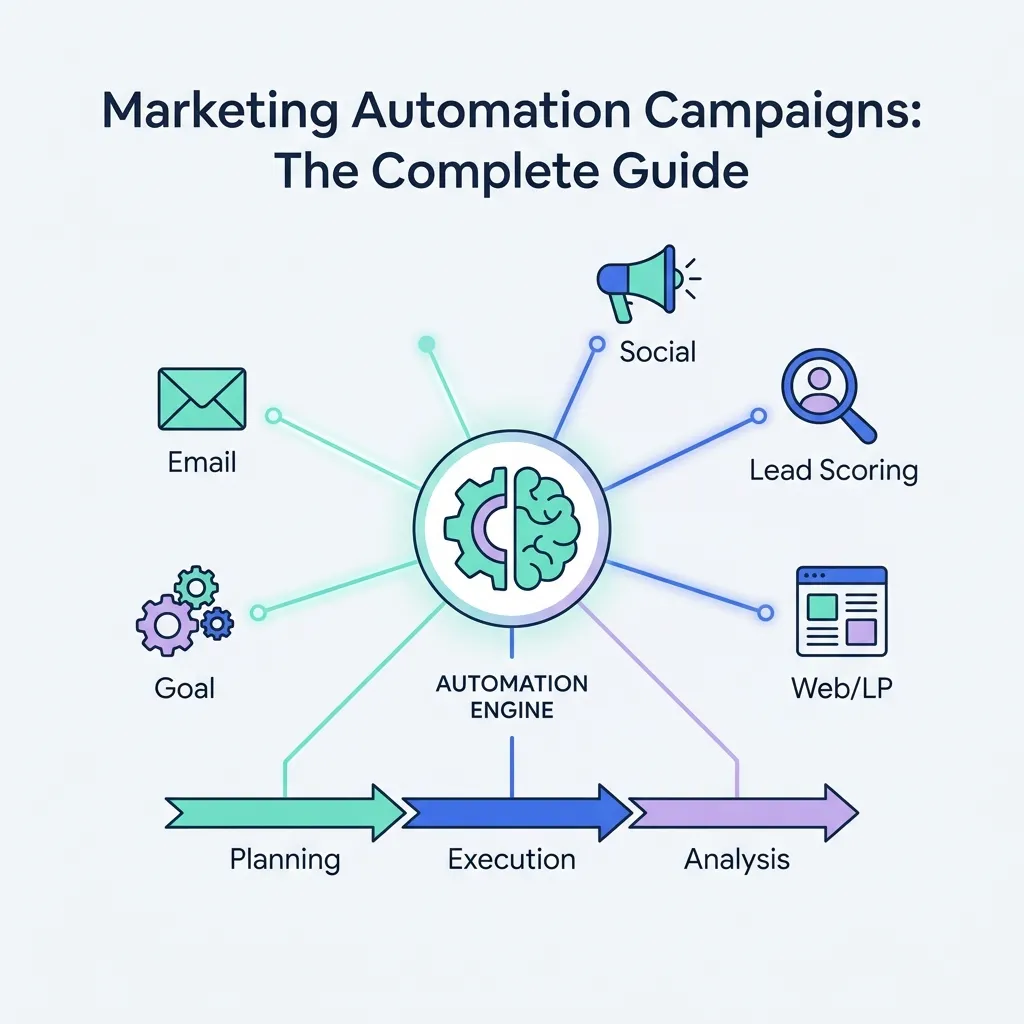
Marketing automation campaigns let brands deliver the right message to the right person at the right time, without a marketer manually sending every email or triggering every action. Done well, automation turns a handful of thoughtfully designed workflows into a system that nurtures leads, re-engages inactive customers, and drives repeat purchases around the clock. This guide covers how marketing automation campaigns actually work, the core campaign types every marketer should know, how to build a workflow from scratch, and the mistakes that quietly hurt automation performance.
Running a successful marketing automation campaign isn’t about buying software and flipping a switch — it’s about designing a system of triggers, content, and timing that mirrors how a real customer actually moves through their relationship with your brand. When it’s done right, automation feels less like a mass email blast and more like a thoughtful, personal follow-up that happens to scale to thousands of people at once.
This guide walks through everything you need to build effective marketing automation campaigns, starting with the fundamentals covered in this complete guide to marketing automation strategy, and moving into practical workflow design, segmentation, and measurement. By the end, you’ll have a clear framework for planning new campaigns and diagnosing why an existing one might be underperforming.
What Are Marketing Automation Campaigns?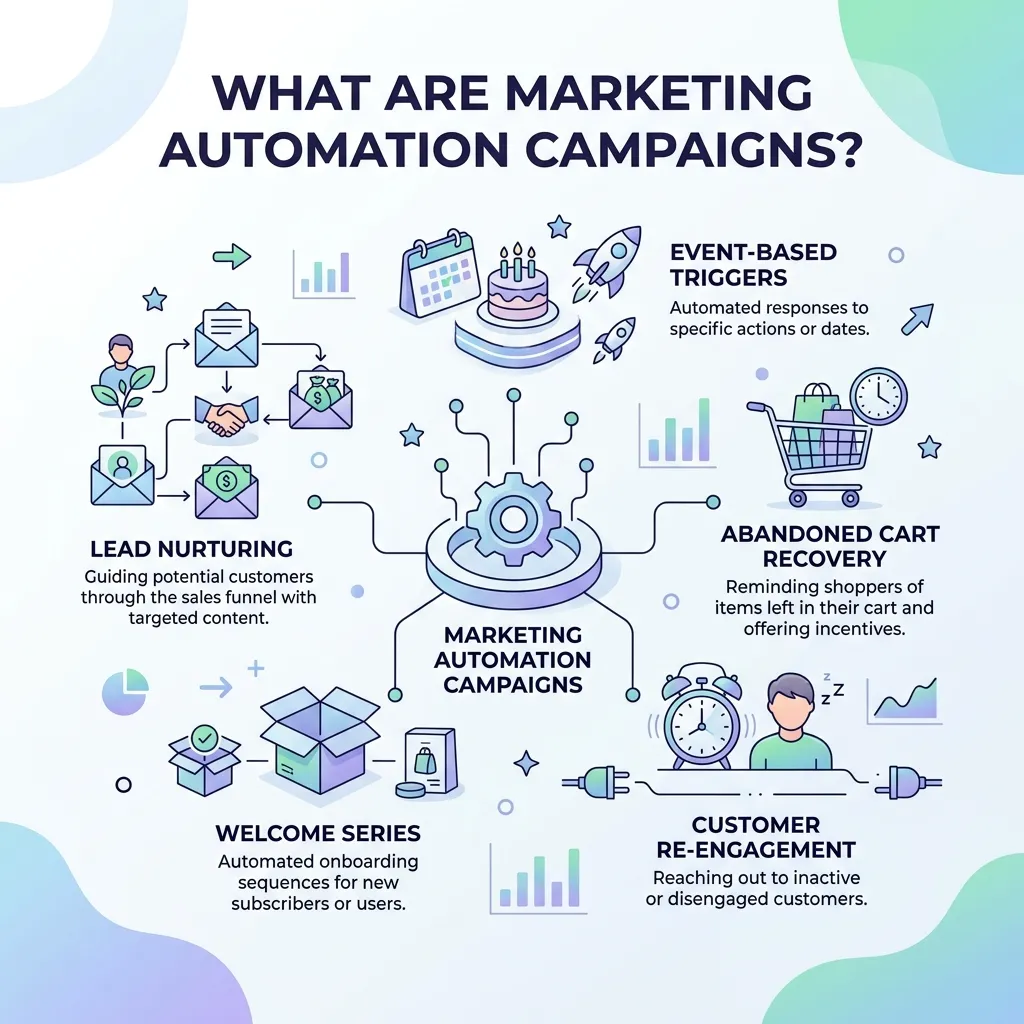
A marketing automation campaign is a pre-built sequence of actions — usually emails, but often including SMS, push notifications, or ad retargeting — triggered automatically based on a customer’s behavior or a specific point in time. Instead of a marketer manually deciding when to send each message, automation software handles the timing and targeting based on rules set up in advance.
If you’re new to the concept entirely, it’s worth first reviewing what marketing automation is at a foundational level before diving into specific campaign types, since understanding the underlying logic makes every subsequent workflow easier to design.
Core Types of Marketing Automation Campaigns
1. Welcome Series
Triggered the moment someone subscribes or creates an account, a welcome series introduces new contacts to your brand, sets expectations, and often includes an incentive to make a first purchase. This is typically the highest-performing automated campaign type, since new subscribers are at their most engaged right after signing up.
2. Lead Nurturing Campaigns
Designed to move a prospect gradually from initial interest to purchase readiness, lead nurturing campaigns deliver educational content, case studies, or product comparisons over a set period, adjusting based on how the recipient engages along the way.
3. Abandoned Cart Campaigns
Triggered when a shopper adds items to a cart but doesn’t complete checkout, these campaigns are among the most reliably profitable automation types in e-commerce, often recovering a meaningful percentage of otherwise lost sales.
4. Re-Engagement Campaigns
Sent to contacts who haven’t opened emails or interacted with the brand in a defined period, re-engagement campaigns attempt to win back attention before a contact goes fully inactive, often using a stronger incentive or a direct “we miss you” message.
5. Post-Purchase and Onboarding Sequences
Triggered after a purchase, these campaigns guide customers through product setup, gather reviews, and introduce complementary products, extending the relationship beyond the initial transaction.
6. Behavioral Trigger Campaigns
Based on specific actions like browsing a particular product category, downloading a resource, or attending a webinar, these campaigns respond to real-time behavior rather than a fixed schedule, making them feel especially relevant to the recipient.
7. Loyalty and Retention Campaigns
Aimed at existing customers, these campaigns reward repeat behavior, celebrate milestones like anniversaries, and encourage referrals, helping extend customer lifetime value well beyond the first purchase.
How to Build a Marketing Automation Campaign
Step 1: Define the Campaign Goal
Every workflow should have a single, clear objective — recovering abandoned carts, nurturing a specific lead segment, or re-engaging dormant customers. Trying to accomplish too many goals within one workflow usually dilutes its effectiveness.
Step 2: Map the Customer Journey
Before building any automation, sketch out the actual sequence of steps a customer takes — and where they might drop off. This journey map becomes the blueprint for your triggers and timing. Reviewing a marketing automation workflow guide can help ensure your journey map translates cleanly into the logic your automation platform actually needs.
Step 3: Segment Your Audience
Automation performs best when messages are tailored to specific audience segments rather than sent identically to everyone. Segment by behavior, purchase history, engagement level, or demographic data so each workflow feels relevant to the people receiving it.
Step 4: Set Clear Triggers and Timing
Decide exactly what action or condition starts the workflow, and how much time should pass between each step. A cart abandonment email sent within an hour typically performs differently than one sent the next day — testing timing is often as important as testing the content itself.
Step 5: Create the Content for Each Step
Write and design each message in the sequence, keeping the tone consistent and making sure each step logically follows from the last. Avoid simply repeating the same message with a different subject line — each touchpoint should add new value or a new reason to act.
Step 6: Test Before Launching
Run through the entire workflow as a test contact to confirm triggers fire correctly, links work, and personalization fields populate properly. A broken automation can run unnoticed for weeks, quietly damaging the customer experience at scale.
Step 7: Monitor and Optimize
Track open rates, click-through rates, conversion rates, and unsubscribe rates for each step in the workflow. Reviewing marketing automation best practices regularly helps ensure your campaigns keep pace with evolving customer expectations and platform capabilities.
Marketing Automation for Small Businesses
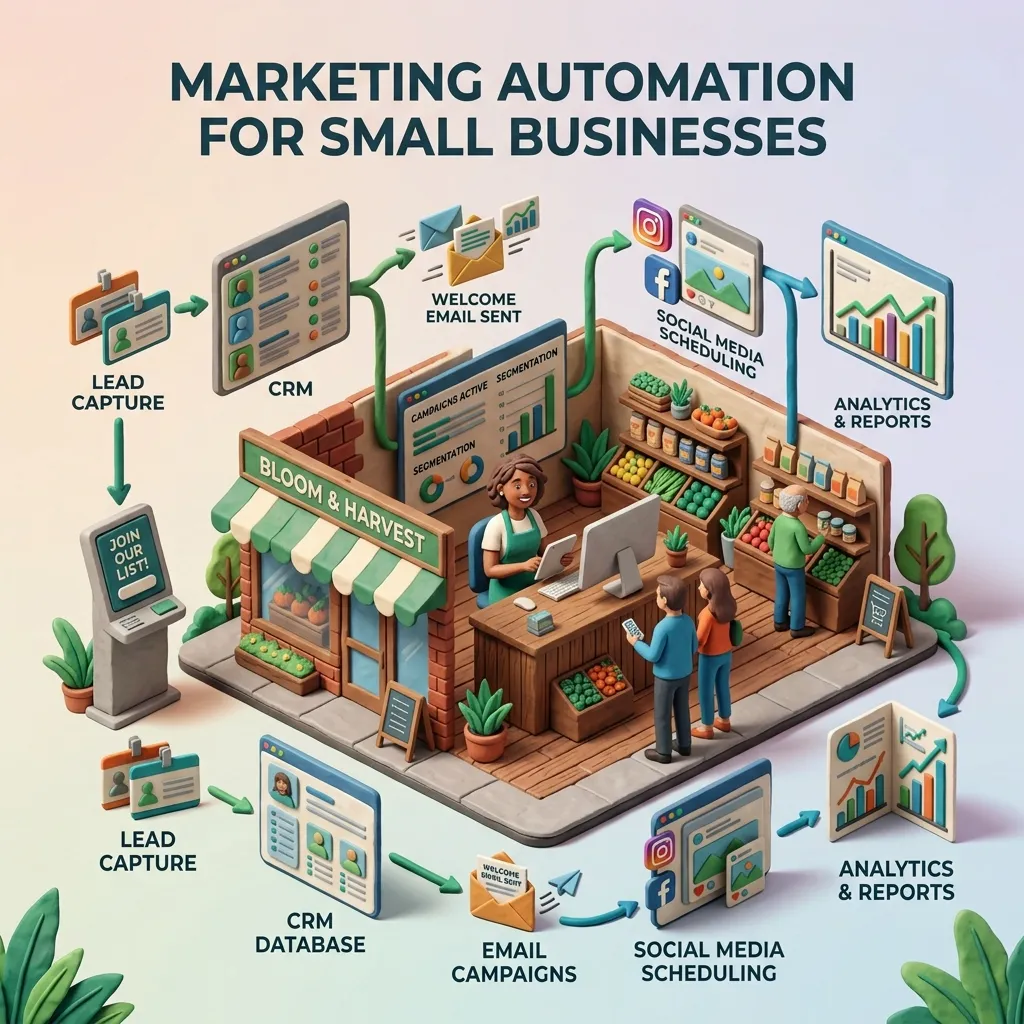
Smaller teams often assume automation is only worth the investment at scale, but even a handful of well-built workflows can save significant time while improving consistency. A marketing automation guide for small business shows how starting with just a welcome series and an abandoned cart sequence can deliver a strong return before expanding into more advanced campaigns. Pairing the right marketing automation tools for small business with a focused strategy matters more than trying to automate everything at once.
Email Automation vs. Broader Marketing Automation
It’s worth distinguishing between email automation specifically and marketing automation as a broader discipline. While many automation campaigns are email-based, modern platforms extend automation across SMS, in-app messages, and retargeting ads. This comparison of email marketing vs. marketing automation breaks down where the two overlap and where automation’s scope extends further than a traditional email program alone.
Using AI and Predictive Data in Automation Campaigns
Modern automation platforms increasingly use predictive data to decide not just what message to send, but when a specific individual is most likely to engage or convert. Rather than relying on fixed time delays, AI-driven send-time optimization and predictive lead scoring can adjust each contact’s journey based on their unique behavior patterns. This approach to AI-powered trend forecasting in marketing illustrates how predictive techniques are reshaping not just automation timing, but the broader strategic decisions behind campaign design. Similarly, predictive analytics in trend marketing shows how forecasting models can inform which segments deserve the most automation investment in the first place.
Marketing Automation in E-Commerce
E-commerce brands tend to see some of the strongest returns from marketing automation, largely due to the clear behavioral signals shoppers generate — browsing, adding to cart, purchasing, and repeat buying all provide natural automation triggers. This guide to marketing automation strategies for e-commerce covers how online stores can build out cart recovery, post-purchase, and win-back sequences that directly tie back to revenue.
Integrating Automation With Sales and CRM
Marketing automation delivers the most value when it’s connected to the systems your sales team actually uses. When automation platforms sync with a CRM, behavioral data like email opens, content downloads, and website visits can feed directly into lead scoring models, giving sales reps visibility into which prospects are genuinely warming up versus which are still early in their research.
This integration also allows for smoother handoffs between marketing and sales. Instead of a lead disappearing into a spreadsheet after downloading a resource, a well-connected system can automatically notify a sales rep once a contact crosses a defined engagement threshold, or move that contact into a more sales-focused nurture sequence rather than a purely educational one. Without this connection, automation risks becoming a marketing-only tool that generates activity without translating into pipeline the sales team can actually act on.
For B2B companies with longer sales cycles in particular, this alignment matters even more. A prospect might interact with a dozen automated touchpoints over several months before ever speaking with a salesperson, and having that full history visible to the sales team — rather than starting the conversation from zero — often makes the eventual handoff feel far more informed and relevant to the prospect.
Common Mistakes in Marketing Automation Campaigns
- Over-automating too quickly. Launching a dozen complex workflows before mastering a few simple ones often leads to messy, hard-to-maintain systems.
- Ignoring segmentation. Sending the same automated sequence to every contact regardless of behavior or interest reduces relevance and performance.
- Setting and forgetting workflows. Automation still needs regular review and optimization — content, offers, and timing should evolve as customer behavior changes.
- Overloading contacts with messages. Too many overlapping automated campaigns can flood a single contact’s inbox, increasing unsubscribe and spam complaint rates.
- Skipping proper testing. Broken links, incorrect personalization, or misfiring triggers can quietly undermine an otherwise well-designed campaign.
- Treating automation as separate from overall strategy. Automated campaigns should reinforce the same messaging and offers used across other channels, not exist in isolation.
Measuring Marketing Automation Campaign Success
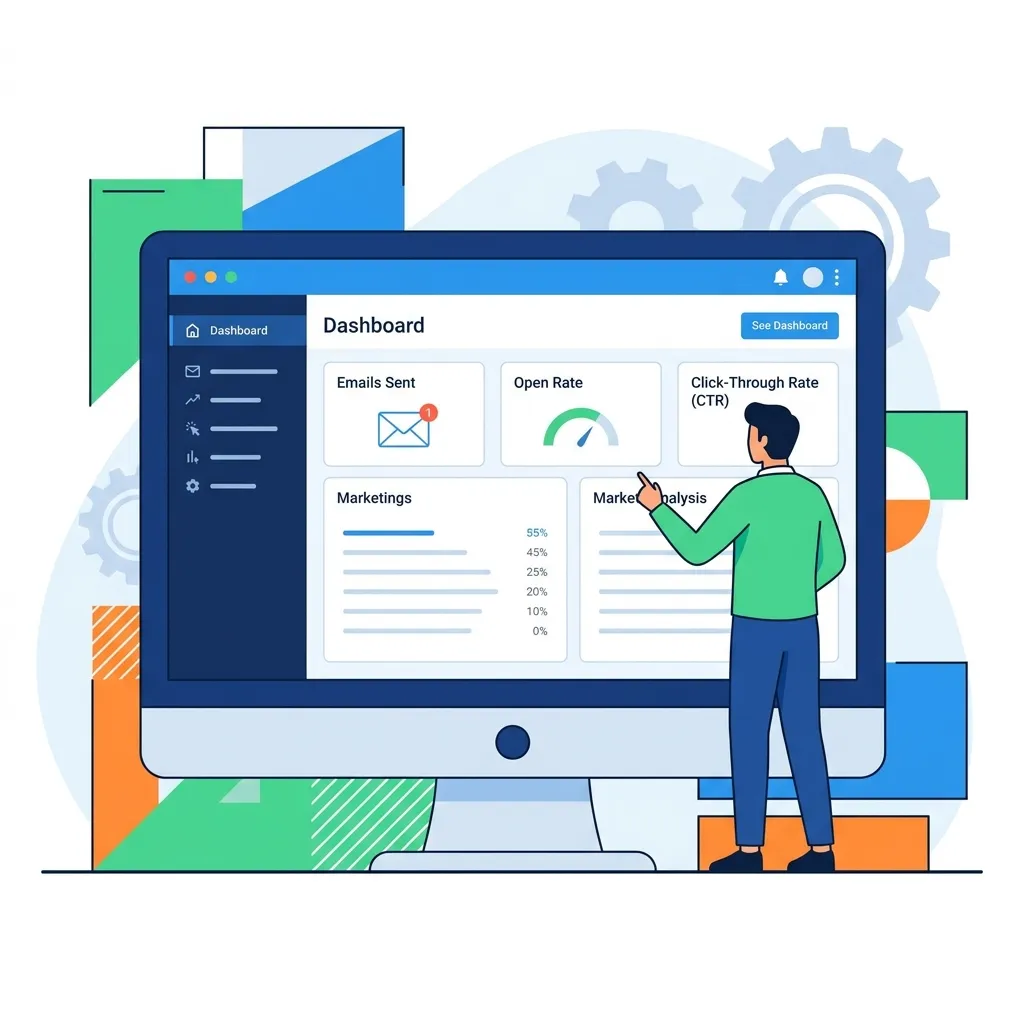
Key metrics to track across most automation campaigns include:
- Open and click-through rates for each step in the sequence.
- Conversion rate — the percentage of contacts who complete the desired action, such as a purchase or sign-up.
- Revenue per email or per workflow, especially for e-commerce-focused automation.
- Unsubscribe and complaint rates, which signal whether frequency or relevance needs adjustment.
- Time-to-conversion, showing how quickly contacts move through the workflow toward the desired outcome.
Staying current with the latest marketing automation trends can also help identify new benchmarks and platform capabilities worth testing as the space continues to evolve.
Conclusion
Marketing automation campaigns work best when they’re built around a genuine understanding of the customer journey rather than treated as a way to simply send more messages with less effort. Start with a single clear goal, map the actual behavior that should trigger each step, segment your audience thoughtfully, and test everything before it goes live. From there, ongoing measurement and optimization turn a good workflow into a consistently high-performing one. Whether you’re building your first welcome series or refining a complex, AI-assisted lead-scoring system, the fundamentals remain the same: relevance, timing, and a clear path toward the action you actually want the customer to take. And as your program matures, connecting automation more closely with sales and CRM data will usually unlock the next meaningful jump in performance.
Frequently Asked Questions (FAQs)
1. What is a marketing automation campaign?
It’s a pre-built sequence of triggered actions — typically emails, SMS, or ads — sent automatically based on a customer’s behavior or a specific point in time, rather than manually by a marketer.
2. What’s the easiest automation campaign to start with?
A welcome series is usually the best starting point, since new subscribers are highly engaged and the trigger (a new sign-up) is simple to set up.
3. How long should a marketing automation workflow be?
It depends on the goal — a welcome series might run three to five emails over a week or two, while a longer lead-nurturing campaign could extend over several weeks or months.
4. Is marketing automation only useful for large companies?
No. Even small businesses can benefit significantly from a few well-built workflows like welcome series and abandoned cart recovery.
5. What’s the difference between email marketing and marketing automation?
Email marketing typically refers to manually sent campaigns, while marketing automation uses triggers and rules to send messages automatically based on behavior or timing.
6. How do you measure marketing automation success?
Common metrics include open and click-through rates, conversion rate, revenue per workflow, unsubscribe rates, and time-to-conversion.
7. Can marketing automation include channels other than email?
Yes, modern automation platforms often include SMS, push notifications, in-app messages, and retargeting ads alongside email.
8. How often should automated workflows be reviewed?
Most marketers review and optimize workflows quarterly, or sooner if performance metrics show a noticeable drop in engagement or conversions.
9. What causes marketing automation campaigns to underperform?
Common causes include poor segmentation, lack of testing before launch, overly generic content, and sending too many overlapping campaigns to the same contacts.
10. Can AI improve marketing automation campaigns?
Yes, AI can optimize send times, score leads based on predicted likelihood to convert, and personalize content dynamically based on individual behavior patterns.
11. Should every automated email be personalized?
Personalization generally improves performance, but it should go beyond just inserting a first name — segmenting by behavior and interest matters more for true relevance.
12. What’s the biggest mistake businesses make with marketing automation?
Setting up workflows once and never revisiting them. Automation still requires ongoing testing, content updates, and performance monitoring to stay effective.
For a deeper foundation before building your first workflow, see our marketing automation strategy guide, or explore marketing automation best practices to refine campaigns you’ve already launched.





Leave a Reply