

Viral marketing represents one of the most powerful yet unpredictable strategies in public relations. When executed successfully, it can catapult a brand from obscurity to household name status overnight. But what exactly makes content go viral, and how can PR professionals harness this phenomenon?
This comprehensive guide explores the mechanics of viral marketing within PR, examines successful campaigns, and provides actionable strategies for creating content with viral potential. You’ll discover the key elements that make campaigns shareable, learn from real-world examples, and understand how to measure viral success.
Understanding Viral Marketing in Public Relations
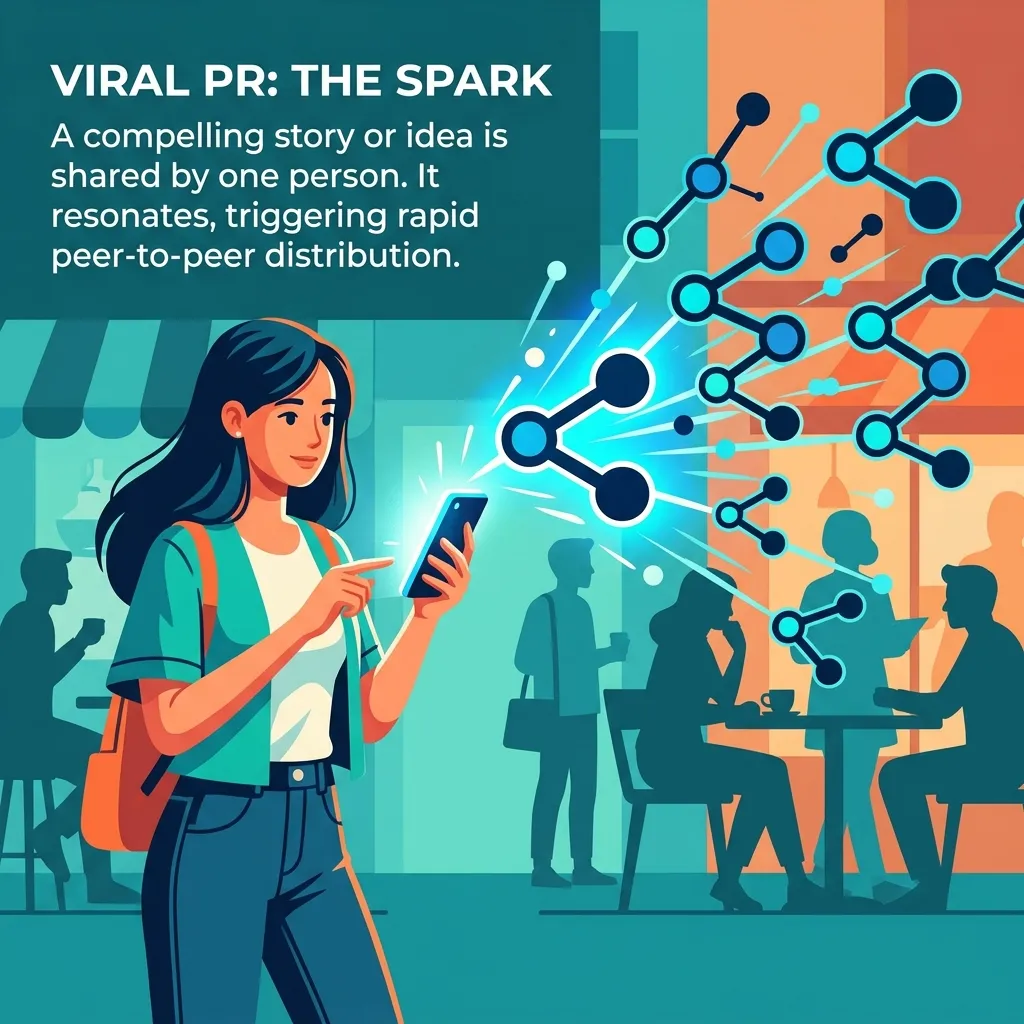
Viral marketing is a PR strategy designed to create content so compelling that audiences voluntarily share it across their networks. Unlike traditional advertising, viral campaigns rely on organic distribution through social media, word-of-mouth, and earned media coverage. In modern PR, viral content marketing has become an essential tool for brands seeking rapid audience growth without relying solely on paid promotion.
The term “viral” draws from epidemiology—just as viruses spread rapidly through populations, viral content spreads exponentially through digital networks. Each share creates multiple new touchpoints, amplifying reach far beyond what paid advertising could achieve with the same budget.
The Psychology Behind Viral Content
Several psychological triggers drive people to share content:
Emotional resonance forms the foundation of viral campaigns. Content that evokes strong emotions—whether joy, surprise, anger, or inspiration—compels audiences to share their experience with others.
Social currency plays a crucial role. People share content that makes them appear knowledgeable, trendy, or aligned with their values. Sharing becomes a form of self-expression and social positioning.
Practical value drives sharing when content provides useful information, tips, or solutions. Audiences share content that helps others, reinforcing their helpful image while providing genuine value.
Storytelling elements create memorable experiences. Compelling narratives with clear characters, conflict, and resolution stick in audiences’ minds and encourage retelling.
Key Components of Successful Viral Marketing Campaigns
Timing and Cultural Relevance
Successful viral campaigns tap into current cultural moments, trending topics, or seasonal events. They feel timely and relevant, creating urgency around sharing.
Real-time marketing—responding quickly to breaking news or trending topics—can generate viral moments. However, brands must balance speed with sensitivity, ensuring their response aligns with their values and audience expectations.
Platform-Specific Optimization
Different platforms favor different content types and sharing behaviors:
Twitter thrives on witty commentary, real-time responses, and easily quotable content. Character limits force concise messaging that’s easy to share and remix.
TikTok favors authentic, entertaining video content that fits current trends and challenges. The platform’s algorithm can rapidly amplify engaging content to massive audiences.
Instagram emphasizes visual storytelling through images and short videos. Stories and Reels provide additional opportunities for viral content distribution.
LinkedIn responds well to professional insights, industry commentary, and thought leadership content that professionals want to share with their networks.
Authenticity and Brand Alignment
Viral content must feel authentic to the brand’s voice and values. Audiences quickly detect and reject content that feels forced or inauthentic. Successful campaigns maintain brand consistency while adapting to platform-specific expectations.
Notable Viral Marketing Campaigns in PR History
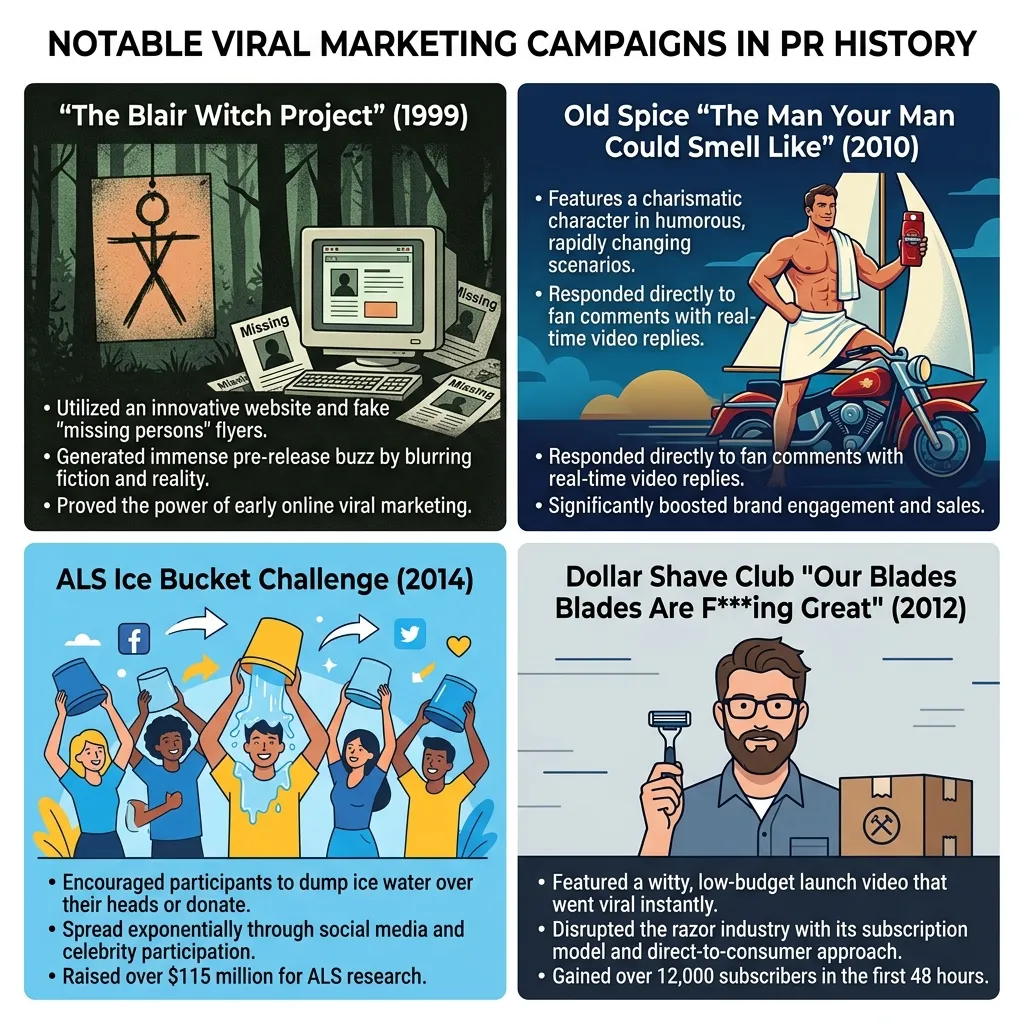
The Ice Bucket Challenge
The ALS Ice Bucket Challenge became a viral phenomenon by combining charitable giving with entertaining content. Participants dumped ice water over themselves, donated to ALS research, and challenged others to do the same.
The campaign succeeded because it:
- Created a simple, replicable format
- Combined entertainment with social good
- Leveraged social pressure through public nominations
- Generated both user-generated content and celebrity participation
Old Spice’s “The Man Your Man Could Smell Like”
Old Spice transformed its brand image through absurd humor and unexpected creative execution. The campaign’s success came from:
- Memorable, quotable dialogue
- Unexpected visual elements and rapid scene changes
- Strategic placement during high-viewership events
- Follow-up content that maintained momentum
Dollar Shave Club’s Launch Video
Dollar Shave Club’s irreverent launch video went viral by addressing common customer pain points with humor and personality. The campaign worked because it:
- Clearly communicated value proposition
- Used humor to differentiate from competitors
- Featured authentic, relatable messaging
- Included a clear call-to-action
Strategies for Creating Viral Content
Content Planning and Ideation
Start with audience research to understand what interests your target audience, what problems they face, and what type of content they are most likely to share. Analyze successful viral content in your industry to identify common patterns, formats, emotional triggers, and emerging opportunities.
Brainstorm content ideas that align with your brand while connecting with current trends, cultural moments, or relevant conversations. Focus on ideas that offer entertainment, useful information, inspiration, or a fresh perspective. Consider how your brand’s unique voice can add value without appearing forced or overly promotional.
Execution Best Practices
Keep it simple. Viral content often succeeds because it is easy to understand, remember, and share. Use clear messaging and avoid unnecessary complexity that could confuse your audience.
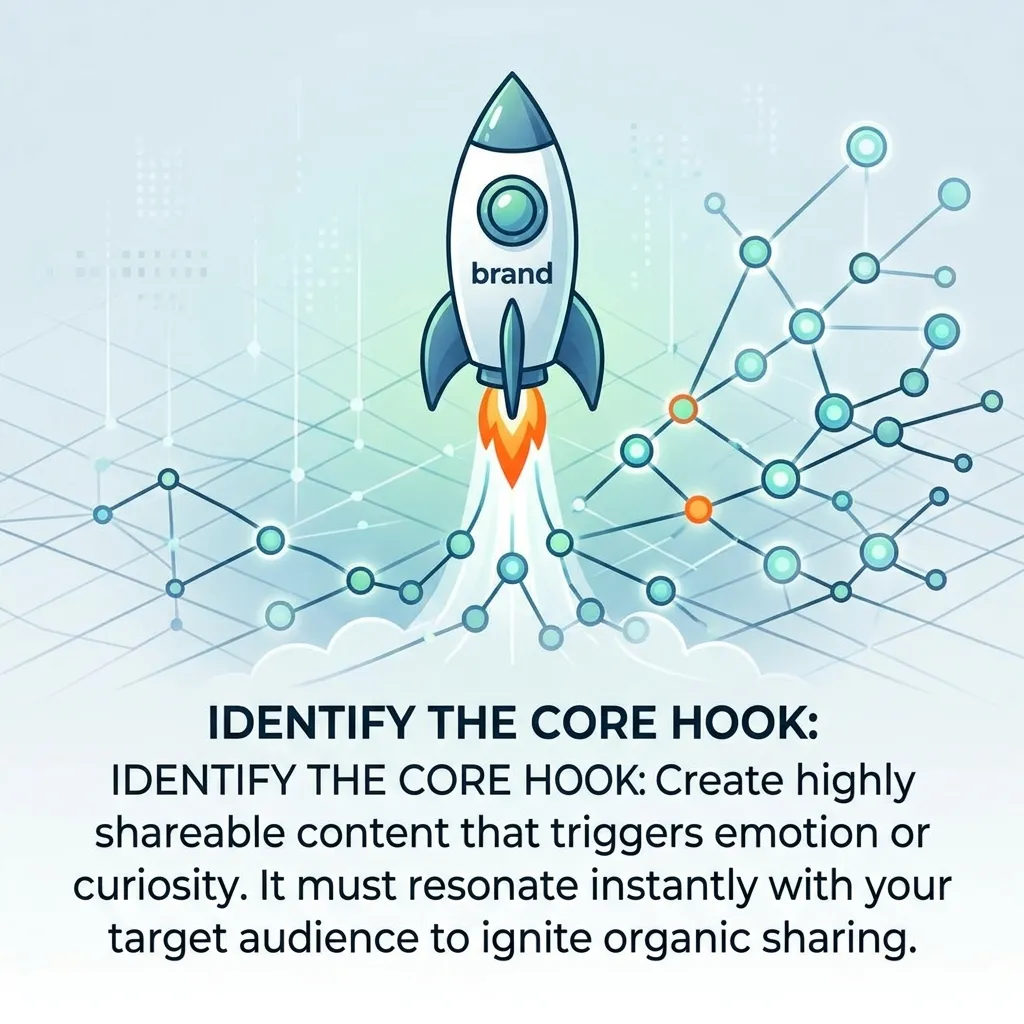
Create a strong hook. Capture attention within the first few seconds or opening lines. A compelling question, surprising fact, emotional statement, or unexpected visual can encourage people to continue watching or reading.
Optimize for mobile. Most social media users consume content on mobile devices. Make sure videos, images, text, and landing pages display properly and load quickly across different screen sizes.
Include clear sharing mechanisms. Make it easy for audiences to share your content across social platforms. Use recognizable sharing options and consider creating different versions of the content for specific platforms.
Plan for scale. Viral success can bring a sudden increase in website traffic, customer questions, social engagement, and media attention. Make sure your website, customer service team, and internal processes are prepared to handle the increased demand.
Measuring Viral Success
Traditional metrics such as reach, impressions, and engagement provide a useful starting point, but viral campaigns require deeper analysis to understand how quickly content spreads and what impact it creates.
Engagement rate shows how actively audiences interact with your content through likes, comments, reactions, and other actions. Strong engagement can indicate that the content is resonating with viewers.
Share velocity measures how quickly people share content after it is published. A rapid increase in shares can indicate that the campaign is gaining viral momentum.
Earned media value estimates the value generated through organic media coverage, social sharing, mentions, and other unpaid exposure. This can help demonstrate the broader PR impact of a viral campaign.
Sentiment analysis helps determine how audiences feel about your content and brand. Positive sentiment can strengthen brand perception, while negative reactions may signal the need for a quick and thoughtful response.
Conversion and business impact should also be considered. Track website visits, leads, sales, sign-ups, or other relevant actions to determine whether viral attention is contributing to meaningful business results.
The Role of Influencers and User-Generated Content
Influencer Partnerships
Collaborating with influencers can amplify viral potential by leveraging their established audiences and credibility. However, successful partnerships require careful selection of influencers whose audiences align with your target demographic.
Micro-influencers often generate higher engagement rates than macro-influencers, making them valuable partners for viral campaigns. Their smaller, more engaged audiences may be more likely to share content organically.
Encouraging User-Generated Content
User-generated content (UGC) provides authentic endorsements while expanding your content creation capacity. Successful UGC campaigns create frameworks that encourage participation while maintaining brand consistency.
Contests, challenges, and hashtag campaigns can generate significant UGC volumes. However, brands must provide clear guidelines and moderate submissions to ensure quality and appropriateness.
Common Pitfalls and How to Avoid Them
Forcing Viral Content
Viral success cannot be guaranteed or forced. Brands that try too hard to create viral content often produce inauthentic campaigns that audiences reject.
Instead, focus on creating genuinely valuable, entertaining, or informative content that serves your audience’s needs. Viral success may follow, but the content should succeed on its own merits.
Ignoring Brand Safety
Viral content can quickly spiral beyond your control. Brands must consider potential negative interpretations or unintended consequences before launching campaigns.
Establish clear brand guidelines and approval processes for viral campaign content. Consider potential risks and prepare response strategies for various scenarios.
Neglecting Follow-Up
Viral success creates opportunities that require a quick response. Brands must capitalize on increased attention through strategic follow-up content and engagement.
Prepare contingency plans for viral success, including additional content, customer service capacity, and media outreach strategies.
Building a Viral Marketing Strategy
Setting Realistic Expectations
Viral marketing should complement, not replace, traditional PR strategies. While viral success can provide massive exposure, it’s unpredictable and shouldn’t be your primary marketing approach.
Set realistic goals that focus on engagement, brand awareness, and audience growth rather than viral metrics alone. Success should be measured across multiple campaigns and touchpoints.
Integration with Broader PR Efforts
Viral campaigns work best when integrated with comprehensive PR strategies. Use viral content to support broader brand messaging and business objectives.
Coordinate viral campaigns with other marketing activities to maximize impact and ensure consistent brand messaging across all channels.
Making Viral Marketing Work for Your Brand
Viral marketing in PR offers tremendous opportunities for brands willing to take creative risks and engage authentically with their audiences. Success requires understanding your audience, creating genuinely valuable content, and maintaining brand authenticity throughout the process.
Start by analyzing viral content in your industry and identifying opportunities to add your unique perspective to trending conversations. Focus on creating content that serves your audience’s needs while showcasing your brand’s personality and values.
Remember that viral success is just the beginning. The real value comes from converting viral attention into lasting brand relationships and business results. Use viral moments as springboards for deeper audience engagement and long-term brand building.
Learn more about: Predictive Trend Marketing: How AI Forecasts Emerging Consumer Behaviors
Conclusion
Viral marketing can give PR campaigns extraordinary reach, engagement, and brand visibility, but going viral should never be the only goal. The most effective campaigns combine audience insight, emotional storytelling, cultural relevance, authentic brand messaging, and platform-specific execution.
By creating valuable content, encouraging sharing, working with relevant influencers, and measuring meaningful results, brands can turn viral attention into lasting audience relationships. Most importantly, treat viral marketing as part of a broader PR strategy rather than a guaranteed shortcut to success. With the right planning and follow-up, even a short-lived viral moment can become a valuable opportunity for long-term brand growth.
Frequently Asked Questions
1. What is viral marketing in public relations?
Viral marketing in public relations is a strategy that encourages audiences to share engaging, entertaining, or valuable content organically across social networks and other channels.
2. How does viral marketing help PR?
Viral marketing can increase brand awareness, generate earned media coverage, expand audience reach, and create conversations around a brand without depending entirely on paid advertising.
3. What makes content go viral?
Content is more likely to go viral when it creates strong emotions, offers practical value, feels relevant, is easy to share, and connects with current trends or cultural conversations.
4. What are the key elements of a viral marketing campaign?
Key elements include emotional appeal, strong storytelling, cultural relevance, authenticity, simple messaging, platform optimization, and easy sharing opportunities.
5. Which social media platforms are best for viral marketing?
TikTok, Instagram, YouTube, X, and LinkedIn can all support viral marketing. The best platform depends on the target audience, content format, and campaign goals.
6. How can brands create viral content?
Brands can create viral content by researching their audience, monitoring trends, developing compelling ideas, using engaging storytelling, optimizing content for mobile, and making sharing easy.
7. What role do influencers play in viral marketing?
Influencers can increase a campaign’s reach and credibility by introducing content to established audiences. The right influencer should have strong audience alignment and genuine engagement.
8. How does user-generated content support viral marketing?
User-generated content encourages customers to participate in campaigns and share their experiences. This can increase authenticity, engagement, and organic reach.
9. Can viral marketing be guaranteed?
No. Viral marketing is unpredictable, and there is no guaranteed formula for making content go viral. Brands should focus on creating valuable and shareable content rather than chasing virality alone.
10. How do you measure viral marketing success?
Common metrics include engagement rate, shares, reach, impressions, share velocity, earned media value, website traffic, conversions, and audience sentiment.
11. What are common viral marketing mistakes?
Common mistakes include forcing trends, creating inauthentic content, ignoring brand safety, failing to prepare for increased attention, and not having a follow-up strategy.
12. How can viral marketing support long-term brand growth?
Viral marketing can create awareness and attract new audiences, but brands need consistent engagement, relevant follow-up content, and strong customer experiences to turn temporary attention into lasting relationships.






Leave a Reply